
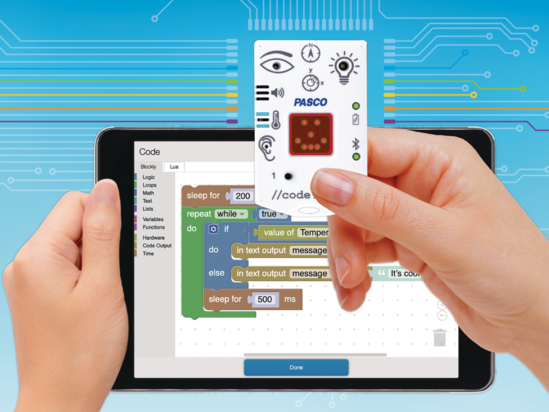
PS-3231 code.Node programming module
The PS-3231 code.Node programming module is an all-in-one programming solution combining real-world sensor investigations, Blockly graphical programming, and real-time data displays to develop computational thinking in STEM (science, technology, engineering, and mathematics). It contains 6 interactive sensors and 4 groups of device-output interfaces, measuring and responding to phenomena through code written in SPARKvue or Capstone. Today's students inhabit a digital world filled with sensors and code-driven devices. From automatic night lights to emergency-braking systems, sensors play an essential role in daily life. With //code.Node and Blockly, students learn how sensors work, where they are used, and the logic of code controlling them. Every //code.Node activity requires an interactive program whose external responses extend code beyond the screen into the real world. The built-in 6 sensors include temperature, motion, magnetic-field, sound, and light sensors, plus two momentary switches. The 4 groups of device-output interfaces include a speaker, a 5×5 LED matrix, and an RGB LED. The user-friendly Blockly platform integrated into SPARKvue or Capstone lets students define how the device collects and responds to data. Students can control how sensor inputs collect and display data and specify how device outputs respond to incoming sensor data. Blockly in SPARKvue and Capstone supports code-based control of all PASCO sensors, including wireless and PASPORT sensors. Once sensors are connected to PASCO software, students can control acquisition and display with Blockly. The sensor inputs and device outputs of //code.Node can be used separately, together, or with any PASCO sensor to create complex feedback loops, automated experiments, and more. The device has multiple sensor inputs and output-signal interfaces. Each LED in the 5×5 matrix has programmable brightness; lighting multiple LEDs displays letters, numbers, and symbols. The matrix in the illustration shows a classic smiling face. Developing computational thinking and emotional skills: //code.Node uses design thinking and problem solving to build computational-thinking foundations. During lessons, students independently explore ways to achieve objectives. They write a program and execute it with the Record button. Correct data or signals indicate success; unexpected results prompt debugging. Learning to control sensors through code also develops emotional skills, such as persistence in overcoming difficulties and teamwork. Programming challenges encourage collaboration. Some students may find effective approaches earlier, and as lessons progress, students learn to draw on one another's strengths for better results. Educators can also listen to group discussions and reasoning to understand students' problem-solving approaches. Data science—bridging programming and data literacy: Global demand for data scientists is growing, yet most educational programming solutions do not bridge programming and data literacy. By integrating data collection into programming, //code.Node provides an unparalleled platform for building both computational-thinking and data-science foundations. Visualize, collect, and analyze data with //code.Node: Combined with our award-winning acquisition and analysis software, it integrates data visualization with programming. After successfully coding sensor control, students can visualize data using any SPARKvue or Capstone display option. These displays help students practice visualization and choose suitable graph formats, while stimulating curiosity about data science. After programming the device and collecting data, students analyze results in SPARKvue or Capstone. Both provide basic and advanced calculation tools for all ages. Younger students can readily obtain minimum, maximum, and mean values, while older students can use advanced calculations for specific applications. Analyzing and interpreting code-generated datasets helps students use their findings to guide subsequent programming decisions.
 Save to Favorites
Overview
Specifications
| Parameter | Value |
|---|---|
| Maximum sampling rate | 100 Hz |
| Light-intensity sensor range [Uncalibrated] | 600 to 50,000 lx (uncalibrated) |
| Sound-level sensor range [Uncalibrated] | 70 to 100 dB (uncalibrated) |
| Magnetic-field sensor range | ±50 gauss |
| Acceleration-sensor range | ±8 g |
| Speaker frequency range | 10 to 10,000 Hz |
| Ambient-temperature sensor - Measurement range | -25°C to 40°C |
| Ambient-temperature sensor - Resolution | 0.05°C |
| Ambient-temperature sensor - Accuracy | ±1°C |
| Connection Method | USB and Bluetooth 5.1 |
| Data Logging Function | None |
| Battery Type | Rechargeable Lithium-Polymer Battery (LiPo) |
Applications
Datasheet
Please provide your email to download the datasheet.
Invalid email format. Please try again.
Supplier Information
Related Products
-
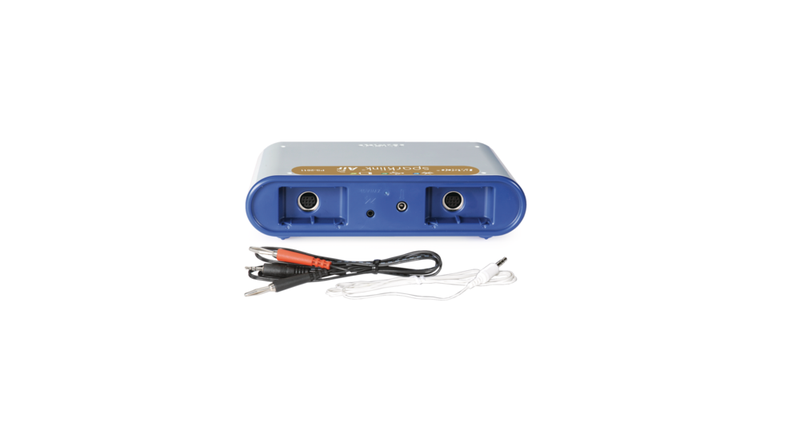 PS-2011 dual-channel Bluetooth interface
Sensors
Brolight
Interface Type: USB or Bluetooth 2.0 Interface: 4 (2 PASPORT interfaces, 1 voltage interface, 1 temperature interface)
The PS-2011 SPARKlink dual-channel Bluetooth interface lets teachers and students connect their devices by USB or Bluetooth to any of more than 70 PASPORT sensors in the PASCO range. Data are acquired with SPARKvue or PASCO Capstone. Teachers and students can use desktop or laptop computers running either program, or Bluetooth-enabled iOS or Android devices running the SPARKvue app. Note: SPARKlink Air connects to Google Chromebooks by USB but does not support Bluetooth connection to them.
-
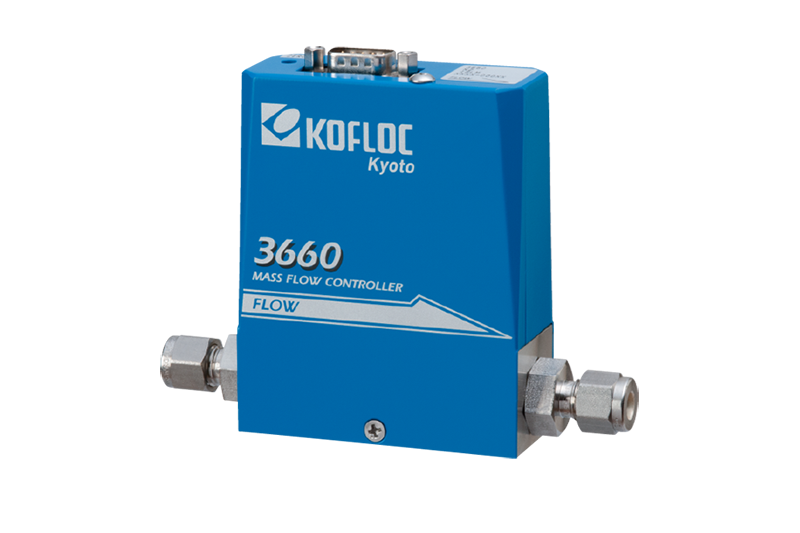 Gas mass flow controllers-3660 series
Sensors
Csl-vacuum
Flow-rate range [Different flow units at the two ends retained as in the source, without conversion]: 10SCCM~100SLM Gas/fluid: N2, AIR, H2, HE, AR, O2, CO2, etc. Electrical connection: Dsub 9-pin
An internal sensor measures gas flow in real time and compares it with the setpoint. The controller rapidly actuates a regulating valve, forming a closed loop that stabilizes actual flow precisely at the target.
-
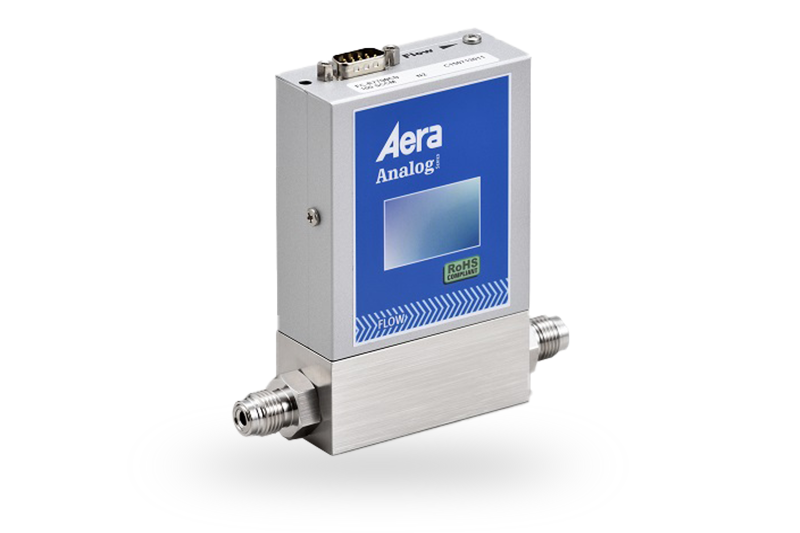 Gas mass flow controllers FC-R7700CD series
Sensors
Csl-vacuum
Flow-rate range [Different flow units at the two ends retained as in the source, without conversion]: 10SCCM~200SLM Gas/fluid: N2, AIR, H2, HE, AR, O2, CO2, etc. Electrical connection: Dsub 9-pin
An internal sensor measures gas flow in real time and compares it with the setpoint. The controller rapidly actuates a regulating valve, forming a closed loop that stabilizes actual flow precisely at the target.
-
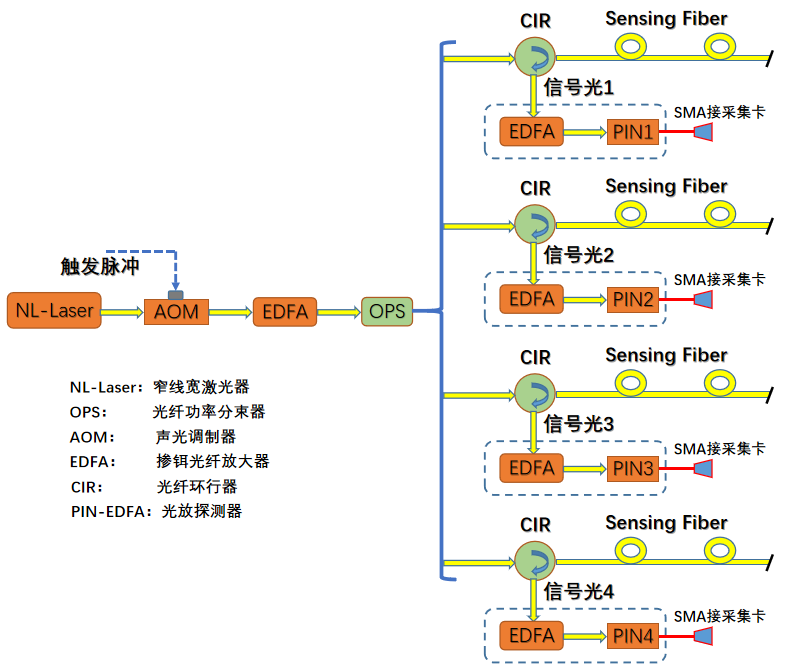 Fully integrated 4-channel DVS optical module
Sensors
Oe-photonics
Sensing distance: typical:20 km Number of detection channels: 4 channels Modulation mode: External modulation
For multichannel, fully integrated distributed vibration sensing (DVS), the DVS-AOM-L series uses an ultra-narrow-linewidth laser with optimized optomechanical/electrical integration. Serial-port parameter configuration, high integration, environmental-interference resistance, compact size, and convenience are provided. Sharing a narrow-linewidth laser reduces multichannel costs, particularly for demanding sensing applications. Custom solutions and specifications are available to sensor-equipment manufacturers.
-
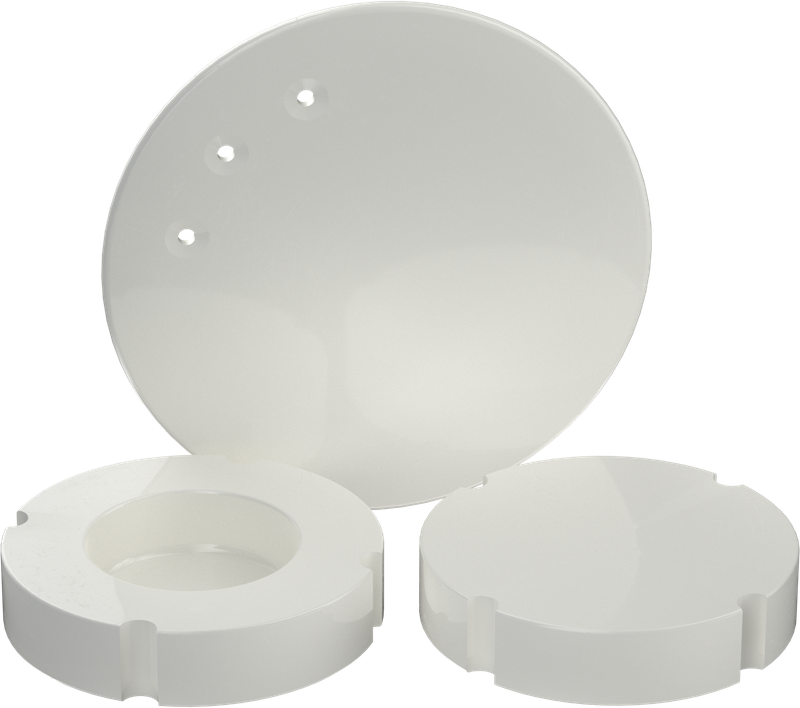 Ceramic pressure sensor
Sensors
Cctc
Ceramic parts for pressure sensors.
Related Articles
The ElFys PD25s series photodetectors adopt ElFys‑patented Black Silicon Induced Junction technology, delivering excellent spectral response spanning deep‑ultraviolet, visible and near‑infrared bands for diverse high‑precision photometry applications. Sub‑variants including H, M, HG and MG are optimised for low‑capacitance, low‑dark‑current and high‑reverse‑bias guard‑ring operations respectively. Multiple packaging configurations are available to satisfy various system‑design requirements.
Fomoptic delivers integrated one‑stop optical solutions covering precision optical fabrication and custom vacuum coating services. Supported by complete processing production lines, comprehensive metrology equipment and experienced engineering team, we provide full‑chain customized components, ranging from blank shaping, ultra‑precision polishing to thin‑film coating, for laser systems, infrared imaging, industrial optics and scientific‑research projects.
Wuhan Optical Valley Interlink Technology Co., Ltd. was founded in 2013 by a technical team from Huazhong University of Science and Technology.
For semiconductor, coating and laboratory vacuum chambers, thermal conductivity gauges suffer large measurement errors caused by gas type and ambient temperature.
Loading...
Name
Phone
Organization
Use Case

Database Platform