

Red Transmitting Green Reflecting +AR Dichroic Mirror
Red Transmitting Green Reflecting +AR Dichroic Mirror is A high-performance optical spectrometer. / Photocolumn 。 It uses multilayered film interferometry. , Efficiently transceiving red light and reflecting green light , Accurate Wavelength Separation , Additional Antireflection Coating I've further refined my performance. , Maximum Limited increase in red light permeability and decrease in harmful dispersive reflections 。 The core advantage is efficiency. 、 Low absorption 、 High Damage Threshold And steep. Cutoff Side , It's a light-light. 、 Fluent cell technique 、 Laser Key optical components indispensable in fields such as technology 。 Additional feature : Antireflection Coating (Anti-ReflectionCoating-ARCoating) 1. Principles of operation : is. Optical Component Surface coated with one or more thin film , Use film interference to reduce specific Wavelength Non-expected reflections of the range light on the surface 。 2. Dichroic Mirror It has multi-layered structure. , But to optimize it , Usually on the surface of their non-working. ( That's not true. is The side that is mainly used to reflect or to see. ) Plating AR Membrane 。 Main purpose : The light is down on the trans-radio path. ( That's red light through. Optical Element Time ) Or surface reflection loss on non-target reflector path 。 Effects : “ Red Transmitting Green Reflecting +AR Dichroic Mirror ” and advantages of the 2. Low absorption : & Based Dye Absorption type Optical Filter Different. , Dichroic Mirror It's mostly the light that's not needed for the reflection of the intervention principle. , Without is Take it. 。 Which means... : Small heat. : Especially suitable for use High Power Light Source ( Like Laser ) Application , Avoiding damage to components or reduced performance due to absorption of heat 。 3. High Damage Threshold : Because of the low absorption properties , It can withstand higher light density. 。 4. Steep Transition Edge : High quality. Dichroic Mirror It can be at the intersection of red and green. Wavelength It's a very steep ejection. / Reflectance Change Curve , Achieving more precise Wavelength Separation 。 5.AR Increased effect of the film : Reduce the dispersing light : Reduce non-working reflections , It helps to contain background noise. , Increase the noise ratio to image or detect 。 Improving system efficiency : Overall ,AR The film makes the energy of the spectrometer more efficient. 。
 Save to Favorites
Overview
Specifications
| Parameter | Value |
|---|---|
| For the passage through the red light. | AR The film has significantly reduced the red light entering and leaving. Optical Element Glass Surface reflection wear and tear at base plate , And it's increasing the overall penetration of red light. 。 |
| For the channel that reflects the green light | AR The film is usually plating in Optical Element The back ( Relative to reflect face ), This is for the green light reflection. Yes “ Non-working ” Noodles. 。AR The film can reduce the incidence on this back. 、 Reaction to green light None The dispersive reflections. , It helps improve the system's contrast and the noise ratio 。 |
| 1. Efficient Spectrometry | Here. Yes Its core values 。 It can efficiently separate the red and green elements from the light in the beam. ( Transradio and reflective paths ) Medium 。 The red light is very efficient. , The reflection of green light is highly efficient. 。 |
| Spectra Pure | The red-light bands that see through are usually purer. , Spills ( Special Yes Green Light ) It's better to keep it down. 。 |
| Maximum Red light. | AR The film significantly reduced the loss of light on the trans-radio path. , And it's a little bit more red light energy. 。 |
| Material | Optical Glass |
Applications
Datasheet
Please provide your email to download the datasheet.
Invalid email format. Please try again.
Supplier Information
Related Products
-
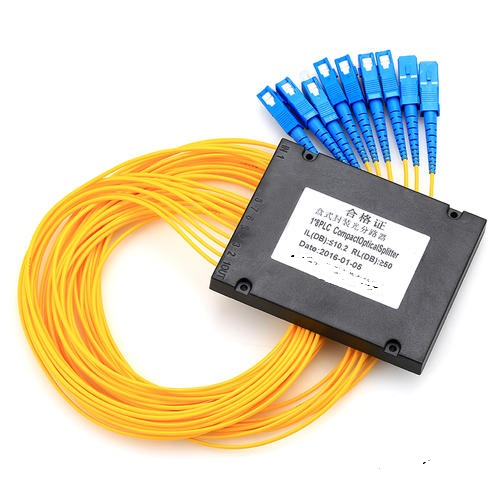 2XN PLC Optical Splitter 2X2
AR/VR
Prevail-catv
Operating Wavelength: 1260-1650nm Fiber Type: Single-Mode (G652, G657) Optical Cable Type: Ø0.9 Loose Tube, Ø3 Optical Cable
Quartz-Substrate PLC Integrated-Waveguide Splitter,Small/Broad Wavelengths/Reliable/Uniform,Links Local/Terminal EPON/BPON/GPON Equipment and Splits Signals.
-
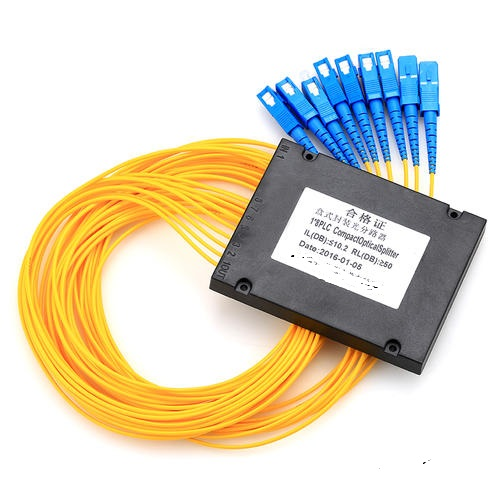 2XN PLC Optical Splitter 2X4
AR/VR
Prevail-catv
Operating Wavelength: 1260-1650nm Fiber Type: Single-Mode (G652, G657) Optical Cable Type: Ø0.9 Loose Tube, Ø3 Optical Cable
Quartz-Substrate PLC Integrated-Waveguide Splitter,Small/Broad Wavelengths/Reliable/Uniform,Links Local/Terminal EPON/BPON/GPON Equipment and Splits Signals.
-
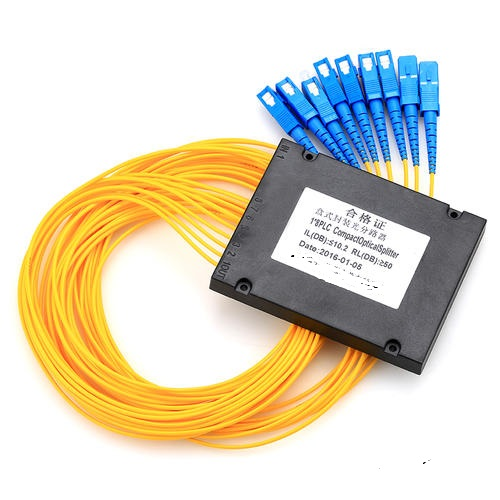 2XN PLC Optical Splitter 2X8
AR/VR
Prevail-catv
Operating Wavelength: 1260-1650nm Fiber Type: Single-Mode (G652, G657) Optical Cable Type: Ø0.9 Loose Tube, Ø3 Optical Cable
Quartz-Substrate PLC Integrated-Waveguide Splitter,Small/Broad Wavelengths/Reliable/Uniform,Links Local/Terminal EPON/BPON/GPON Equipment and Splits Signals.
-
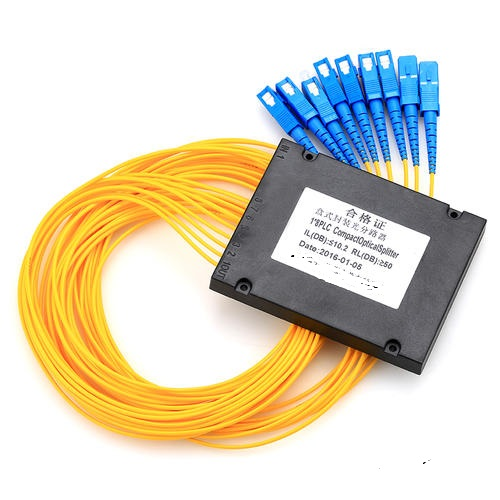 2XN PLC Optical Splitter 2X32
AR/VR
Prevail-catv
Operating Wavelength: 1260-1650nm Fiber Type: Single-Mode (G652, G657) Optical Cable Type: Ø0.9 Loose Tube, Ø3 Optical Cable
Quartz-Substrate PLC Integrated-Waveguide Splitter,Small/Broad Wavelengths/Reliable/Uniform,Links Local/Terminal EPON/BPON/GPON Equipment and Splits Signals.
-
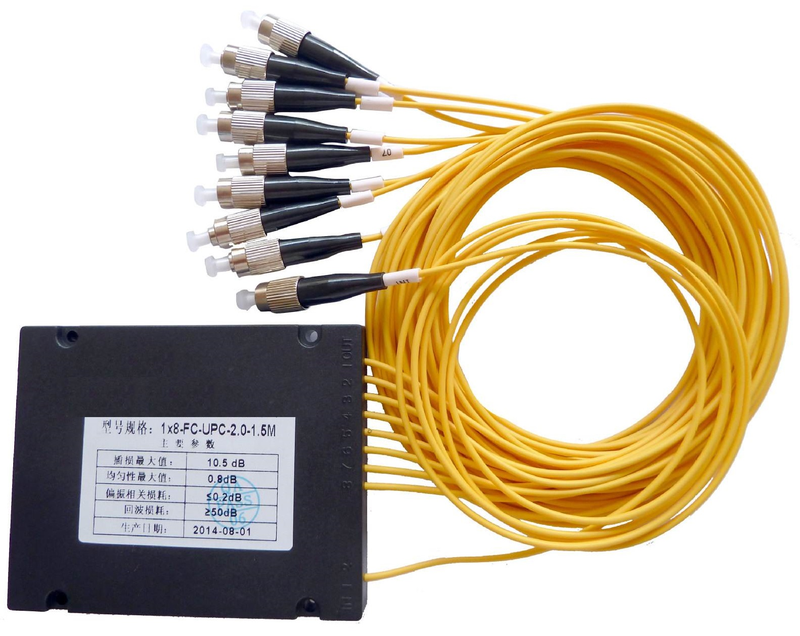 1XN PLC Optical Splitter 1X128
AR/VR
Prevail-catv
Operating Wavelength: 1260-1650nm Fiber Type: Single-Mode (G652, G657) Optical Cable Type: Ø0.9 Loose Tube, Ø3 Optical Cable
Quartz-Substrate PLC Integrated-Waveguide Splitter,Small/Broad Wavelengths/Reliable/Uniform,Links Local/Terminal EPON/BPON/GPON Equipment and Splits Signals.
Related Articles
As a core precision optical component for wavelength screening, frequency locking and spectral demodulation, optical etalons are widely used in high-end scientific research and precision laser equipment.
Shanghai Connet Laser Technology Co., Ltd. focuses on technological innovation, delivering cutting-edge photonic products & solutions for industrial lasers, LiDAR, fiber optic sensing, coherent telecom, cold atom physics and precision spectroscopy research & mass manufacturing.
A solid-state laser is one of the most common and reliable laser types used in modern industry, medical equipment, and scientific research. Unlike gas or fiber lasers, it uses solid materials as its gain medium to generate stable, high-brightness laser beams. Thanks to its high precision, long lifespan, and compact structure, solid-state lasers have become a mainstream solution for high-precision laser processing and optical systems.
Driven by worldwide energy‑structure transformation, the lithium‑ion battery industry is expanding rapidly as green, high‑efficiency energy‑storage devices gain surging global market demand. With years‑long dedication to intelligent manufacturing, Han’s Laser Lithium‑battery Intelligent Equipment has accumulated solid R&D strength and rich practical experience. By integrating multiple cutting‑edge technologies, the company delivers high‑efficiency, eco‑friendly and sustainable lithium‑ion battery production lines, bringing revolutionary upgrades to the new‑energy battery sector.
Loading...
Name
Phone
Organization
Use Case

Database Platform