
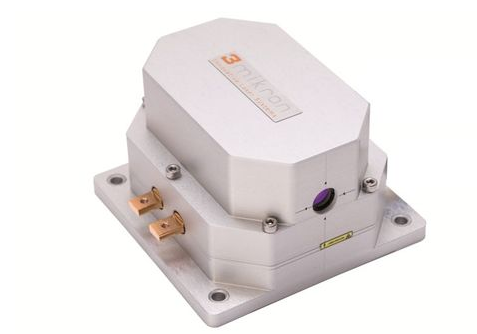
2020nm Laser DPM-25 (Tm:YAG)
 Save to Favorites
Specifications
| Parameter | Value |
|---|---|
| Wavelength [Average Power =25/20W] | 2020nm |
| Average Power [Average Power =25/20W] | 25/20W |
| Pulse Energy ( Maximum @100Hz) [Average Power =25/20W;@100Hz; Maximum @100Hz;@100Hz)] | 250/200mJ |
| Frequency [Average Power =25/20W] | 500Hz |
| Pulse Width [Average Power =25/20W] | 100~500μs |
| Average current ( Maximum ) [Average Power =25/20W] | 8A |
| Run Mode [Average Power =25/20W] | Pulse |
| Beam Mass [Average Power =25/20W] | M²<20 |
| Optical Efficiency [Average Power =25/20W] | >15% |
| Split angles ( Half angle ) [Average Power =25/20W] | <20mrad |
| Beam Diameter [Average Power =25/20W] | 1.6mm |
| Beam Shape ( Focus ) [Average Power =25/20W] | Near-Perimeter Light |
Datasheet
Please provide your email to download the datasheet.
Invalid email format. Please try again.
Supplier Information
Related Products
-
Fiber for Helium-Neon Laser Therapy System SMA-UVHN-01 Laser Modules & Systems Fiberock
Optical fiber material: UV silica fiber Connector Type: SMA905/FC/custom Fiber core count: Single-core
Neon laser therapy instruments (Helium-Neon, He-Ne, laser devices) were among the early lasers used therapeutically and are known for their Low-Level Laser Therapy (LLLT) effects on tissue. He-Ne lasers mainly emit red light at 632.8 nanometers, beneficial for certain tissue treatments such as wound healing, inflammation reduction, pain relief, and cellular repair. In medical applications, specially designed high-quality medical fibers often deliver He-Ne light to target body areas without significant power loss. Fibers allow flexible application throughout the body regardless of the laser's position. 1. Compatibility: the fiber input must match the laser-emitting equipment interface. 2. Transmission loss: losses should be minimized to deliver sufficient energy to the treatment area. 3. Flexibility and durability: fibers should accommodate different clinical situations and conditions. 4. Safety: accurate beam delivery and prevention of leakage protect patients and healthcare personnel. 5. Beam quality: fibers must maintain beam quality during transmission to avoid reduced effectiveness from defocusing or mode mismatch. He-Ne lasers have gradually been replaced by other lasers, such as high-power semiconductor lasers, which are generally more compact, efficient, and inexpensive to maintain. Nevertheless, He-Ne lasers retain a distinctive role in low-level laser therapy for certain treatments.
-
Fiber for Helium-Neon Laser Therapy System SMA-UVHN-02 Laser Modules & Systems Fiberock
Optical fiber material: UV silica fiber Connector Type: SMA905/FC/custom Fiber core count: Multicore
Neon laser therapy instruments (Helium-Neon, He-Ne, laser devices) were among the early lasers used therapeutically and are known for their Low-Level Laser Therapy (LLLT) effects on tissue. He-Ne lasers mainly emit red light at 632.8 nanometers, beneficial for certain tissue treatments such as wound healing, inflammation reduction, pain relief, and cellular repair. In medical applications, specially designed high-quality medical fibers often deliver He-Ne light to target body areas without significant power loss. Fibers allow flexible application throughout the body regardless of the laser's position. 1. Compatibility: the fiber input must match the laser-emitting equipment interface. 2. Transmission loss: losses should be minimized to deliver sufficient energy to the treatment area. 3. Flexibility and durability: fibers should accommodate different clinical situations and conditions. 4. Safety: accurate beam delivery and prevention of leakage protect patients and healthcare personnel. 5. Beam quality: fibers must maintain beam quality during transmission to avoid reduced effectiveness from defocusing or mode mismatch. He-Ne lasers have gradually been replaced by other lasers, such as high-power semiconductor lasers, which are generally more compact, efficient, and inexpensive to maintain. Nevertheless, He-Ne lasers retain a distinctive role in low-level laser therapy for certain treatments.
-
Fiber for Helium-Neon Laser Therapy System SMA-DUVHN-01 Laser Modules & Systems Fiberock
Optical fiber material: UV-Resistant Silica Fiber Connector Type: SMA905/FC/custom Fiber core count: Single-core
Neon laser therapy instruments (Helium-Neon, He-Ne, laser devices) were among the early lasers used therapeutically and are known for their Low-Level Laser Therapy (LLLT) effects on tissue. He-Ne lasers mainly emit red light at 632.8 nanometers, beneficial for certain tissue treatments such as wound healing, inflammation reduction, pain relief, and cellular repair. In medical applications, specially designed high-quality medical fibers often deliver He-Ne light to target body areas without significant power loss. Fibers allow flexible application throughout the body regardless of the laser's position. 1. Compatibility: the fiber input must match the laser-emitting equipment interface. 2. Transmission loss: losses should be minimized to deliver sufficient energy to the treatment area. 3. Flexibility and durability: fibers should accommodate different clinical situations and conditions. 4. Safety: accurate beam delivery and prevention of leakage protect patients and healthcare personnel. 5. Beam quality: fibers must maintain beam quality during transmission to avoid reduced effectiveness from defocusing or mode mismatch. He-Ne lasers have gradually been replaced by other lasers, such as high-power semiconductor lasers, which are generally more compact, efficient, and inexpensive to maintain. Nevertheless, He-Ne lasers retain a distinctive role in low-level laser therapy for certain treatments.
-
Fiber for Helium-Neon Laser Therapy System SMA-DUVHN02 Laser Modules & Systems Fiberock
Optical fiber material: UV-Resistant Silica Fiber Connector Type: SMA905/FC/custom Fiber core count: Multicore
Neon laser therapy instruments (Helium-Neon, He-Ne, laser devices) were among the early lasers used therapeutically and are known for their Low-Level Laser Therapy (LLLT) effects on tissue. He-Ne lasers mainly emit red light at 632.8 nanometers, beneficial for certain tissue treatments such as wound healing, inflammation reduction, pain relief, and cellular repair. In medical applications, specially designed high-quality medical fibers often deliver He-Ne light to target body areas without significant power loss. Fibers allow flexible application throughout the body regardless of the laser's position. 1. Compatibility: the fiber input must match the laser-emitting equipment interface. 2. Transmission loss: losses should be minimized to deliver sufficient energy to the treatment area. 3. Flexibility and durability: fibers should accommodate different clinical situations and conditions. 4. Safety: accurate beam delivery and prevention of leakage protect patients and healthcare personnel. 5. Beam quality: fibers must maintain beam quality during transmission to avoid reduced effectiveness from defocusing or mode mismatch. He-Ne lasers have gradually been replaced by other lasers, such as high-power semiconductor lasers, which are generally more compact, efficient, and inexpensive to maintain. Nevertheless, He-Ne lasers retain a distinctive role in low-level laser therapy for certain treatments.
-
Fiber for Helium-Neon Laser Therapy System SMA-IRHN-01 Laser Modules & Systems Fiberock
Optical fiber material: Infrared silica fiber Connector Type: SMA905/FC/custom Fiber core count: Single-core
Neon laser therapy instruments (Helium-Neon, He-Ne, laser devices) were among the early lasers used therapeutically and are known for their Low-Level Laser Therapy (LLLT) effects on tissue. He-Ne lasers mainly emit red light at 632.8 nanometers, beneficial for certain tissue treatments such as wound healing, inflammation reduction, pain relief, and cellular repair. In medical applications, specially designed high-quality medical fibers often deliver He-Ne light to target body areas without significant power loss. Fibers allow flexible application throughout the body regardless of the laser's position. 1. Compatibility: the fiber input must match the laser-emitting equipment interface. 2. Transmission loss: losses should be minimized to deliver sufficient energy to the treatment area. 3. Flexibility and durability: fibers should accommodate different clinical situations and conditions. 4. Safety: accurate beam delivery and prevention of leakage protect patients and healthcare personnel. 5. Beam quality: fibers must maintain beam quality during transmission to avoid reduced effectiveness from defocusing or mode mismatch. He-Ne lasers have gradually been replaced by other lasers, such as high-power semiconductor lasers, which are generally more compact, efficient, and inexpensive to maintain. Nevertheless, He-Ne lasers retain a distinctive role in low-level laser therapy for certain treatments.
Related Articles
The LZFL405‑80mW‑3 series from Shenzhen Leirte Optoelectronics Co., Ltd. is a coaxial‑packaged violet‑blue single‑mode fiber‑coupled laser diode. It delivers 80 mW continuous‑wave output at 405 nm. Light is coupled into 3 μm core‑diameter single‑mode fiber for clean beam quality and easy integration into diverse optical systems. It serves as a compact violet‑blue light source for medical instruments and industrial printing applications.
Macro channel water-cooled stacked laser diodes integrate dozens of laser bars into one vertical stacked module with large-diameter macro flow cooling channels.
CytoViva delivers comprehensive hyperspectral imaging solutions covering visible to near-infrared spectrum, compatible with brightfield, fluorescence and proprietary enhanced darkfield microscopy modes.
Electro-optic deflectors (EODs) are optical devices used to steer or deflect light beams by applying an electric field to a specialized optical crystal. Unlike mechanical beam steering systems that rely on moving mirrors, electro-optic deflectors enable high-speed, non-mechanical beam control with exceptional precision and responsiveness. They are widely used in laser scanning, optical communications, microscopy, laser printing, spectroscopy, and scientific research, where rapid and accurate laser beam positioning is essential.
Loading...
Name
Phone
Organization
Use Case

Database Platform