
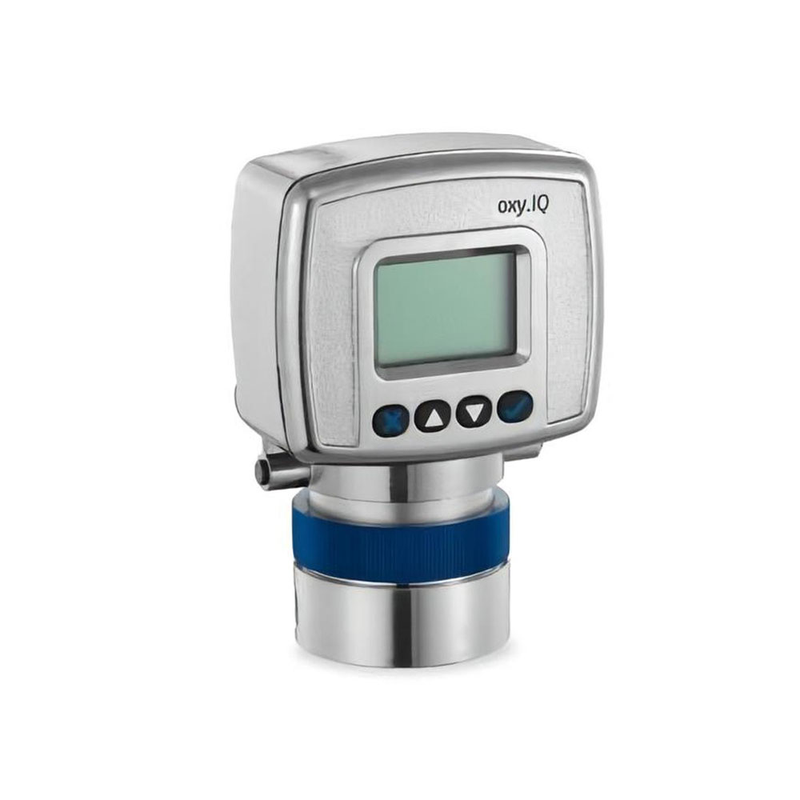
GE oxy.IQ Oxygen Analyzer/GE oxy.IQ™ Oxygen Transmitter
The oxy.IQ is a highly reliable and cost-effective two-wire, loop-powered transmitter with a linearized 4 to 20 mA output. It measures oxygen in ten ppm ranges and six percentage ranges. All ranges are user-selectable. This compact transmitter uses proven sensor technology to accurately measure O2 in a variety of gases, even in hazardous environments. The oxy.IQ's oxygen sensor is an advanced galvanic fuel cell that provides superior performance, accuracy, stability and long life. The cell's innovative design eliminates the potential for negative signal output, reduces sources of contamination. The cell is unaffected by other background gases or hydrocarbons and is compatible with acid gases (OX-2 and OX-4 cells). Recovery from air at low ppm levels takes just a few minutes. Because the cell is self-contained, minimal maintenance is required. There is no electrolyte to change or electrodes to clean. When equipped with optional zener barriers or a galvanic isolator, the oxy.IQ can be mounted in a hazardous (classified) location. The rugged oxy.IQ is controlled by a microprocessor that enables the user to select the range, trim outputs and perform calibration. Improved user interface includes user-selectable and programmable ranges, sensor diagnostics including a sensor lifetime feature and sensor raw signal, low reading/sensor failure signal and temperature compensation. Programming is easily done using the keypad and display. These keypad buttons allow complete functionality in hazardous areas when equipped with a zener barrier or a galvanic isolator per drawing 752-347. The compact oxy.IQ, with its built-in microprocessor, is designed to fit easily into any installation site. The oxy.IQ can be installed right at the sampling point, whereas other transmitters must be rack or panel mounted.
 Save to Favorites
Overview
Specifications
| Parameter | Value |
|---|---|
| Power requirements [Intrinsically safe (IS) installation;requires a zener barrier, one IS cable and one non-IS cable;oxy.IQ] | 24 to 28 VDC at 50 mA |
| Cable [Intrinsically safe (IS) installation;oxy.IQ] | PN 704-1318: blue jacket, twisted pair with connector; 26 AWG; 2 or 10 m length |
| Output load [Intrinsically safe (IS) installation;when using zener barrier;oxy.IQ] | 250 Ω ±5% |
| Power requirements [Flamepoof installation;ATEX or IECEX locations;oxy.IQ] | 24 to 28 VDC at 50 mA |
| Cable [Flamepoof installation;ATEX or IECEX locations;oxy.IQ] | PN 704-1317: black jacket, twisted pair with connector; 26 AWG; 2 or 10 m length |
| Process wetted materials [All installations;oxy.IQ] | SS process unit: 316 stainless steel, Viton® O-ring, gold plated sensor electrical contacts and glass (Chemraz O-Ring Option) |
| User-selectable measurement range [All installations;PPM sensors;OX-1 or OX-2 only;oxy.IQ] | 0 to 10 ppmv O2 |
| User-selectable measurement range [All installations;PPM sensors;OX-1 or OX-2 only;oxy.IQ] | 0 to 20 ppmv O2 |
| User-selectable measurement range [All installations;PPM sensors;OX-1 or OX-2 only;oxy.IQ] | 0 to 50 ppmv O2 |
| User-selectable measurement range [All installations;PPM sensors;oxy.IQ] | 0 to 100 ppmv O2 |
| User-selectable measurement range [All installations;PPM sensors;oxy.IQ] | 0 to 200 ppmv O2 |
| User-selectable measurement range [All installations;PPM sensors;oxy.IQ] | 0 to 500 ppmv O2 |
| User-selectable measurement range [All installations;PPM sensors;oxy.IQ] | 0 to 1,000 ppmv O2 |
| User-selectable measurement range [All installations;PPM sensors;oxy.IQ] | 0 to 2,000 ppmv O2 |
| User-selectable measurement range [All installations;PPM sensors;oxy.IQ] | 0 to 5,000 ppmv O2 |
| User-selectable measurement range [All installations;PPM sensors;oxy.IQ] | 0 to 10,000 ppmv O2 |
| User-selectable measurement range [All installations;Percent sensors;oxy.IQ] | 0% to 1% O2 |
| User-selectable measurement range [All installations;Percent sensors;oxy.IQ] | 0% to 2% O2 |
| User-selectable measurement range [All installations;Percent sensors;oxy.IQ] | 0% to 5% O2 |
| User-selectable measurement range [All installations;Percent sensors;oxy.IQ] | 0% to 10% O2 |
| User-selectable measurement range [All installations;Percent sensors;oxy.IQ] | 0% to 25% O2 |
| User-selectable measurement range [All installations;Percent sensors;oxy.IQ] | 0% to 50% O2 |
| Accuracy [All installations;at calibration point;specific 0 to 10 ppmv case separately stated;oxy.IQ] | ±1% of range |
| Accuracy [All installations;at the calibration point;0 to 10 ppmv range;OX-1 or OX-2 only;oxy.IQ] | ±2% of range |
| Repeatability [All installations;specific 0 to 10 ppmv case separately stated;oxy.IQ] | ±1% of range |
| Repeatability [All installations;0 to 10 ppmv range;OX-1, 2 only;oxy.IQ] | ±2% of Range |
| Resolution [All installations;oxy.IQ] | ±0.1% of range |
| Linearity [All installations;OX-1, 2, 3, 5;oxy.IQ] | ±2% of range |
| Linearity [All installations;OX-4;oxy.IQ] | ±5% of range |
| O2 sensor operating temperature [All installations;oxy.IQ] | 32 to 113°F (0 to 45°C) |
| Sample pressure [All installations;during operation and calibration;oxy.IQ] | Vented to atmosphere |
| Atmospheric pressure effect [All installations;directly proportional to absolute pressure;During calibration, pressure and flow must be kept constant;oxy.IQ] | ±0.13% of reading per mmHg |
| Process connection [All installations;oxy.IQ] | 1/8 in. NPT inlet and outlet |
| Dimensions [All installations;page 3 specifications paragraph, not dimensions taken from mechanical drawing;oxy.IQ] | 4.10 x 2.75 x 2.05 in. (104.1 x 69.9 x 52.1 mm) |
| Weight [All installations;oxy.IQ] | 1.35 lb (612 grams) |
| Sample flow rate [All installations;recommended for process units;oxy.IQ] | 1.0 SCFH (500 cc/min) |
| Electrical classification/certification [Intrinsically safe;USA/Canada;oxy.IQ] | IS for Class I, Div 1, Groups ABCD, T4 |
| Electrical classification/certification [Intrinsically safe;ATEX and IECEx;oxy.IQ] | Ex ia IIC Ga T4 Tamb -20 to 60°C |
| Electrical classification/certification [IS package, non-incendive without use of Zener barrier or galvanic isolator;USA/Canada;oxy.IQ] | Class 1, Div 2, Groups A, B, C, D; T4 |
| Electrical classification/certification [Flame proof package;oxy.IQ] | ATEX/IECEX Ex d IIC T4 IP66 |
| European compliance [All installations;oxy.IQ] | Complies with EMC directive 2014/30/EU |
| Oxygen sensor interference gases — H2S [OX-1 and OX-5, ppm;Continuous;oxy.IQ] | <5 ppm |
| Oxygen sensor interference gases — H2S [OX-2, ppm;Continuous;oxy.IQ] | <10 ppm |
| Oxygen sensor interference gases — H2S [OX-3, %;Continuous;oxy.IQ] | 0.0005 % |
| Oxygen sensor interference gases — H2S [OX-3, %;Intermittent;Recommended maximum exposure 30 minutes followed by flushing with ambient air for equal period;oxy.IQ] | 0.01 % |
| Oxygen sensor interference gases — H2S [OX-4, %;Continuous;oxy.IQ] | 0.001 % |
| Oxygen sensor interference gases — H2S [OX-4, %;Intermittent;Recommended maximum exposure 30 minutes followed by flushing with ambient air for equal period;oxy.IQ] | 0.1 % |
| Oxygen sensor interference gases — SO3 [OX-1 and OX-5, ppm;Continuous;oxy.IQ] | <10 ppm |
| Oxygen sensor interference gases — SO3 [OX-2, ppm;Continuous;oxy.IQ] | <10 ppm |
| Oxygen sensor interference gases — SO3 [OX-3, %;Continuous;oxy.IQ] | 0.01 % |
| Oxygen sensor interference gases — SO3 [OX-3, %;Intermittent;Recommended maximum exposure 30 minutes followed by flushing with ambient air for equal period;oxy.IQ] | 0.1 % |
| Oxygen sensor interference gases — SO3 [OX-4, %;Continuous;oxy.IQ] | 0.01 % |
| Oxygen sensor interference gases — SO3 [OX-4, %;Intermittent;Recommended maximum exposure 30 minutes followed by flushing with ambient air for equal period;oxy.IQ] | 0.1 % |
| Oxygen sensor interference gases — SO2 [OX-1 and OX-5, ppm;Continuous;oxy.IQ] | <10 ppm |
| Oxygen sensor interference gases — SO2 [OX-2, ppm;Continuous;oxy.IQ] | Minimal effect on sensor performance |
| Oxygen sensor interference gases — SO2 [OX-3, %;Continuous;oxy.IQ] | 0.01 % |
| Oxygen sensor interference gases — SO2 [OX-3, %;Intermittent;Recommended maximum exposure 30 minutes followed by flushing with ambient air for equal period;oxy.IQ] | 0.1 % |
| Oxygen sensor interference gases — SO2 [OX-4, %;Continuous;oxy.IQ] | Minimal effect on sensor performance |
| Oxygen sensor interference gases — SO2 [OX-4, %;Intermittent;Recommended maximum exposure 30 minutes followed by flushing with ambient air for equal period;oxy.IQ] | Minimal effect on sensor performance |
| Oxygen sensor interference gases — HCI [OX-1 and OX-5, ppm;Continuous;oxy.IQ] | <1000 ppm |
| Oxygen sensor interference gases — HCI [OX-2, ppm;Continuous;oxy.IQ] | Minimal effect on sensor performance |
| Oxygen sensor interference gases — HCI [OX-3, %;Continuous;oxy.IQ] | 0.1 % |
| Oxygen sensor interference gases — HCI [OX-3, %;Intermittent;Recommended maximum exposure 30 minutes followed by flushing with ambient air for equal period;oxy.IQ] | 1.0 % |
| Oxygen sensor interference gases — HCI [OX-4, %;Continuous;oxy.IQ] | Minimal effect on sensor performance |
| Oxygen sensor interference gases — HCI [OX-4, %;Intermittent;Recommended maximum exposure 30 minutes followed by flushing with ambient air for equal period;oxy.IQ] | Minimal effect on sensor performance |
| Oxygen sensor interference gases — HCN [OX-1 and OX-5, ppm;Continuous;oxy.IQ] | <1000 ppm |
| Oxygen sensor interference gases — HCN [OX-2, ppm;Continuous;oxy.IQ] | Minimal effect on sensor performance |
| Oxygen sensor interference gases — HCN [OX-3, %;Continuous;oxy.IQ] | 0.1 % |
| Oxygen sensor interference gases — HCN [OX-3, %;Intermittent;Recommended maximum exposure 30 minutes followed by flushing with ambient air for equal period;oxy.IQ] | 1.0 % |
| Oxygen sensor interference gases — HCN [OX-4, %;Continuous;oxy.IQ] | Minimal effect on sensor performance |
| Oxygen sensor interference gases — HCN [OX-4, %;Intermittent;Recommended maximum exposure 30 minutes followed by flushing with ambient air for equal period;oxy.IQ] | Minimal effect on sensor performance |
| Oxygen sensor interference gases — CO2 [OX-1 and OX-5, ppm;Continuous;oxy.IQ] | <5000 ppm |
| Oxygen sensor interference gases — CO2 [OX-2, ppm;Continuous;oxy.IQ] | Minimal effect on sensor performance |
| Oxygen sensor interference gases — CO2 [OX-3, %;Continuous;oxy.IQ] | 0.1 % |
| Oxygen sensor interference gases — CO2 [OX-3, %;Intermittent;Recommended maximum exposure 30 minutes followed by flushing with ambient air for equal period;oxy.IQ] | 20 % |
| Oxygen sensor interference gases — CO2 [OX-4, %;Continuous;oxy.IQ] | Minimal effect on sensor performance |
| Oxygen sensor interference gases — CO2 [OX-4, %;Intermittent;Recommended maximum exposure 30 minutes followed by flushing with ambient air for equal period;oxy.IQ] | Minimal effect on sensor performance |
| Oxygen sensor interference gases — NO2 [OX-1 and OX-5, ppm;Continuous;oxy.IQ] | Minimal effect on sensor performance, but produces signal interference of 1:2 ratio, ppm levels only. For example, 100 ppm NO2 looks like 200 ppm O2 |
| Oxygen sensor interference gases — NO2 [OX-2, ppm;Continuous;oxy.IQ] | Minimal effect on sensor performance, but produces signal interference of 1:2 ratio, ppm levels only. For example, 100 ppm NO2 looks like 200 ppm O2 |
| Oxygen sensor interference gases — NO2 [OX-3, %;Continuous;oxy.IQ] | Minimal effect on sensor performance, but produces signal interference of 1:2 ratio, ppm levels only. For example, 100 ppm NO2 looks like 200 ppm O2 |
| Oxygen sensor interference gases — NO2 [OX-3, %;Intermittent;Recommended maximum exposure 30 minutes followed by flushing with ambient air for equal period;oxy.IQ] | Minimal effect on sensor performance, but produces signal interference of 1:2 ratio, ppm levels only. For example, 100 ppm NO2 looks like 200 ppm O2 |
| Oxygen sensor interference gases — NO2 [OX-4, %;Continuous;oxy.IQ] | Minimal effect on sensor performance, but produces signal interference of 1:2 ratio, ppm levels only. For example, 100 ppm NO2 looks like 200 ppm O2 |
| Oxygen sensor interference gases — NO2 [OX-4, %;Intermittent;Recommended maximum exposure 30 minutes followed by flushing with ambient air for equal period;oxy.IQ] | Minimal effect on sensor performance, but produces signal interference of 1:2 ratio, ppm levels only. For example, 100 ppm NO2 looks like 200 ppm O2 |
Applications
Key Features
Datasheet
Supplier Information
Related Products
-
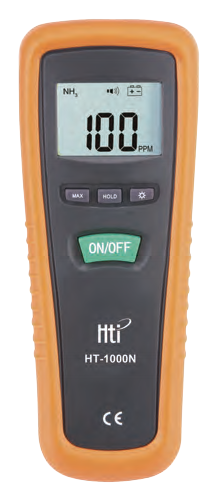 HT-1000N Ammonia Detector
Gas Analysis
Hti-meter
Measurement Range: 0~100 ppm Basic accuracy: ±3%FS Resolution: 1 ppm
The HT-1000N is an instrument specifically for detecting ammonia-gas concentration. It can effectively prevent poisoning and explosion accidents to protect lives and property.
-
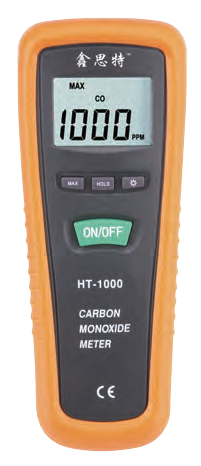 HT-1000/1000H Carbon Monoxide Detector
Gas Analysis
Hti-meter
Carbon-monoxide measurement range: 0~1000 ppm Resolution: 1 ppm Accuracy [Parameter Image]: ±5%/±10ppm
This instrument detects carbon monoxide using a high-precision electrochemical sensor for more accurate measurement. It effectively reduces or prevents poisoning accidents.
-
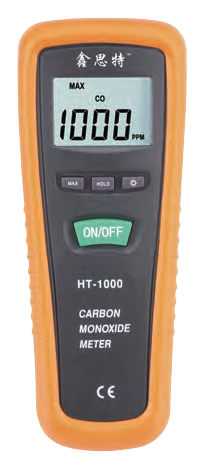 HT-1000/1000H Carbon Monoxide Detector HT-1000H
Gas Analysis
Hti-meter
Carbon-monoxide measurement range: 0~1000 ppm Resolution: 1 ppm Accuracy [Parameter Image]: ±5%/±10ppm
This instrument detects carbon monoxide using a high-precision electrochemical sensor for more accurate measurement. It effectively reduces or prevents poisoning accidents.
-
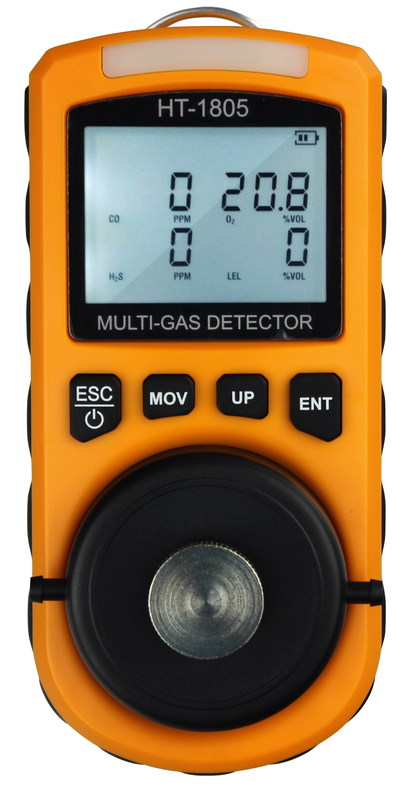 HT-1805 Four-in-One Gas Detector
Gas Analysis
Hti-meter
Measurement Range [Sensor: O₂]: 0~30 % Resolution [Sensor: O₂]: 0.1 % Measurement Range [Sensor: LEL]: 0~100 %
The HT-1805 four-in-one portable gas detector simultaneously detects 1-4 gases using high-sensitivity sensors for fast, accurate response. It can effectively reduce gas-poisoning and explosion accidents.
-
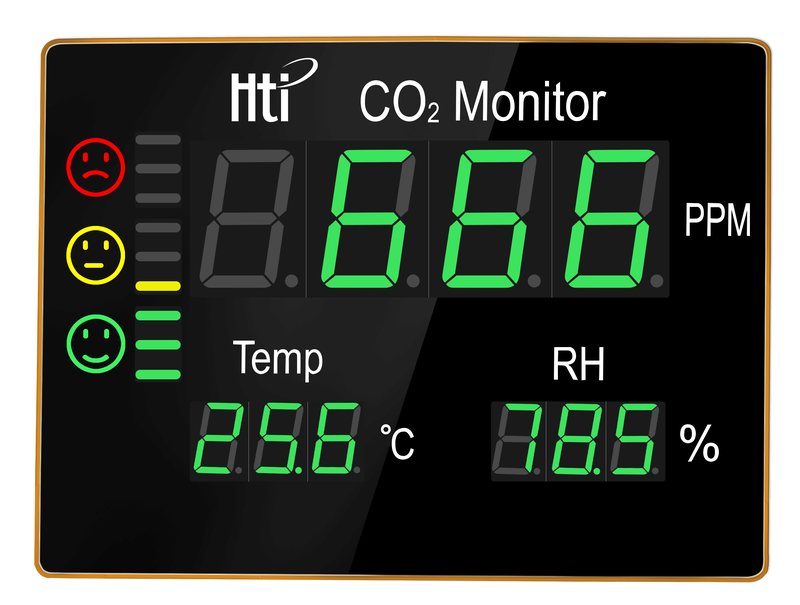 HT-2008 Wall-Mounted Carbon Dioxide Detector
Gas Analysis
Hti-meter
Carbon-dioxide measurement range [PDF]: 0~9999 PPM Carbon-dioxide measurement accuracy [As originally printed in the PDF, without the word 'or']: ±70PPM ±3% of reading Carbon-dioxide accuracy [Parameter Image]: ±70ppm or ±3% of reading
The HT-2008 carbon-dioxide detector records carbon-dioxide concentration, temperature, and humidity in real time and displays them simultaneously on an LCD. It records up to 12700 data sets to support safer living. Powerful functions suit multiple fields.
Related Articles
The ElFys PD25s series photodetectors adopt ElFys‑patented Black Silicon Induced Junction technology, delivering excellent spectral response spanning deep‑ultraviolet, visible and near‑infrared bands for diverse high‑precision photometry applications. Sub‑variants including H, M, HG and MG are optimised for low‑capacitance, low‑dark‑current and high‑reverse‑bias guard‑ring operations respectively. Multiple packaging configurations are available to satisfy various system‑design requirements.
Fomoptic delivers integrated one‑stop optical solutions covering precision optical fabrication and custom vacuum coating services. Supported by complete processing production lines, comprehensive metrology equipment and experienced engineering team, we provide full‑chain customized components, ranging from blank shaping, ultra‑precision polishing to thin‑film coating, for laser systems, infrared imaging, industrial optics and scientific‑research projects.
Wuhan Optical Valley Interlink Technology Co., Ltd. was founded in 2013 by a technical team from Huazhong University of Science and Technology.
For semiconductor, coating and laboratory vacuum chambers, thermal conductivity gauges suffer large measurement errors caused by gas type and ambient temperature.
Loading...
Name
Phone
Organization
Use Case

Database Platform