
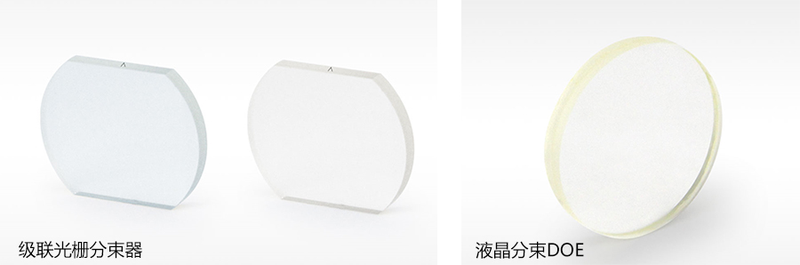
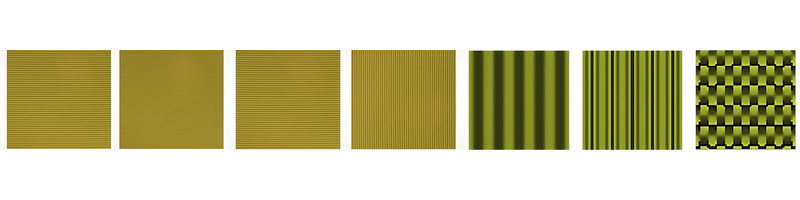
Beam-Splitting DOEs SLB-MLGS25-2202-532
Beam-splitting DOEs use pixel-based periodic phase design, cascaded gratings or a combination to produce one- or two-dimensional splitting into odd or even beam counts. Our range includes multilayer grating beam splitters and liquid-crystal beam splitters. The Multilayer Grating Beam Splitter (MLGS) uses N-BK7 glass and liquid crystal polymer (LCP), with three 1-inch double-trimmed substrates coated with LCP layers containing grating and waveplate structures, forming a single-wavelength device. For linearly polarized input, parallel or perpendicular relative grating-line orientations provide one- or two-dimensional four-beam splitting. The output beams are circularly polarized with different handedness, and splitting angle depends on grating periods. High transmission, optimized phase design and precise retardance control provide higher efficiency and uniformity than typical Dammann grating splitters, with high splitting-angle accuracy. The Liquid Crystal Beam Splitter (LCBS) DOE also uses N-BK7 glass and LCP in a flat sandwich structure for a single wavelength. Diffractive-optics phase design meets the desired splitting pattern, spot spacing or beam-separation angle by distributing energy among diffraction orders. Unlike cascaded grating splitters, the LCBS DOE has no incident-polarization requirement and allows odd beam counts. Compared with Dammann gratings, it has better diffraction efficiency and spot uniformity. Compared with etched DOEs, liquid-crystal DOEs more easily produce multilevel phase changes, improving efficiency with substantially simpler fabrication. High efficiency, uniformity and separation-angle accuracy, low unwanted-order noise and simple fabrication suit parallel laser processing, optical sensing and medical aesthetics, improving processing efficiency and consistency. Standard operating wavelength λ is 532nm or 1064nm. MLGS splitting patterns are 1×4 or 2×2; LCBS patterns are 1×3, 1×9 or 2×3. Flexible customization meets varied application requirements. Parameter definitions: splitting uniformity for the output spot energies is (1-range/sum of extremes)×100 %. Diffraction efficiency is energy in effective output orders divided by all output optical energy. Splitting angle has different definitions for different splitting schemes.
 Save to Favorites
Overview
Specifications
| Parameter | Value |
|---|---|
| Operating Wavelength [Standard Products] | 532 nm,1064 nm |
| Operating Wavelength [Custom] | 400-1700 nm |
| Element Dimensions and Mounting Method [Standard Products] | Ø25.4x2.7 mm, untrimmed/double-side trimmed, compatible with 1-inch optic mounts |
| Input Beam Quality Requirements [Standard Products] | None |
| Input Beam Size [Standard Products] | <Half the Clear Aperture (Recommended) |
| Clear Aperture Dimension [Standard Products] | Ø20 mm,Ø21.5 mm |
| Splitting Pattern [Custom] | 1xm,mxn |
| Splitting Uniformity [Standard products; splitting uniformity for the output spot energies is defined as (1-range/sum of extremes)×100 %] | > 90% |
| Splitting Uniformity [Custom; splitting uniformity for the output spot energies is defined as (1-range/sum of extremes)×100 %] | >90%, Maximum Achievable >97% |
| Splitting Angle [Custom; splitting angle has different definitions for different splitting schemes] | Adjustable with the Selected Focusing Lens |
| Transmittance [Standard Products] | > 96% |
| Transmittance [Custom ;400-450nm] | >85 % |
| Transmittance [Custom ;450-1700 nm] | >96 % |
| Reflectance Ravg [Standard products; 0° angle of incidence] | <0.5% |
| Diffraction Efficiency [Standard products; diffraction efficiency: energy in effective output orders divided by all output optical energy] | >97% |
Key Features
Datasheet
Please provide your email to download the datasheet.
Invalid email format. Please try again.
Supplier Information
Related Products
-
 Photomask
Diffractive Optics
Jzkgd
-
 Photomask
Diffractive Optics
Jzkgd
-
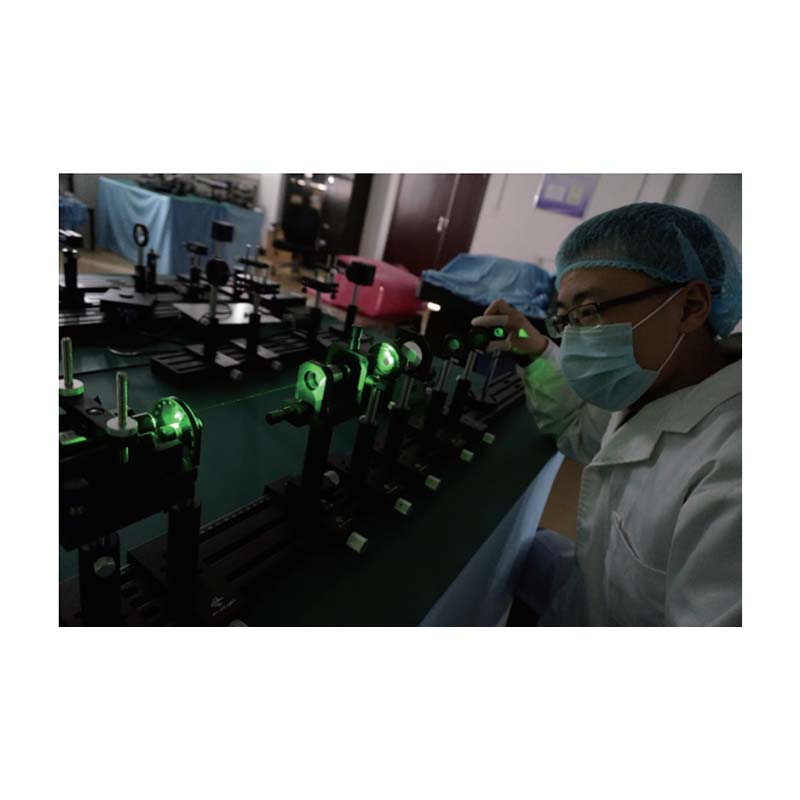 ROT-OT08 Station 8: Beam-Splitting, Polarizing, and Diffractive Optical Component Testing
Diffractive Optics
Yixist
-
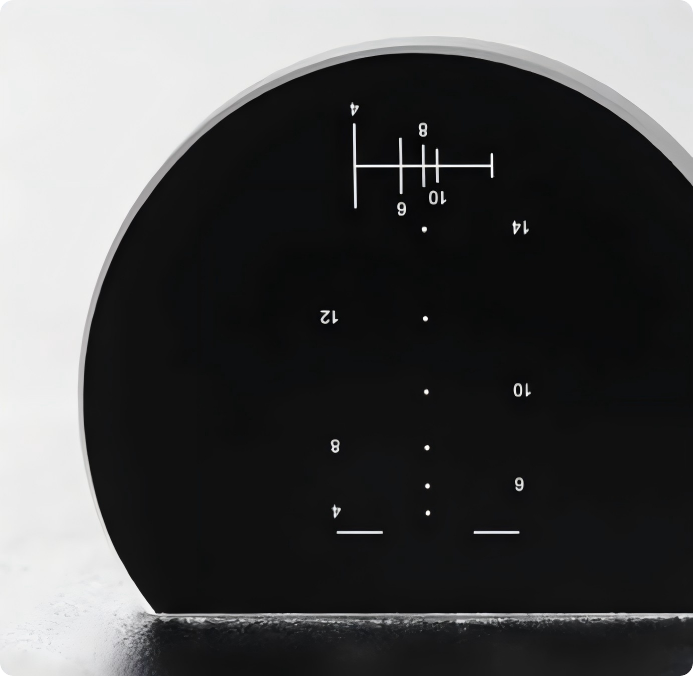 Rulings
Diffractive Optics
Sanhai-optics
Material: Green glass/B270/BK7/quartz Product Performance - Thickness: 0.1~10±0.015mm Product Performance - Appearance Style: 0-10/20-40
-
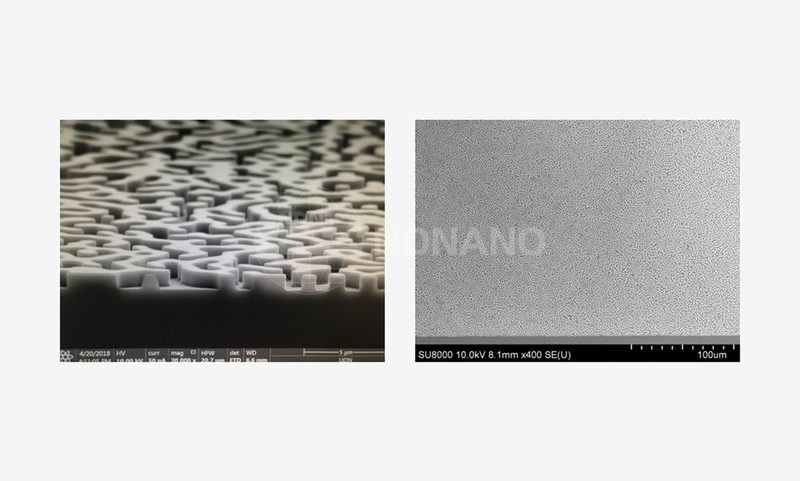 DOE Diffractive Optical Element
Diffractive Optics
Ndnano
Related Articles
An infrared transmitter (IR transmitter) is a basic electronic component that sends invisible infrared light signals for short-range wireless control. It is widely used in daily electronics, smart home devices, and industrial equipment due to its low cost, low power consumption, and stable performance.
The petrochemical industry features continuous high-risk production, where production equipment operates uninterruptedly under extreme working conditions including high temperature, high pressure, strong corrosion and oxidation.
Driven by the rapid upgrading of intelligent vehicles, optoelectronic sensing technologies represented by laser sensing and infrared thermal imaging have become core pillars for high-level autonomous driving and smart cockpit iteration. Leveraging automotive-grade optoelectronic R&D advantages, Pilot Technology Group launches the VITAL intelligent vehicle solution. By integrating high-power VCSEL laser chips and vehicle infrared night-vision thermal imagers, the system comprehensively enhances vehicle environmental perception and realizes safer, smarter and more comfortable driving experiences.
GYOPTICS 30 W collimated isolator is a highly‑reliable passive optical component optimized for 1064 nm high‑power laser systems. Characterized by low insertion loss and superior backward‑light suppression capability, it effectively blocks reflected light traveling back toward the laser resonator, eliminating back‑reflection‑induced instability and protecting fiber or solid‑state laser sources during long‑term operation.
Loading...
Name
Phone
Organization
Use Case

Database Platform