

Other Prisms
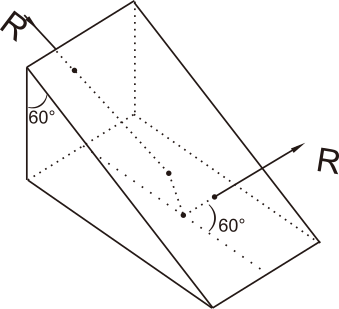
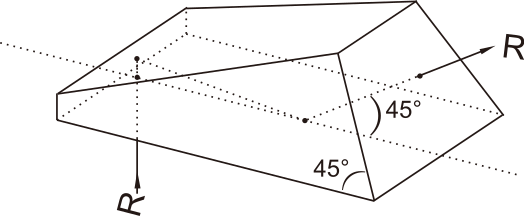
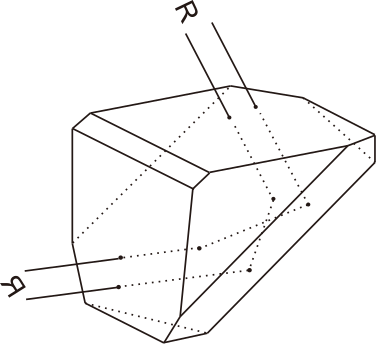
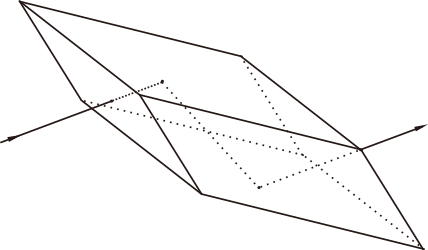
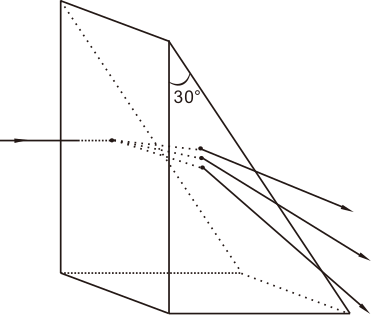
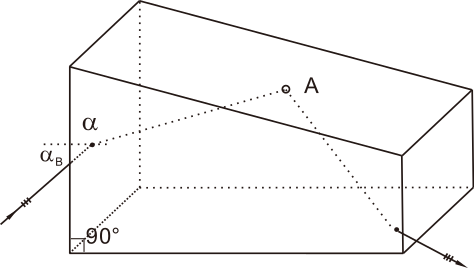
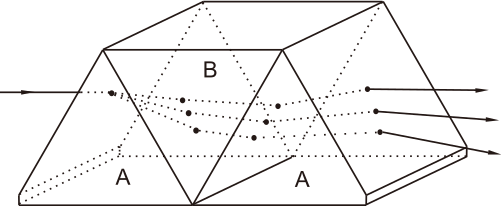
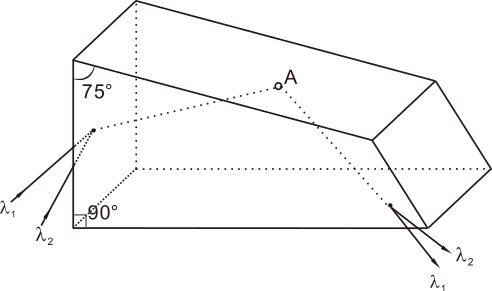
Enlumen can offer different types of prisms. The materials can be optical glasses or fused quartz. 1: The Bauernfeind prism is a type of reflective prism used to deflect the light beam by 45° to 60°, depending on its construction, without flipping or rotating the image. Its inventor was the German geodesy expert Karl Maximilian von Bauernfeind. The light beam is reflected twice in the prism. 2: A AMICI roof prism is generally the collective term for an optical prism that can simply change the direction of light propagation by 90° through reflection. Images that undergo two plane reflections and flips will converge on the optical axis and then flip to the side. 3: The rhomboid prism is an optical prism with a cross-sectional shape of a parallelogram. Its key feature is to change the direction of light propagation through two parallel reflecting surfaces, while maintaining the orientation of the image unchanged. 4: A dispersive prism is an optical component that utilizes the dispersion property of optical materials (i.e., the difference in refractive indices of light of different wavelengths) to decompose composite light into a single-color spectrum. Its core function is to cause the separation of different colors of light at different angles through refraction, forming a spectrum. It is the fundamental component for applications such as spectral analysis and wavelength separation. Enlumen can provide different types of dispersive prisms according to customer requirements.
 Save to Favorites
Overview
Key Features
Datasheet
Please provide your email to download the datasheet.
Invalid email format. Please try again.
Supplier Information
Related Products
-
PBS beamsplitter prism Prisms 100optics
Material [Shared by the standard/high-precision columns; Original cell colspan2]: N-BK7.Fused Silica,N-SF11,or depend on request Clear Aperture [Standard specification]: ≥85 % Dimension Tolerance [Standard specification]: ±0.1 mm
A polarizing beamsplitter separates incident unpolarized light into two orthogonal linearly polarized beams. P-polarized light is fully transmitted, while S-polarized light is reflected at 45 degrees and exits at 90 degrees to the P beam. Made from a pair of cemented high-precision right-angle prisms, with a polarizing beamsplitter dielectric coating on the hypotenuse of one prism.
-
Triangular Prism Prisms 100optics
Material: K9 or ZF glass, etc. Dimensional Tolerance [Two original parallel options without grade distinctions]: ±0.2,±0.1 Surface Quality: 60 / 40
Prisms turn and displace light at specified angles and can adjust image orientation. Their shape and function depend on their interaction with light. Incident light may reflect from one or more surfaces before exiting, or refract while passing through the substrate. Baijing offers forms including triangular prisms, pentaprisms, Dove prisms, Powell prisms, roof prisms, and corner cubes.
-
Pentaprism Prisms 100optics
Material: BK7 Grade A Optical Glass Dimension [No Unit Marked in the Original Table]: 2.5×2.5~100.0×100.0 Dimension Tolerance [General; No Unit Marked in the Original Table]: ±0.2
Penta Prism is a five-sided prism containing two reflecting surfaces at 45° to each other, and two refracting faces perpendicular to the entering and emerging beams. The standard Penta Prism reflecting surfaces are coated with aluminum or enhanced aluminum.
-
Light Pipe Prisms 100optics
Material: K9 or fused silica, etc. Dimensional Tolerance: +0.0,-0.2 Surface Quality: 60 / 40
Light pipes use total internal reflection to convert a nonuniform source into a uniform source regardless of its spectral characteristics. Designed for applications requiring uniform light distribution. Baijing offers square and hexagonal structures.
-
Roof Prism Prisms 100optics
Material: K9, etc. Dimensional Tolerance: +0.0,-0.2 Surface Quality: 60 / 40
Roof prisms rotate and invert images and bend light by 90°. Suitable for telescopes and other optical instruments that need to invert the objective image, turn it right-side up, and bend the path by 90° to maintain the correct viewing orientation.
Related Articles
The LZFL405‑80mW‑3 series from Shenzhen Leirte Optoelectronics Co., Ltd. is a coaxial‑packaged violet‑blue single‑mode fiber‑coupled laser diode. It delivers 80 mW continuous‑wave output at 405 nm. Light is coupled into 3 μm core‑diameter single‑mode fiber for clean beam quality and easy integration into diverse optical systems. It serves as a compact violet‑blue light source for medical instruments and industrial printing applications.
Wuhan Optics Valley Quantum Technology Co., Ltd. is a leading domestic developer of high‑speed semiconductor optical chips and photodetector components. Our product portfolio covers InGaAs avalanche photodiode bare dies and PIN photodetector chips designed for fiber‑optic communication
As a professional ultraviolet‑laser solution provider, Precilasers has launched its 266 nm narrow‑linewidth industrial laser, delivering reliable single‑frequency output for high‑precision interference lithography, semiconductor inspection and precision metrology applications.
Electro-optic deflectors (EODs) are optical devices used to steer or deflect light beams by applying an electric field to a specialized optical crystal. Unlike mechanical beam steering systems that rely on moving mirrors, electro-optic deflectors enable high-speed, non-mechanical beam control with exceptional precision and responsiveness. They are widely used in laser scanning, optical communications, microscopy, laser printing, spectroscopy, and scientific research, where rapid and accurate laser beam positioning is essential.
Loading...
Name
Phone
Organization
Use Case

Database Platform