
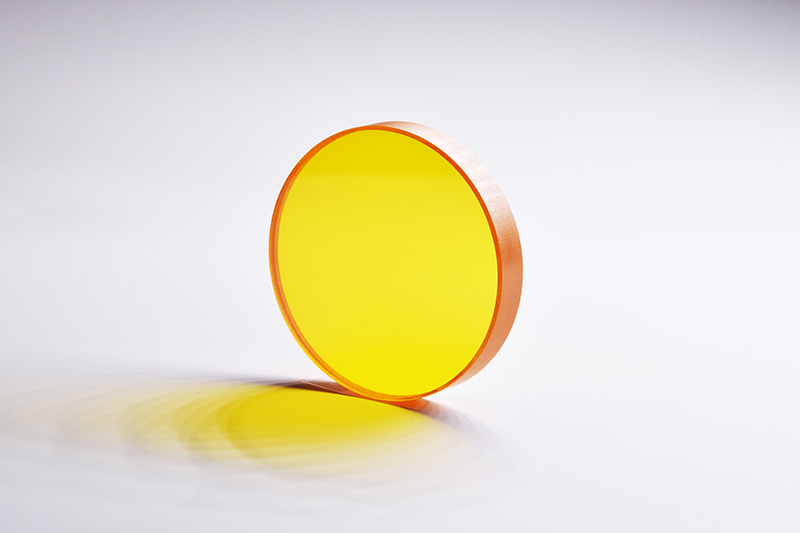
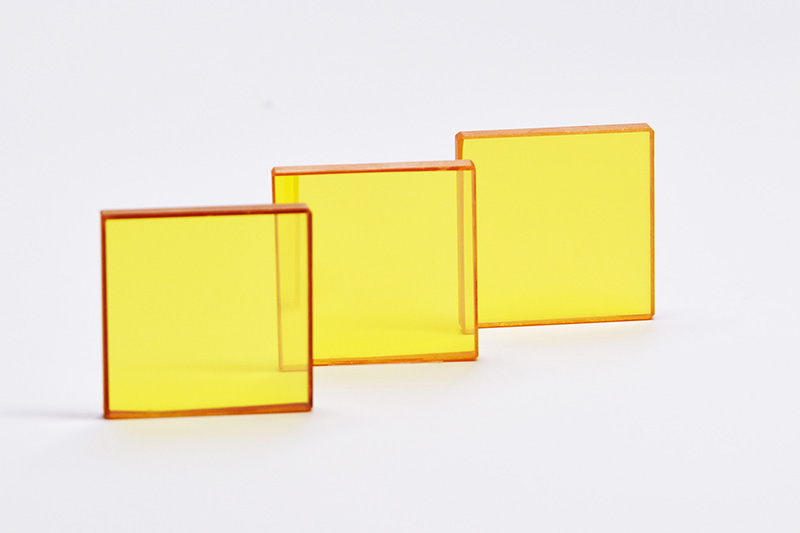
ZnSe Windows
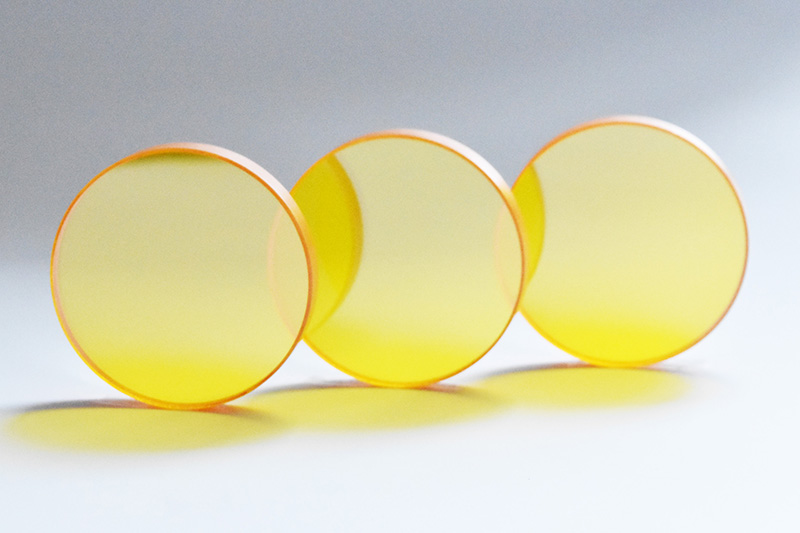
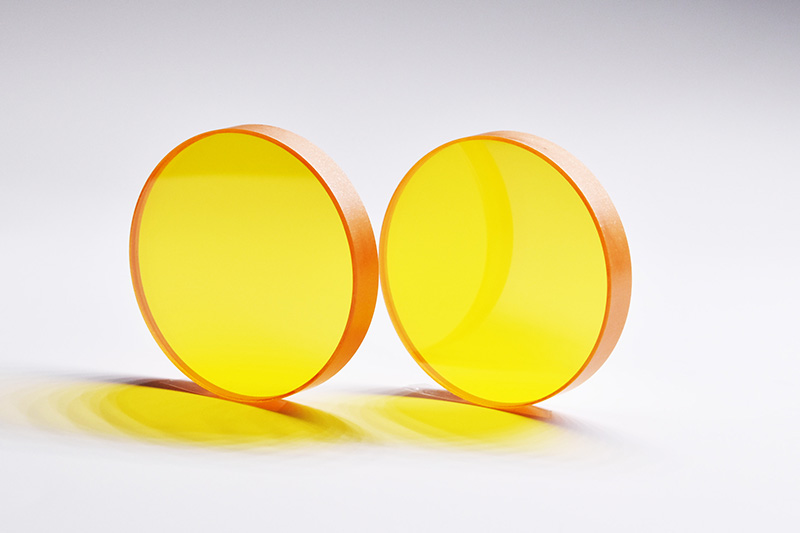
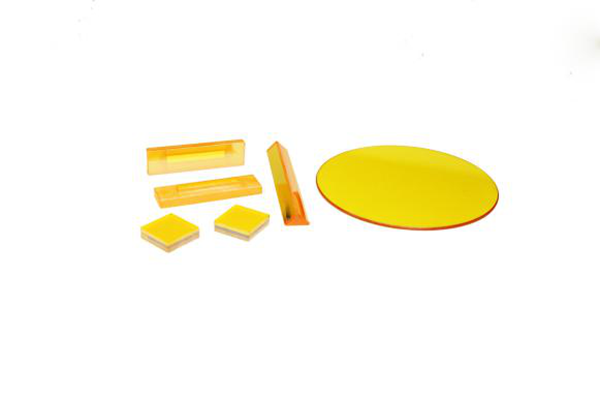
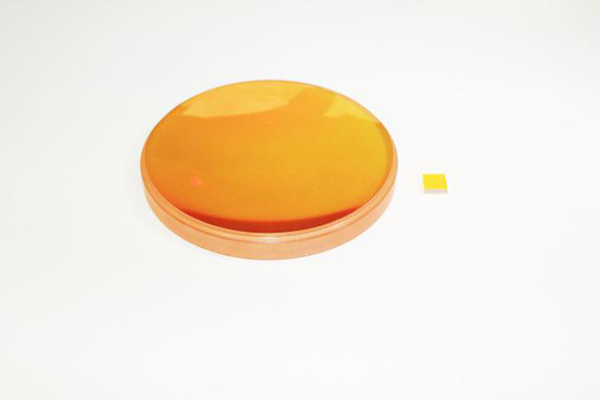
ZnSe is a kind of yellow and transparent mulit-cystal material, the size of crystalline particle is about 70um, transmitting range from 0.6-21um is an excellent choice for a variety of IR applications including high power CO2 laser systems. Zinc Selenide has low IR absorption. This is advantageous for thermal imaging, where temperatures of remote objects are ascertained via their blackbody radiation spectrum. Long wavelength transparency is crucial for imaging room temperature objects, which radiate at peak wavelength of approximately 10 μm with very low intensity. ZnSe has a high index of refraction which requires an anti-reflection coating to achieve high transmission. Our broadband AR coating is optimized for 3 μm to 12 μm. Znse material made by chemical vapor deposition(CVD) basically doesn’t exist impurity absorption, scattering damage is very low. Because of a very low light absorption for 10.6um wavelength, so ZnSe is the first choice material for making optical elements of high-power Co2 laser system. Furthermore ZnSe is also a kind of common used material for different optical system in whole transmitting waveband. Zinc Selenide is produced by synthesis from Zinc vapour and H2Se gas, forming as sheets on Graphite susceptors. Zinc Selenide is microcrystalline in structure, the grain size being controlled to produce maximum strength. Single crystal ZnSe is available, but is not common but has been reported as having lower absorption and thus more effective for CO2 optics. Zinc Selenide oxidizes significantly at 300°C, exhibits plastic deformation at about 500°C and dissociates about 700°C. For safety, Zinc Selenide windows should not be used above 250°C in normal atmosphere. Material: ZnSe Diameter Tolerance: +0.0/-0.1mm Thickness Tolerance: ±0.1mm Surface Accuracy: λ/4@632.8nm Parallelism: <1' Surface Quality: 60-40 Clear Aperture: >90% Bevelling: <0.2×45° Coating: Custom Design
 Save to Favorites
Overview
Specifications
| Parameter | Value |
|---|---|
| Transmission Range | 0.6 to 21.0 μm |
| Refractive Index [10.6 μm] | 2.4028 at 10.6 μm |
| Reflection Loss [10.6 μm;2 surfaces] | 29.1% at 10.6 μm (2 surfaces) |
| Absorption Coefficient [10.6 μm] | 0.0005 cm-1 at 10.6 μm |
| Reststrahlen Peak | 45.7 μm |
| dn/dT [10.6 μm;298K] | +61 x 10-6/°C at 10.6 μm at 298K |
| dn/dμ = 0 | 5.5 μm |
| Density | 5.27 g/cc |
| Melting Point | 1525°C (see notes below) |
| Thermal Conductivity [298K] | 18 W m-1 K-1 at 298K |
| Thermal Expansion [273K] | 7.1 x 10⁻⁶ /°C at 273K |
| Hardness [50g indenter] | Knoop 120 with 50g indenter |
| Specific Heat Capacity | 339 J Kg-1 K-1 |
| Youngs Modulus (E) | 67.2 GPa |
| Bulk Modulus (K) | 40 GPa |
| Apparent Elastic Limit | 55.1 MPa (8000 psi) |
| Poisson Ratio | 0.28 |
| Solubility [water] | 0.001g/100g water |
| Molecular Weight | 144.33 |
| Class/Structure | FCC Cubic, F43m (#216), Zinc Blende structure. (Polycrystalline) |
Applications
Key Features
Datasheet
Supplier Information
Related Products
-
 Chaoqiang Laser Welding Protective Lenses D18T2
Optical Windows
Auroralaser
Lens type: Laser Protective Lenses Applicable Products: 20S/T 21T 23S/T SW150
-
 Chaoqiang Laser Welding Protective Lenses D30T5
Optical Windows
Auroralaser
Lens type: Laser Protective Lenses Applicable Products: 22C
-
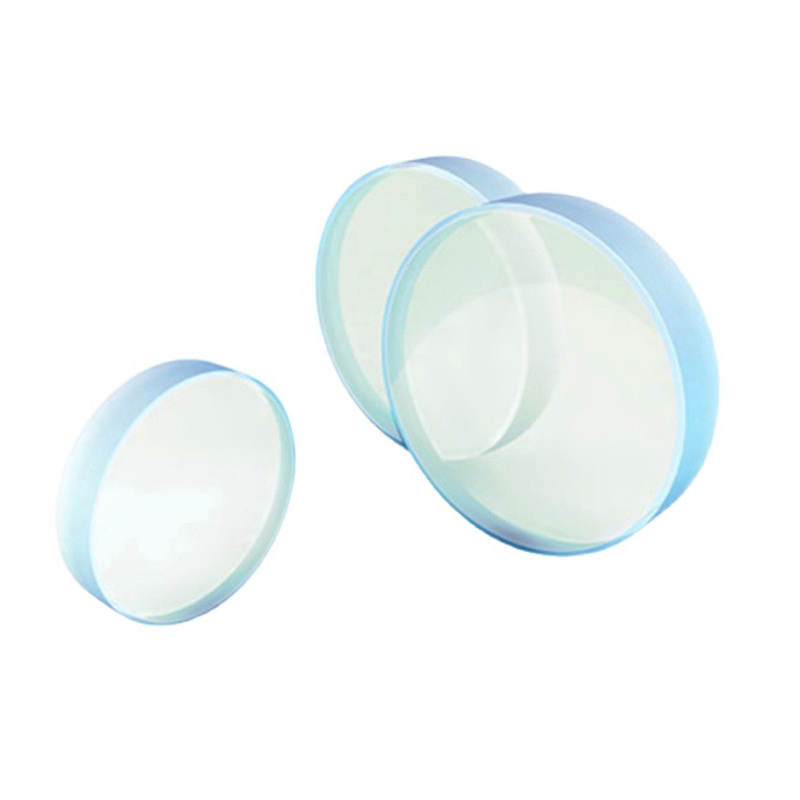 Chaoqiang Laser Welding Protective Lenses D20T2
Optical Windows
Auroralaser
Lens type: Laser Protective Lenses Applicable Products: 21C
-
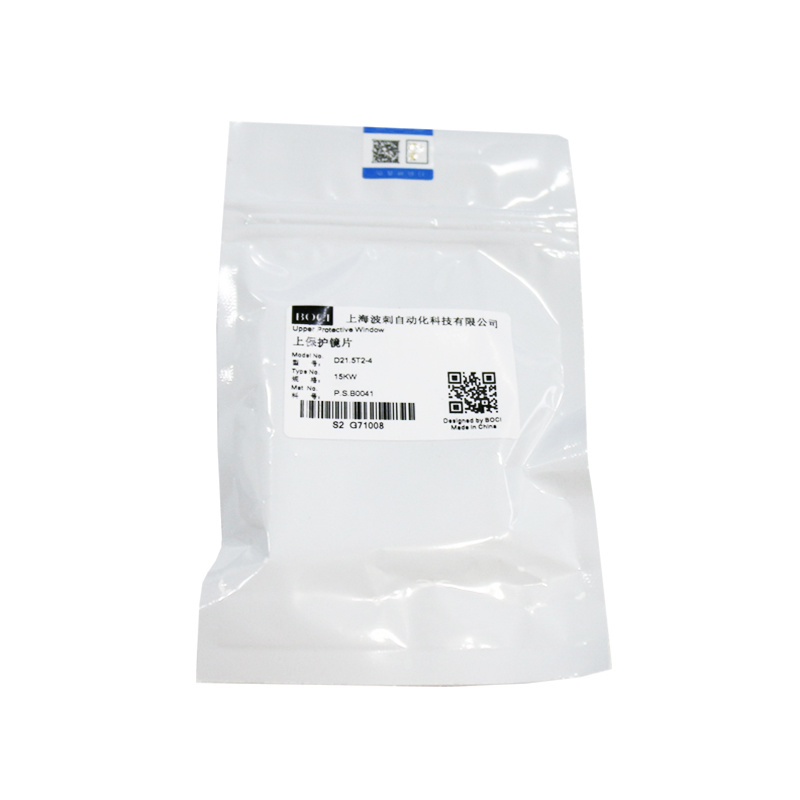 Original BOCI Laser Protective Windows
Optical Windows
Auroralaser
-
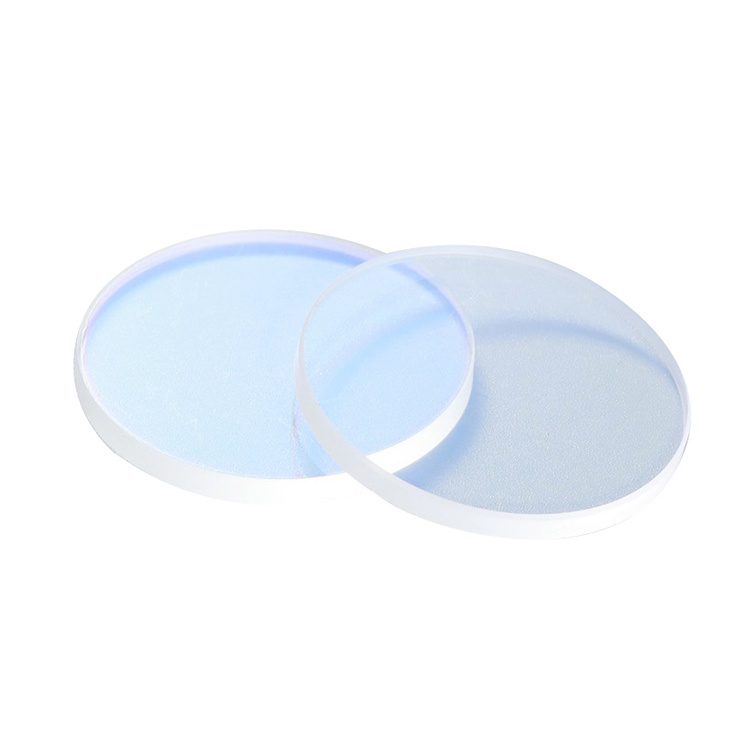 Protective Windows
Optical Windows
Auroralaser
Specifications [Specifications:14.8*4.1]: 14.8*4.1 Specifications [Specifications:18*2]: 18*2 Specifications [Specifications:20*1.5]: 20*1.5
Related Articles
Raybowlaser, a professional manufacturer of high-power laser chips, has officially launched its upgraded new-generation 1470nm high-performance laser chip. Achieving groundbreaking progress in rated output power and wall-plug efficiency (WPE), this innovative laser chip delivers superior and reliable core light source solutions for medical cosmetology, industrial processing, agricultural applications and scientific research equipment.
Electro-optic deflectors (EODs) are optical devices used to steer or deflect light beams by applying an electric field to a specialized optical crystal. Unlike mechanical beam steering systems that rely on moving mirrors, electro-optic deflectors enable high-speed, non-mechanical beam control with exceptional precision and responsiveness. They are widely used in laser scanning, optical communications, microscopy, laser printing, spectroscopy, and scientific research, where rapid and accurate laser beam positioning is essential.
Founded in 2004, Wuhan Union Optic Inc. is a National Specialized, Refined, Unique & Innovative "Little Giant" high-tech enterprise located in Wuhan East Lake High-Tech Development Zone.
Precise spectral screening is essential for high-precision medical detection, spectroscopic analysis and intelligent imaging systems. Tailored for visible and near-infrared spectral separation, the SP900 shortpass optical filter delivers high-efficiency light transmission and deep infrared blocking performance. It effectively eliminates stray light interference, improves signal-to-noise ratio (SNR), and serves as a core optical component for biomedical instruments, scientific analysis equipment and machine vision systems.
Loading...
Name
Phone
Organization
Use Case

Database Platform