
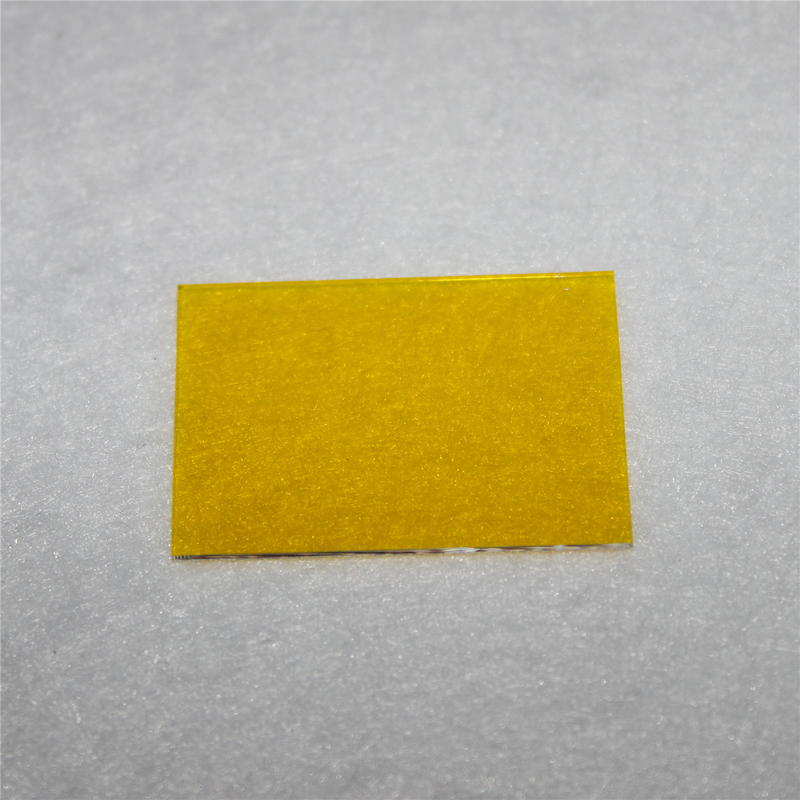
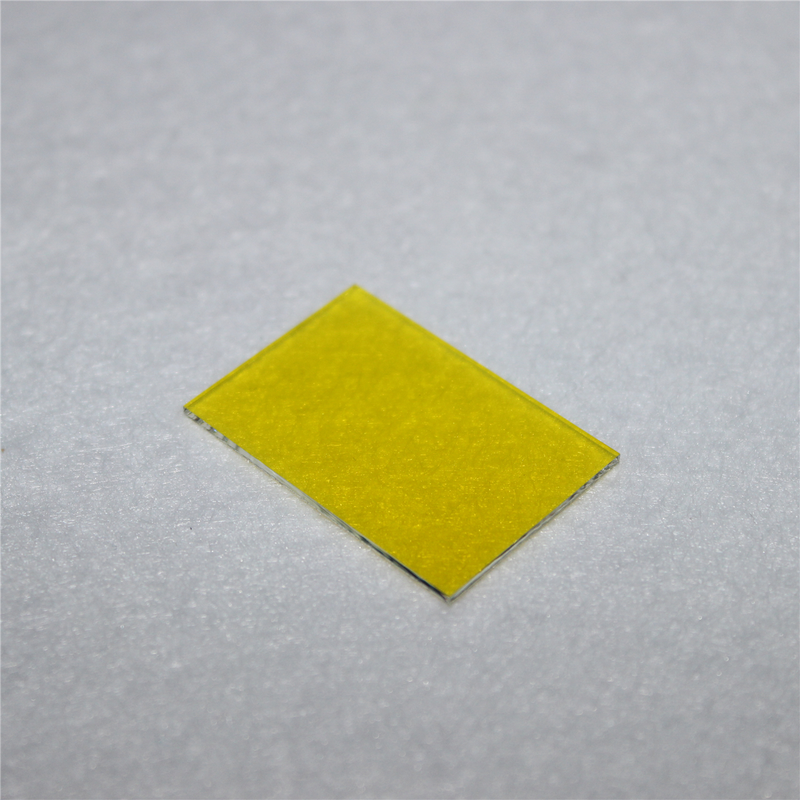
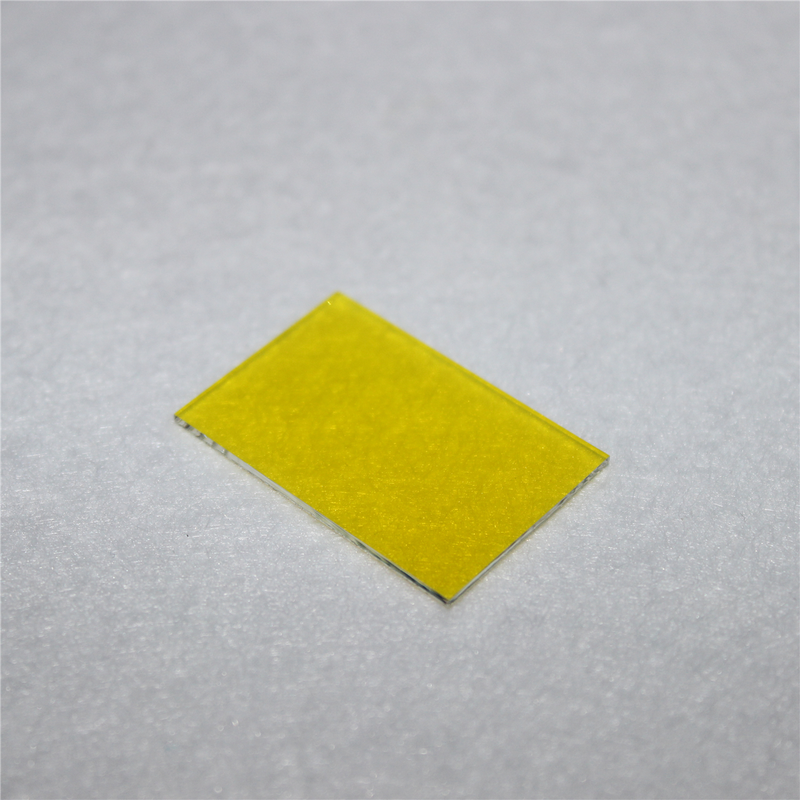
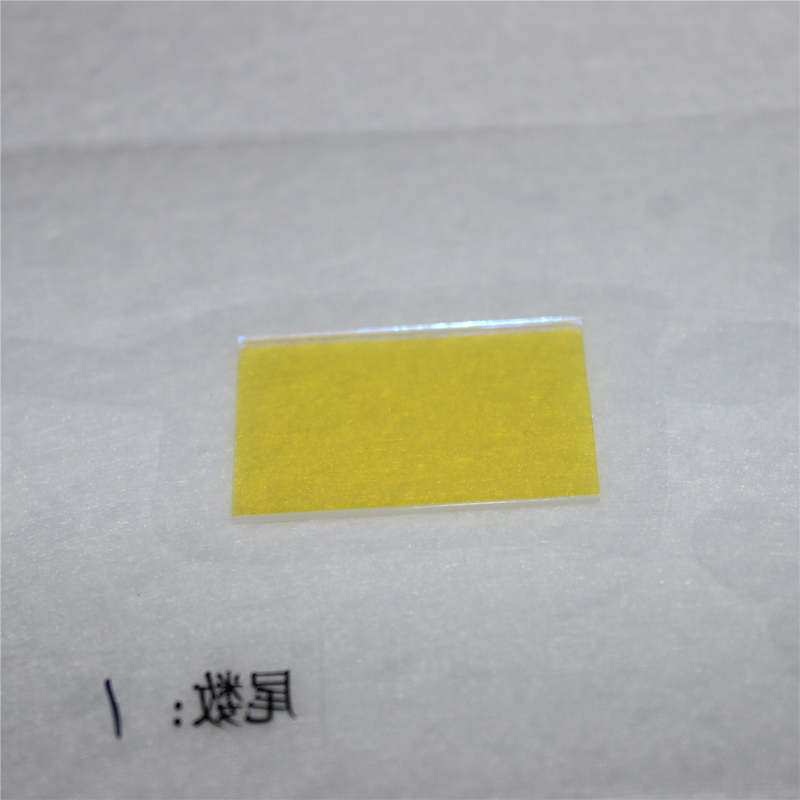

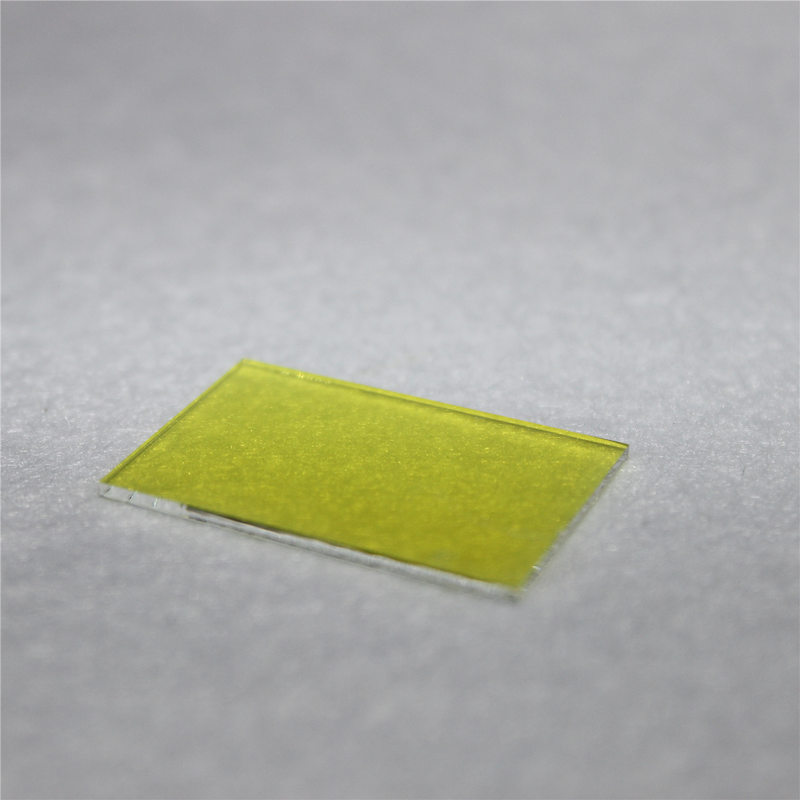
600nm long pass filter W-200916FA
Dimension: 3mm-300mm Thickness: 1.0mmm, 1.10mm CWL: 550nm, 808nm, 920nm, 880nm or as requested FWHM: 20nm Transmission: 90% An optical filter is a device that selectively transmits light of different wavelengths, usually implemented as a glass plane or plastic device in the optical path, which are either dyed in the bulk or have interference coatings. Long pass and short pass filters are two distinct types of specialized optical filters. Long pass filters transmit electromagnetic radiation with long wavelengths while blocking shorter wavelengths. Short pass filters do the opposite: they pass short wavelengths and block longer ones. Both types are sometimes grouped as edge filters (referring to the steep cut-on and cut-off between transmission and rejection) or barrier filters (due to the rejection of large sections of long or short wavelengths). The two images below graphically represent the above discussion. Note the steep cut-on / cut-off wavelength of 750 and 600 nm, respectively, and the fact that each filter provides close to zero transmission for their blocked ranges and 100% for their passband. Long pass (left) and short pass (right) filter transmission. While filters share many of the same specifications with other optical components, there are a number of specifications unique to filters that should be understood in order to effectively understand and determine which filter is best for your application. Center Wavelength (CWL), used in defining bandpass filters, describes the midpoint of spectral bandwidth over which the filter transmits. Traditional Coated Optical Filters tend to achieve a maximum transmission near the center wavelength, whereas Hard Coated Optical Filters tend to have a fairly flat transmission profile over the spectral bandwidth. Bandwidth is a wavelength range used to denote a specific part of the spectrum that passes incident energy through a filter. Bandwidth is also referred to as FWHM (Figure 1). Full Width-Half Maximum (FWHM) describes the spectral bandwidth over which a bandpass filter will transmit. The upper and lower limit of that bandwidth is defined at the wavelengths where the filter achieves 50% of the maximum transmission. For example, if the maximum transmission of the filter is 90%, the wavelengths at which the filter achieves 45% transmission will define the upper and lower limits of the FWHM. FWHM’s of 10nm or less are considered narrowband and often used for laser clean-up and chemical detection. FWHM’s of 25 – 50nm are often used in machine vision applications; FHWM’s of more than 50nm are considered broadband and typically used in fluorescence microscopy applications. Blocking Range is a wavelength interval used to denote a spectral region of energy that is attenuated by the filter (Figure 2). The degree of its blocking is typically specified in terms of optical density. Slope is a specification often defined on edge filters, such as shortpass or longpass filters, to describe the bandwidth over which the filter transitions from high blocking to high transmission. Given as the percent of the cut-wavelength, slope can be specified from a variety of starting and end points. Edmund Optics typically specifies the slope as the distance from the 10% transmission point to the 80% transmission point. For example, a 500nm longpass filter with a 1% slope would be expected to transition from 10% transmission to 80% transmission over a 5nm (1% of 500nm) bandwidth. Optical Density (OD) describes the amount of energy blocked or rejected by a filter. A high optical density value indicates low transmission, and low optical density indicates high transmission. Optical densities of 6 or greater are used for extreme blocking needs such as Raman spectroscopy or fluorescence microscopy. Optical densities of 3.0 – 4.0 are ideal for laser separation and clean-up, machine vision, and chemical detection, while optical densities of 2.0 or less are ideal for color sorting and separating spectral orders. (1)Percent Transmission=T=10−OD×100%Percent Transmission=T=10−OD×100% (2)OD=−log(T100%)OD=−log(T100%) A Dichroic Filter is a type of filter used to transmit or reflect light, depending on the wavelength; light of a specific wavelength range is transmitted, while light of a different range is reflected or absorbed (Figure 4). Dichroic filters are commonly used for longpass and shortpass applications. Cut-On Wavelength is a term used to denote the wavelength at which the transmission increases to 50% throughput in a longpass filter. Cut-on wavelength is indicated by λ_cut-on in Figure 5. Cut-Off Wavelength is a term used to denote the wavelength at which the transmission decreases to 50% throughput in a shortpass filter. Cut-off wavelength is indicated by λ_cut-off in Figure 6. VY provide wide range of optical filters, we could customize the filter for you according to your design or drawing.
 Save to Favorites
Overview
Datasheet
Please provide your email to download the datasheet.
Invalid email format. Please try again.
Supplier Information
Related Products
-
 FL490FF-FISH FISH Excitation Block
Optical Filters
Situoli
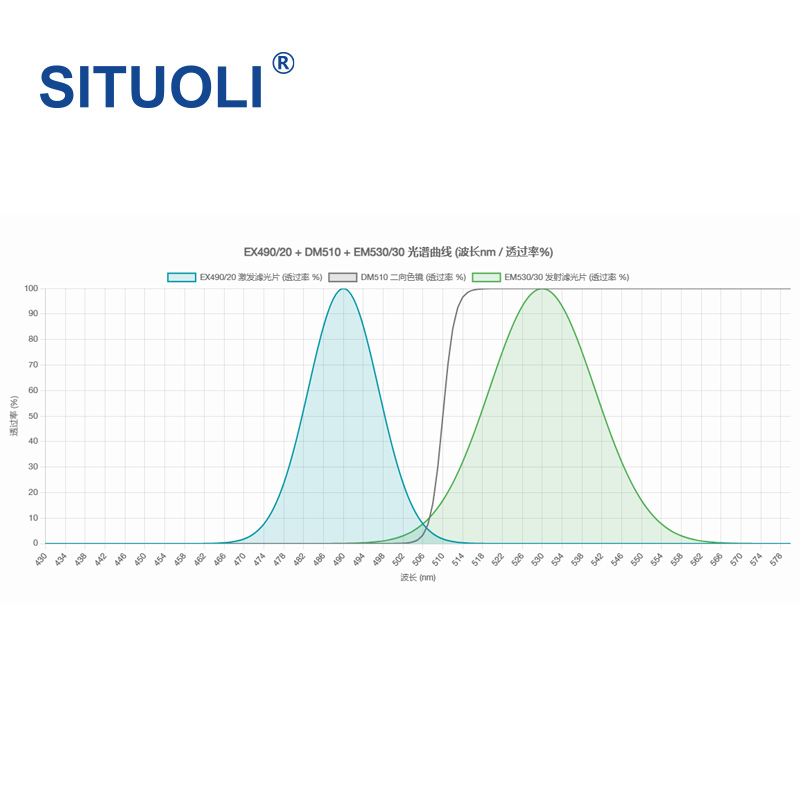
EX490/20 Excitation Filter - Center Wavelength: 490nm EX490/20 Excitation Filter - Half Bandwidth: 20nm EX490/20 Excitation Filter - Effective Wavelength Band [Narrowband Cyan-Green Light Excitation]: 480nm ~ 500nm
Full product name: Mirror Unit for fluorescence microscopy, bandpass fluorescence excitation block specifically for FISH-Green. Optical configuration: excitation filter EX490/20 + dichroic beamsplitter DM510 + emission filter EM530/30. Standard accessory: dedicated protective storage case (including case). Compatible fluorescence systems: FISH-Green green probes, GFP green fluorescent protein and Green-series fluorescent dyes.
-
 FL435LFF-FISH FISH Excitation Block
Optical Filters
Situoli
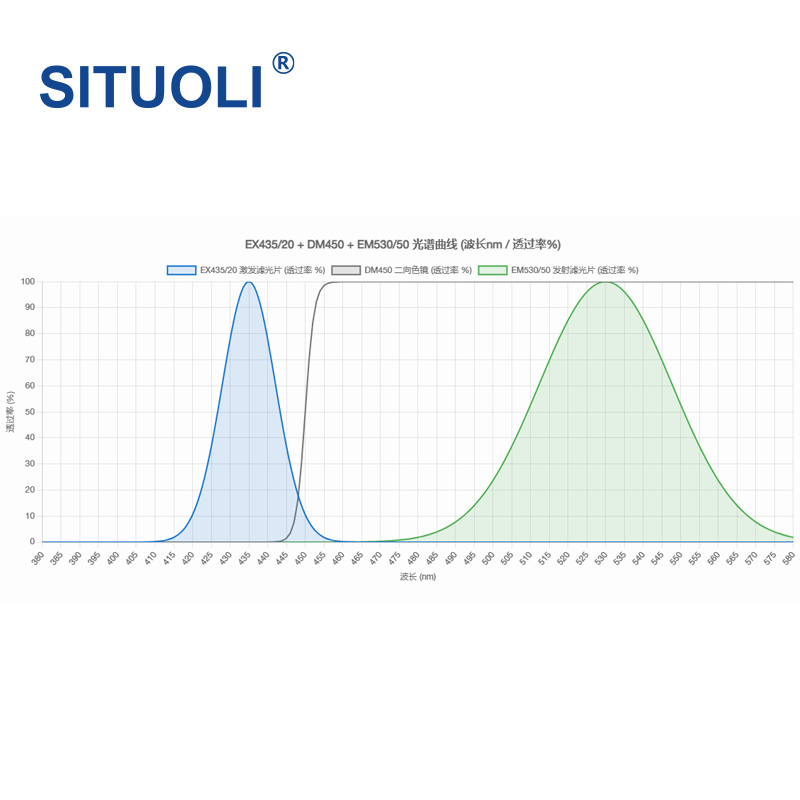
EX435/20 Excitation Filter - Center Wavelength: 435nm EX435/20 Excitation Filter - Half Bandwidth: 20nm EX435/20 Excitation Filter - Effective Wavelength Band [Blue Narrowband Excitation]: 425nm ~ 445nm
Full product name: Mirror Unit for fluorescence microscopy, bandpass fluorescence excitation block specifically for FISH-Aqua. Optical configuration: excitation filter EX435/20 + dichroic beamsplitter DM450 + emission filter EM530/50. Standard accessory: dedicated protective storage case (including case). Compatible fluorescence systems: FISH-Aqua probes, green fluorescent dyes and broadband green fluorescent labels.
-
 FL390FF-FISH FISH Excitation Block
Optical Filters
Situoli
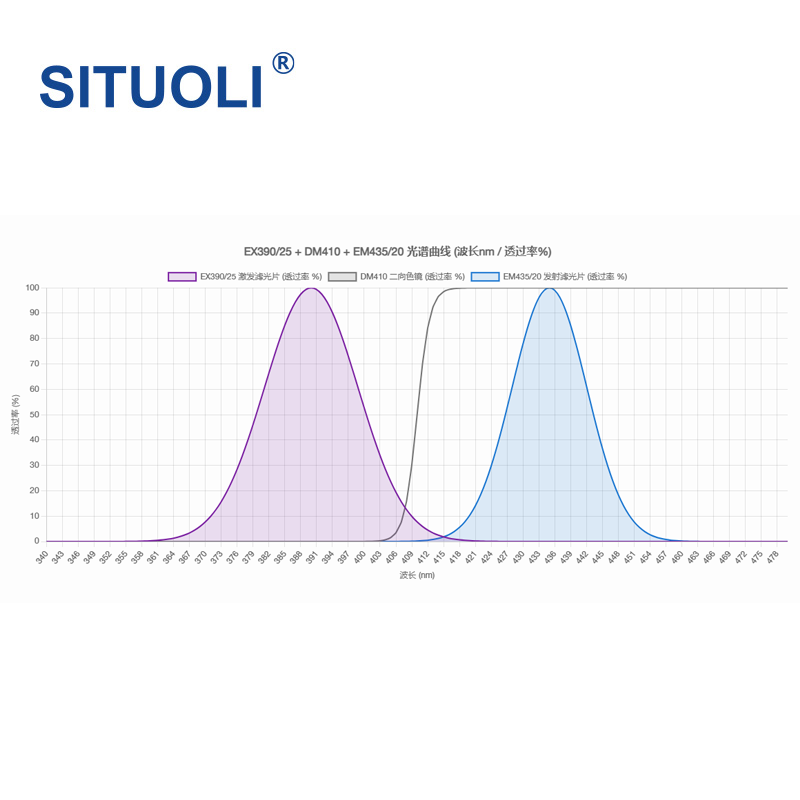
EX390/25 Excitation Filter - Center Wavelength: 390nm EX390/25 Excitation Filter - Half Bandwidth: 25nm EX390/25 Excitation Filter - Effective Wavelength Band [Narrowband UV-Blue Light Excitation]: 377.5nm ~ 402.5nm
Full product name: Mirror Unit for fluorescence microscopy, bandpass fluorescence excitation block specifically for FISH-Blue. Optical configuration: excitation filter EX390/25 + dichroic beamsplitter DM410 + emission filter EM435/20. Standard accessory: dedicated protective storage case (including case). Compatible fluorescence systems: FISH-Blue blue probes, DAPI, Hoechst 33342 and blue fluorescent protein.
-
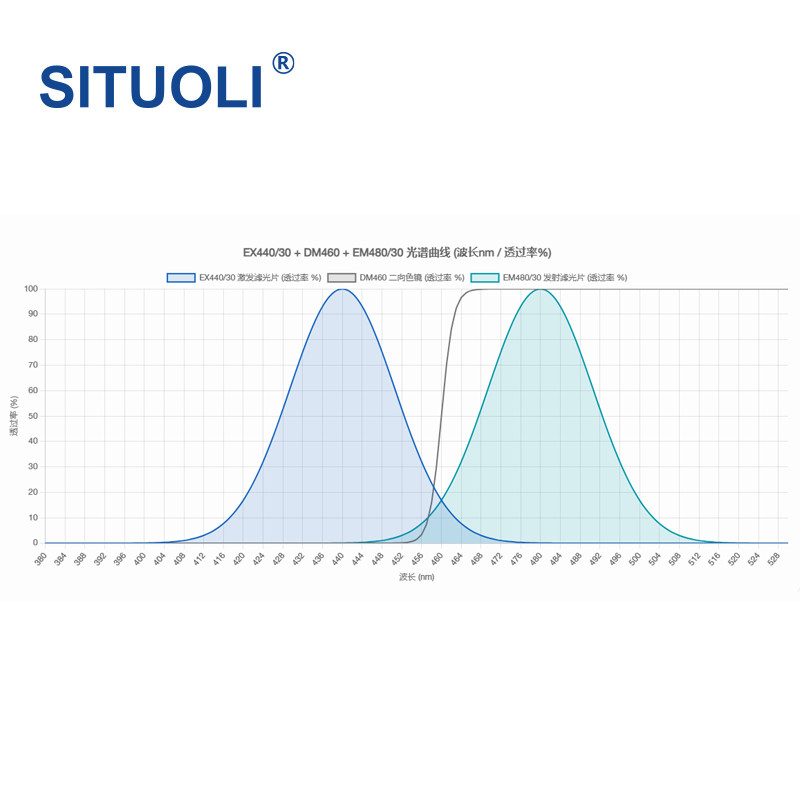 FL440FF-FISH FISH Excitation Block
Optical Filters
Situoli
EX440/30 Excitation Filter - Center Wavelength: 440nm EX440/30 Excitation Filter - Half Bandwidth: 30nm EX440/30 Excitation Filter - Effective Wavelength Band [Blue Narrowband Excitation]: 425nm ~ 455nm
Full product name: Mirror Unit for fluorescence microscopy, bandpass fluorescence excitation block specifically for FISH-Aqua. Optical configuration: excitation filter EX440/30 + dichroic beamsplitter DM460 + emission filter EM480/30. Standard accessory: dedicated protective storage case (including case). Compatible fluorescence systems: FISH-Aqua cyan fluorescent probes, CFP cyan fluorescent protein and Aqua-series fluorescent dyes.
-
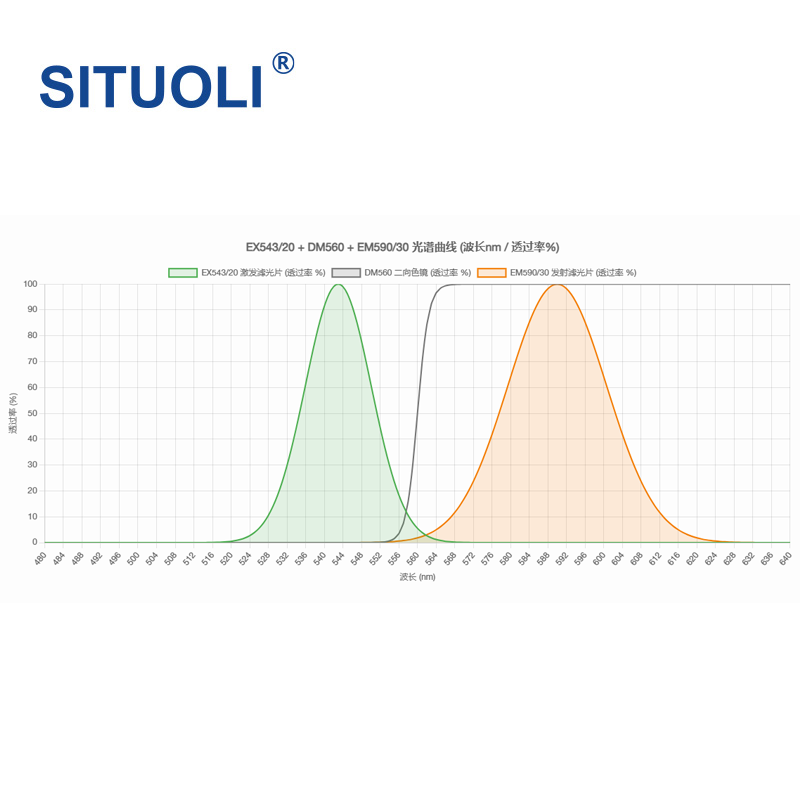 FL543FF-FISH FISH Excitation Block
Optical Filters
Situoli
EX543/20 Excitation Filter - Center Wavelength: 543nm EX543/20 Excitation Filter - Half Bandwidth: 20nm EX543/20 Excitation Filter - Effective Wavelength Band [Narrowband Yellow-Green Light Excitation]: 533nm ~ 553nm
Full product name: Mirror Unit for fluorescence microscopy, bandpass fluorescence excitation block specifically for FISH-Orange. Optical configuration: excitation filter EX543/20 + dichroic beamsplitter DM560 + emission filter EM590/30. Standard accessory: dedicated protective storage case (including case). Compatible fluorescence systems: FISH-Orange orange fluorescent probes, Orange-series fluorescent dyes and ROX dye.
Related Articles
Driven by worldwide energy‑structure transformation, the lithium‑ion battery industry is expanding rapidly as green, high‑efficiency energy‑storage devices gain surging global market demand. With years‑long dedication to intelligent manufacturing, Han’s Laser Lithium‑battery Intelligent Equipment has accumulated solid R&D strength and rich practical experience. By integrating multiple cutting‑edge technologies, the company delivers high‑efficiency, eco‑friendly and sustainable lithium‑ion battery production lines, bringing revolutionary upgrades to the new‑energy battery sector.
A solid-state laser is one of the most common and reliable laser types used in modern industry, medical equipment, and scientific research. Unlike gas or fiber lasers, it uses solid materials as its gain medium to generate stable, high-brightness laser beams. Thanks to its high precision, long lifespan, and compact structure, solid-state lasers have become a mainstream solution for high-precision laser processing and optical systems.
FiDAR, the fiber‑optic radar vehicle positioning and tracking system developed by Jianhe Bafang, is a high‑sensitivity distributed fiber‑sensing solution designed for intelligent traffic road monitoring. It outputs real‑time spatial coordinates of every vehicle across the full road section around‑the‑clock, delivering a brand‑new sensing technology for vehicle‑road cooperation, smart highway construction and urban traffic management.
As a vital emerging sector of modern three-dimensional spatial economy, the low-altitude economy has become a new global growth driver. It covers a wide range of commercial scenarios, including UAV navigation and obstacle avoidance, precise airspace management, aerial mapping, low-altitude logistics distribution, security monitoring and emergency disaster rescue. Nevertheless, frequent extreme weather, complex terrain obstacles and increasingly dense low-altitude flight activities pose severe challenges to the safety and stability of low-altitude aircraft operations.
Loading...
Name
Phone
Organization
Use Case

Database Platform