
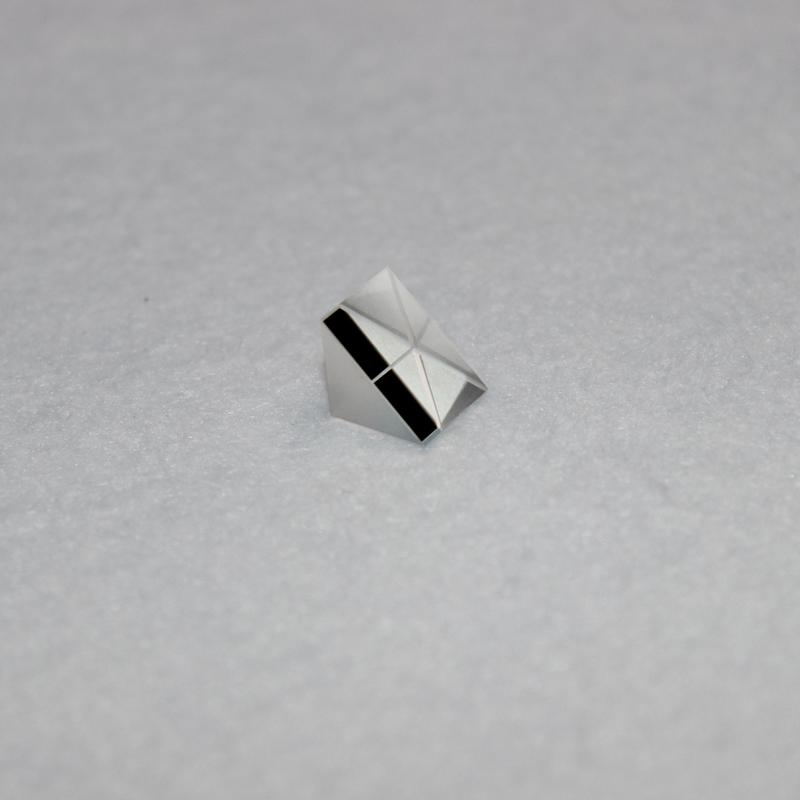
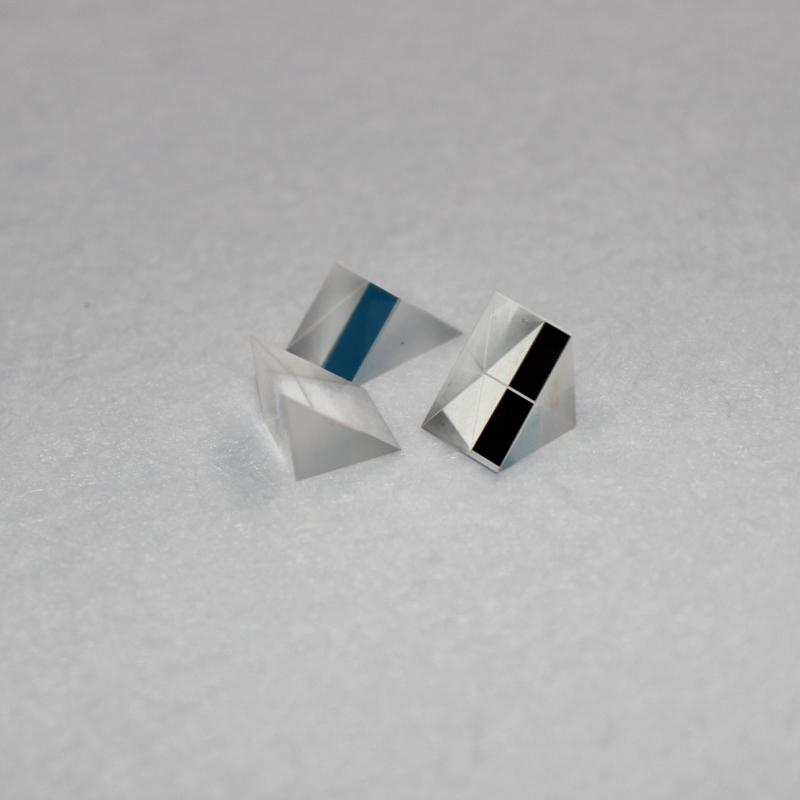
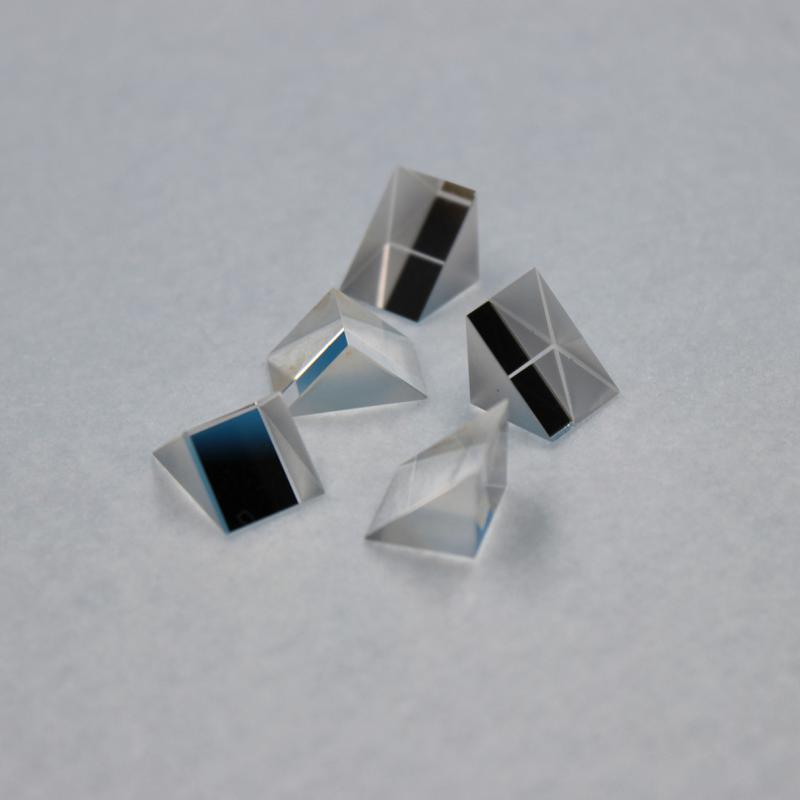
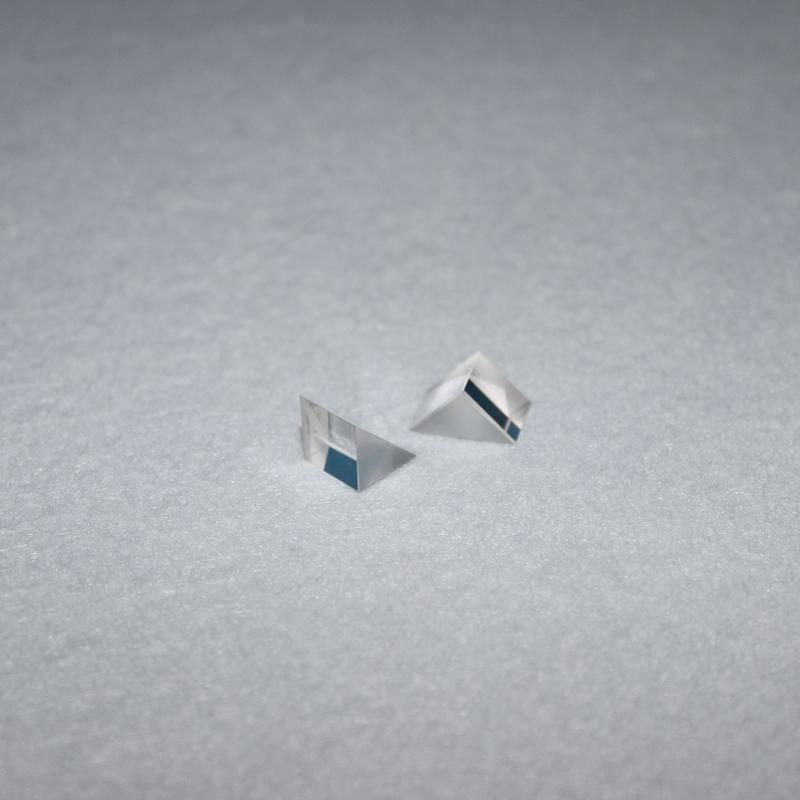
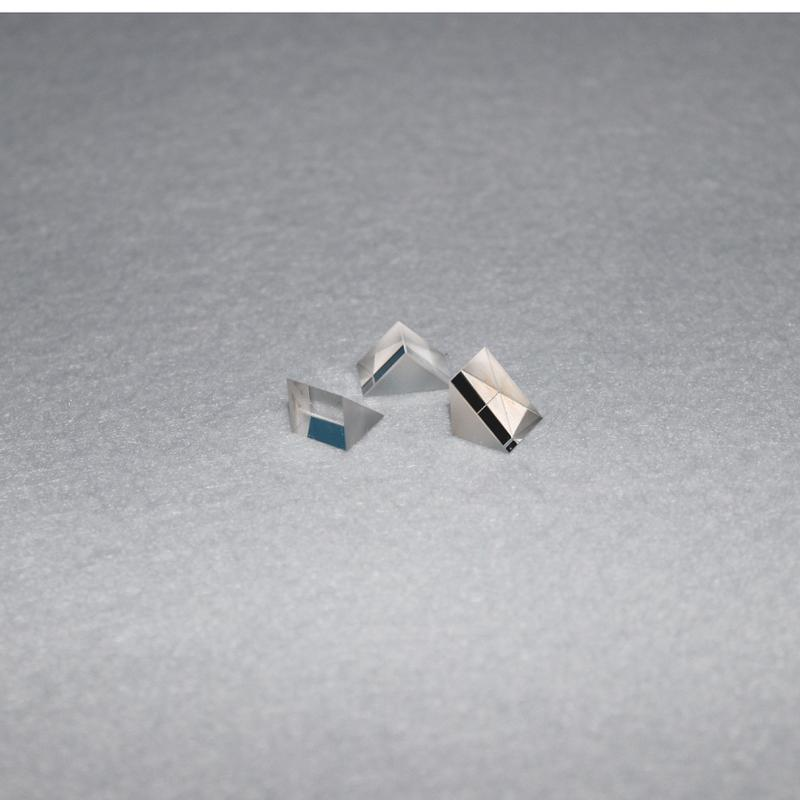
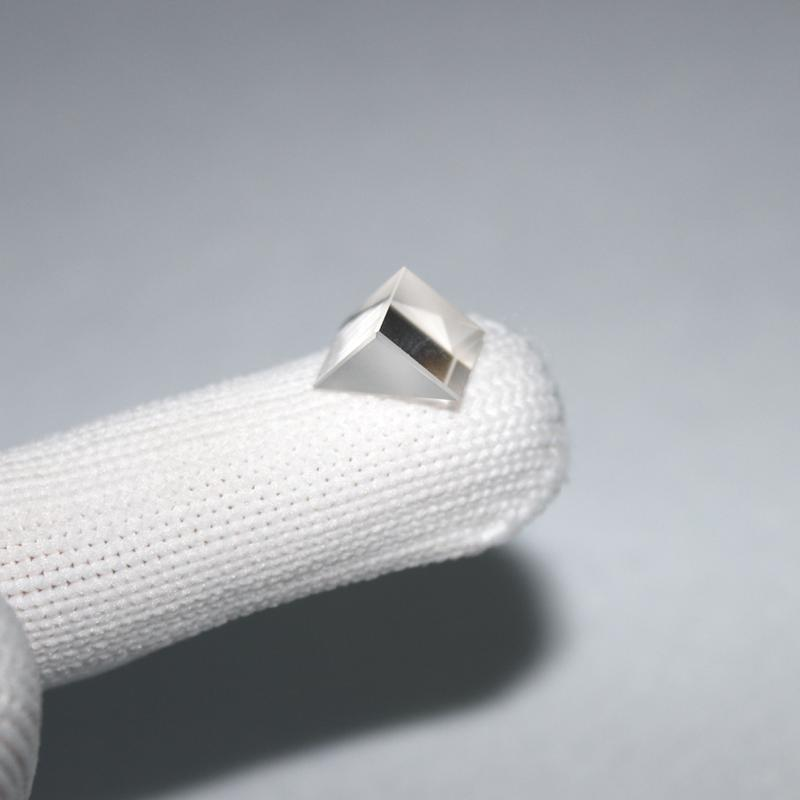
BK7 Right Angle Prism W-20200918PA
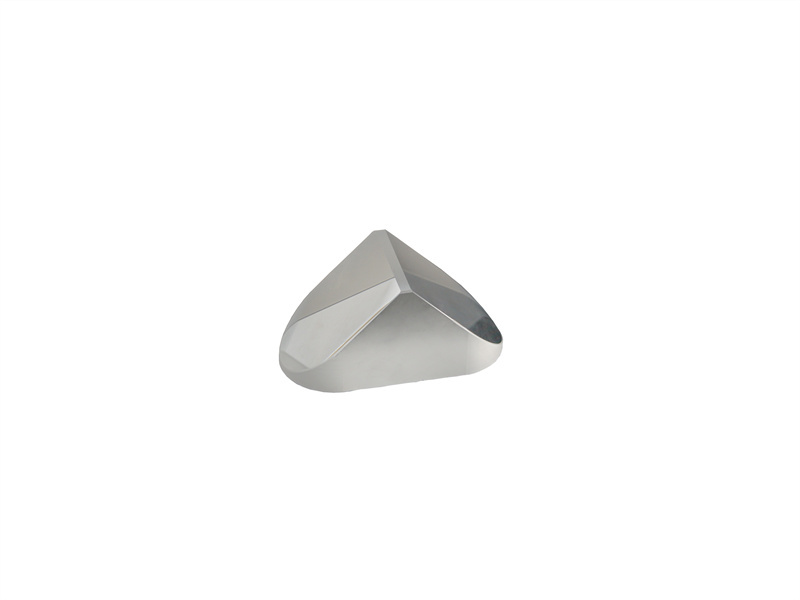
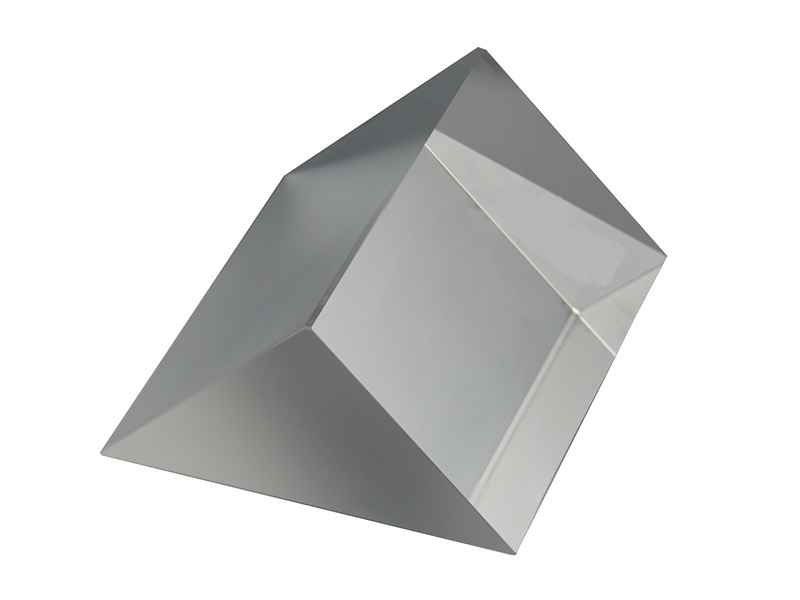
VY Optoelectronics Co.,Ltd. can produce all types of glass prism lenses, the coating or painting may be available by custom orders. An optical prism is a transparent optical element with flat, polished surfaces that refract light. At least one surface must be angled—elements with two parallel surfaces are not prisms. The traditional geometrical shape of an optical prism is that of a triangular prism with a triangular base and rectangular sides, and in colloquial use “prism” usually refers to this type. Some types of optical prism are not in fact in the shape of geometric prisms. Prisms can be made from any material that is transparent to the wavelengths for which they are designed. Typical materials include glass, plastic, and fluorite. (Picture of prism) A dispersive prism can be used to break white light up into its constituent spectral colors (the colors of the rainbow). Furthermore, prisms can be used to reflect light, or to split light into components with different polarizations. A notable characteristic of prisms is their ability to be modeled as a system of plane mirrors in order to simulate the reflection of light within the prism medium. Replacing mirror assemblies is perhaps the most useful application of prisms, since they both bend or fold light and change image parity. Often, multiple mirrors are needed to achieve results similar to a single prism. Therefore, the substitution of one prism in lieu of several mirrors reduces potential alignment errors, increasing accuracy and minimizing the size and complexity of a system. A triangular prism, dispersing light; waves shown to illustrate the differing wavelengths of light. Light changes speed as it moves from one medium to another (for example, from air into the glass of the prism). This speed change causes the light to be refracted and to enter the new medium at a different angle (Huygens principle). The degree of bending of the light’s path depends on the angle that the incident beam of light makes with the surface, and on the ratio between the refractive indices of the two media (Snell’s law). The refractive index of many materials (such as glass) varies with the wavelength or color of the light used, a phenomenon known as dispersion. This causes light of different colors to be refracted differently and to leave the prism at different angles, creating an effect similar to a rainbow. This can be used to separate a beam of white light into its constituent spectrum of colors. A similar separation happens with iridescent materials, such as a soap bubble. Prisms will generally disperse light over a much larger frequency bandwidth than diffraction gratings, making them useful for broad-spectrum spectroscopy. Furthermore, prisms do not suffer from complications arising from overlapping spectral orders, which all gratings have. Prisms are sometimes used for the internal reflection at the surfaces rather than for dispersion. If light inside the prism hits one of the surfaces at a sufficiently steep angle, total internal reflection occurs and all of the light is reflected. This makes a prism a useful substitute for a mirror in some situations. A triangular prism, dispersing light Like many basic geometric terms, the word prism (Greek: πρίσμα, romanized: prisma, lit. ‘something sawed’) was first used in Euclid’s Elements. Euclid defined the term in Book XI as “a solid figure contained by two opposite, equal and parallel planes, while the rest are parallelograms”, however the nine subsequent propositions that used the term included examples of triangular-based prisms (i.e. with sides which were not parallelograms). This inconsistency caused confusion amongst later geometricians. René Descartes had seen light separated into the colors of the rainbow by glass or water,[4] though the source of the color was unknown. Isaac Newton’s 1666 experiment of bending white light through a prism demonstrated that all the colors already existed in the light, with different color “corpuscles” fanning out and traveling with different speeds through the prism. It was only later that Young and Fresnel combined Newton’s particle theory with Huygens’ wave theory to explain how color arises from the spectrum of light. Newton arrived at his conclusion by passing the red color from one prism through a second prism and found the color unchanged. From this, he concluded that the colors must already be present in the incoming light — thus, the prism did not create colors, but merely separated colors that are already there. He also used a lens and a second prism to recompose the spectrum back into white light. This experiment has become a classic example of the methodology introduced during the scientific revolution. The results of the experiment dramatically transformed the field of metaphysics, leading to John Locke’s primary vs secondary quality distinction. Newton discussed prism dispersion in great detail in his book Opticks. He also introduced the use of more than one prism to control dispersion.Newton’s description of his experiments on prism dispersion was qualitative. A quantitative description of multiple-prism dispersion was not needed until multiple prism laser beam expanders were introduced in the 1980s.
 Save to Favorites
Overview
Datasheet
Please provide your email to download the datasheet.
Invalid email format. Please try again.
Supplier Information
Related Products
Related Articles
Driven by worldwide energy‑structure transformation, the lithium‑ion battery industry is expanding rapidly as green, high‑efficiency energy‑storage devices gain surging global market demand. With years‑long dedication to intelligent manufacturing, Han’s Laser Lithium‑battery Intelligent Equipment has accumulated solid R&D strength and rich practical experience. By integrating multiple cutting‑edge technologies, the company delivers high‑efficiency, eco‑friendly and sustainable lithium‑ion battery production lines, bringing revolutionary upgrades to the new‑energy battery sector.
A solid-state laser is one of the most common and reliable laser types used in modern industry, medical equipment, and scientific research. Unlike gas or fiber lasers, it uses solid materials as its gain medium to generate stable, high-brightness laser beams. Thanks to its high precision, long lifespan, and compact structure, solid-state lasers have become a mainstream solution for high-precision laser processing and optical systems.
FiDAR, the fiber‑optic radar vehicle positioning and tracking system developed by Jianhe Bafang, is a high‑sensitivity distributed fiber‑sensing solution designed for intelligent traffic road monitoring. It outputs real‑time spatial coordinates of every vehicle across the full road section around‑the‑clock, delivering a brand‑new sensing technology for vehicle‑road cooperation, smart highway construction and urban traffic management.
As a vital emerging sector of modern three-dimensional spatial economy, the low-altitude economy has become a new global growth driver. It covers a wide range of commercial scenarios, including UAV navigation and obstacle avoidance, precise airspace management, aerial mapping, low-altitude logistics distribution, security monitoring and emergency disaster rescue. Nevertheless, frequent extreme weather, complex terrain obstacles and increasingly dense low-altitude flight activities pose severe challenges to the safety and stability of low-altitude aircraft operations.
Loading...
Name
Phone
Organization
Use Case

Database Platform