

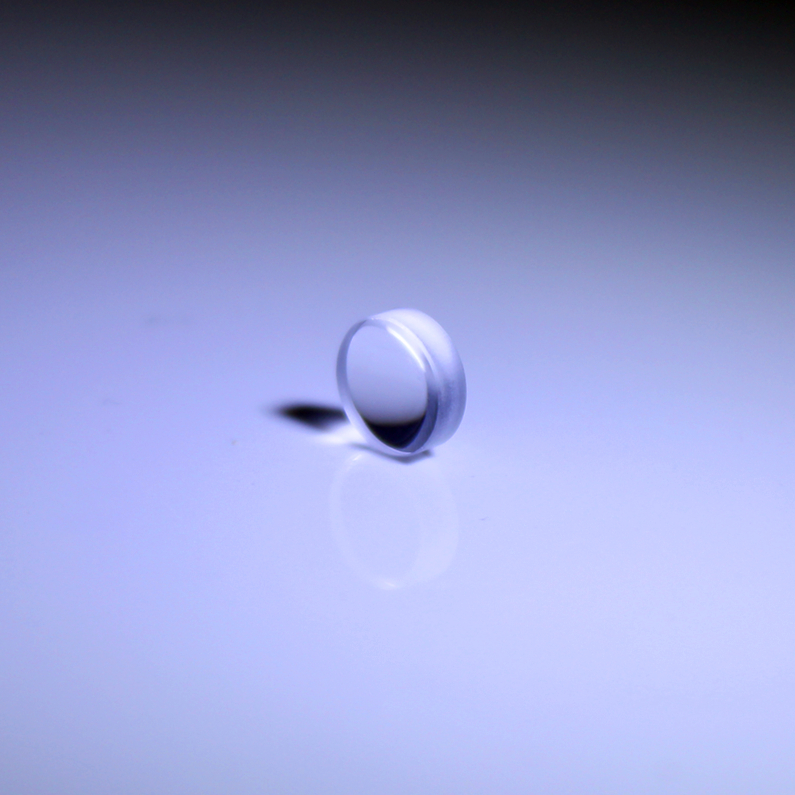
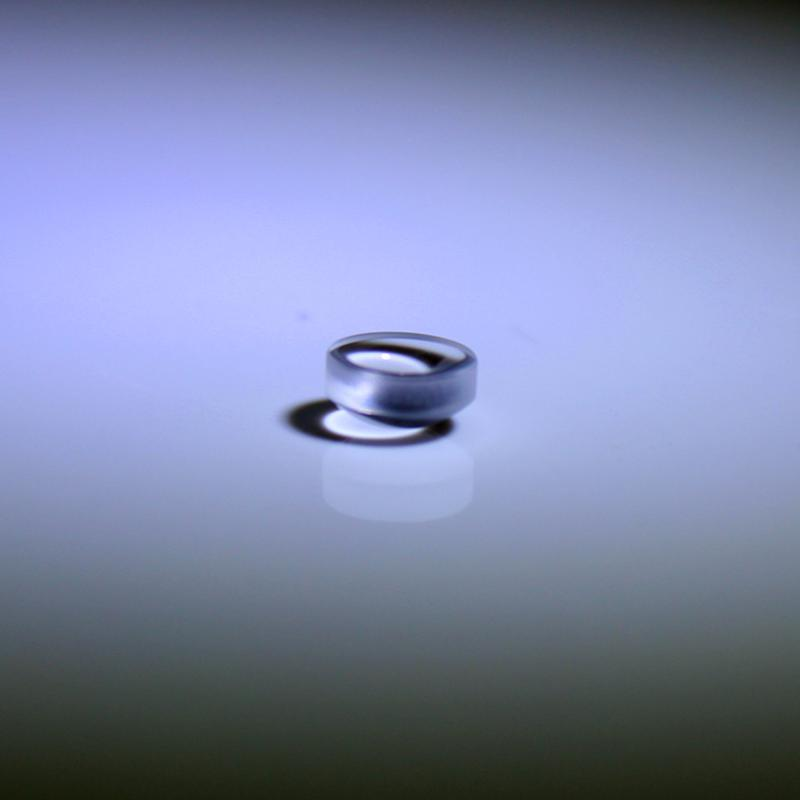
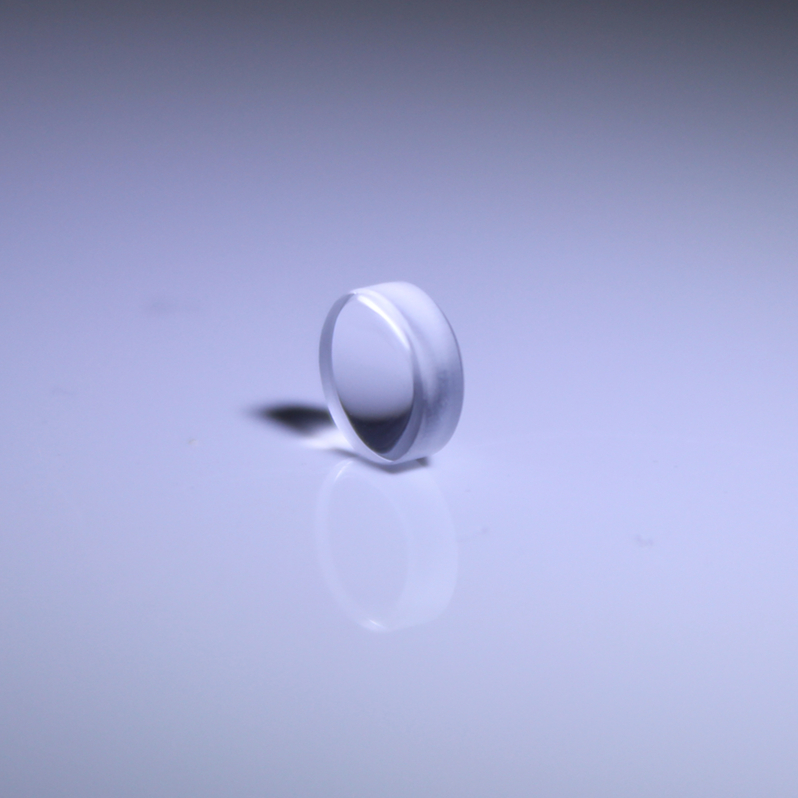
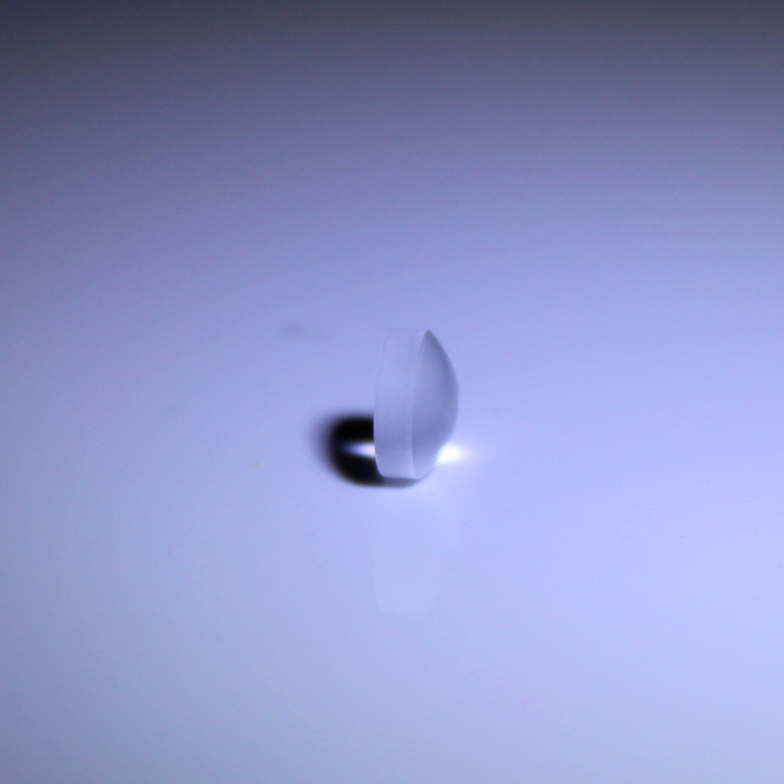
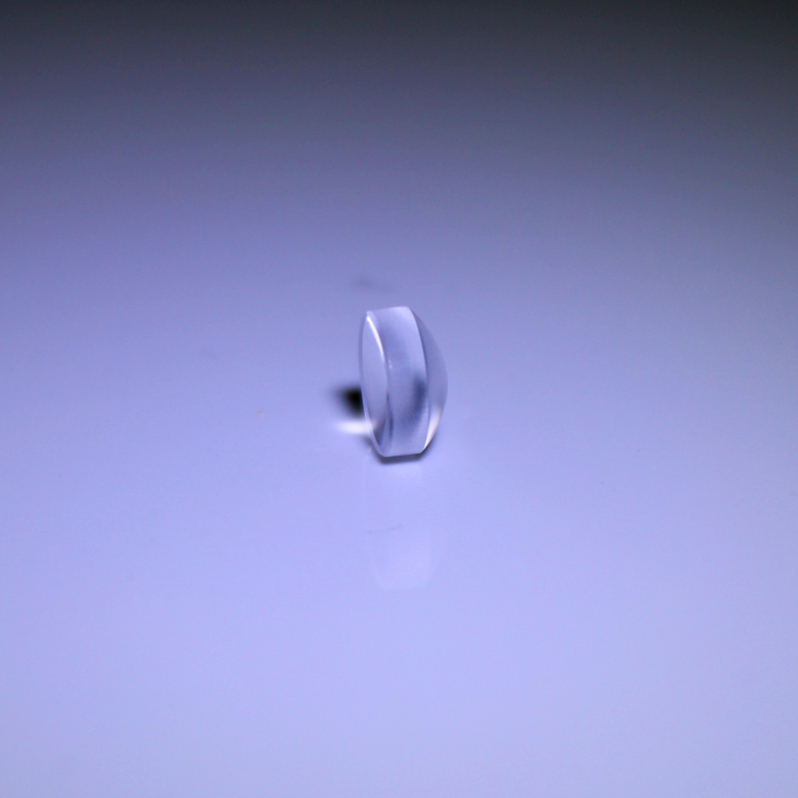
Blue Laser Collimating Aspheric Lenses VY_LTF0306
Laser Collimating Aspheric Lenses is ideal for biomedical instrumentation and date storage applications. Aspheric lenses allow optical designers to correct aberrations using fewer elements than conventional spherical optics because the former gives them more aberration correction than multiple surfaces of the latter. For example, in zoom lenses where ten or more lens elements are typically used, two aspheric lenses can be substituted for a handful of spherical lenses in order to achieve similar or better optical results, while reducing system size and potentially reducing the overall cost of production. The most notable benefit of aspheric lenses is their ability to correct for spherical aberration, an optical effect which causes incident light rays to focus at different points when forming an image, creating a blur. Spherical aberration is commonly seen in spherical lenses, such as plano-convex or double-convex lens shapes, but aspheric lenses focus light to a small point, creating comparatively no blur and improving image quality. Spherical aberration is inherent in the basic shape of a spherical surface and is independent of alignment or manufacturing errors; in other words, a perfectly designed and manufactured spherical lens will still inherently exhibit spherical aberration. An aspheric lens can be designed to minimize aberration by adjusting the conic constant and aspheric coefficients of the curved surface of the lens.
 Save to Favorites
Overview
Specifications
| Parameter | Value |
|---|---|
| Dia. | Φ3.0 |
| CA | 2.4/2.1 |
| Numerical Aperture (NA) | 0.2 |
| Effective Focal Length (EFL) | 6 mm |
| CT | 1.5 mm |
| ET | 1.2 mm |
| Material | D-ZK3 |
| DW | 530 nm |
| AR Coating | 400-700/700-1100 |
Applications
Key Features
Datasheet
Please provide your email to download the datasheet.
Invalid email format. Please try again.
Supplier Information
Related Products
-
Tera3001-SA dual-LENS multidaughterboard coupling equipment Optical Lenses Terawan
The Tera3001-s multidaughterboard automatic alignment platform serves 10G/14G/25G optical transceivers. It mainly aligns lenses in Chip On Board (COB) modules, with single- or dual-channel lens/source alignment, automatic dispensing, and UV curing. The Tera3001-S provides high coupling efficiency, stability, and UPH depending on customer design, plus one-button collision protection and UV protection.
-
355 field lens Optical Lenses Central-laser
Focal Length [Original Table Row 2; Focal Length=100mm; Parallel Values in the Same Row Not Split into Separate Models or Configurations]: 100 mm Working Distance [Original Table Row 2; Focal Length=100mm; Parallel Values in the Same Row Not Split into Separate Models or Configurations]: 136 mm Scan Range [Original Table Row 2; Focal Length=100mm; Parallel Values in the Same Row Not Split into Separate Models or Configurations]: 70 mm² × 70 mm²
355 field lens: large zinc-selenide (ZnSe) focusing lens with a small spot for accurate marking. Imported lens material provides long service life and reduces removal, installation, and alignment. The 355nm scanning field lens is suitable for ultraviolet laser-marking machines.
-
532 field lens Optical Lenses Central-laser
Focal Length [Original Table Row 2; Focal Length=100mm; Parallel Values in the Same Row Not Split into Separate Models or Configurations]: 100 mm Working Distance [Original Table Row 2; Focal Length=100mm; Parallel Values in the Same Row Not Split into Separate Models or Configurations]: 114.5 mm Scan Range [Original Table Row 2; Focal Length=100mm; Parallel Values in the Same Row Not Split into Separate Models or Configurations]: 70 mm² × 70 mm²
532 field lens: large zinc-selenide (ZnSe) focusing lens with a small spot for accurate marking. Imported lens material provides long service life and reduces removal, installation, and alignment. The 532nm field lens is suitable for green laser-marking machines.
-
CO2 field lens Optical Lenses Central-laser
Focal Length [Original table row 2; Focal length=72mm; Parallel values in the same row, without additional model or configuration splitting]: 72 mm Mirror Diameter [Original table row 2; Focal length=72mm; Parallel values in the same row, without additional model or configuration splitting]: 48 mm Scan Range [Original table row 2; Focal length=72mm; Parallel values in the same row, without additional model or configuration splitting]: 50 mm² × 50 mm²
CO2 field lens: large zinc-selenide (ZnSe) focusing lens with a small spot for accurate marking. Imported lens material provides long service life and reduces removal, installation, and alignment. The 10640nm scanning field lens is suitable for CO2 laser-marking machines.
-
YAG field lens Optical Lenses Central-laser
Focal Length [Original table row 2; Focal length=63mm; Parallel values in the same row, without additional model or configuration splitting]: 63 mm Working Distance [Original table row 2; Focal length=63mm; Parallel values in the same row, without additional model or configuration splitting]: 78 mm Scan Range [Original table row 2; Focal length=63mm; Parallel values in the same row, without additional model or configuration splitting]: 50 mm² × 50 mm²
YAG field lens: large zinc-selenide (ZnSe) focusing lens with a small spot for accurate marking. Imported lens material provides long service life and reduces removal, installation, and alignment. The 1064nm scanning field lens is suitable for fiber laser-marking machines.
Related Articles
Fomoptic delivers integrated one‑stop optical solutions covering precision optical fabrication and custom vacuum coating services. Supported by complete processing production lines, comprehensive metrology equipment and experienced engineering team, we provide full‑chain customized components, ranging from blank shaping, ultra‑precision polishing to thin‑film coating, for laser systems, infrared imaging, industrial optics and scientific‑research projects.
A solid-state laser is one of the most common and reliable laser types used in modern industry, medical equipment, and scientific research. Unlike gas or fiber lasers, it uses solid materials as its gain medium to generate stable, high-brightness laser beams. Thanks to its high precision, long lifespan, and compact structure, solid-state lasers have become a mainstream solution for high-precision laser processing and optical systems.
In photonics and laser technology, devices that manipulate optical signals via the electro-optic effect form the backbone of precision optical systems. Electro-optic phase modulators and electro-optic deflectors are two prominent examples of this device category. As a critical hardware solution for high-speed, high-accuracy laser beam direction control, electro-optic deflectors are widely deployed across industrial and research settings. Below is a detailed overview of their core structure, key performance drivers, and primary use cases.
In UV laser testing, UV spectroscopy and lithography optical experiments, excessive light intensity will lead to detector saturation, optical component damage and overexposed imaging.
Loading...
Name
Phone
Organization
Use Case

Database Platform