
Grating
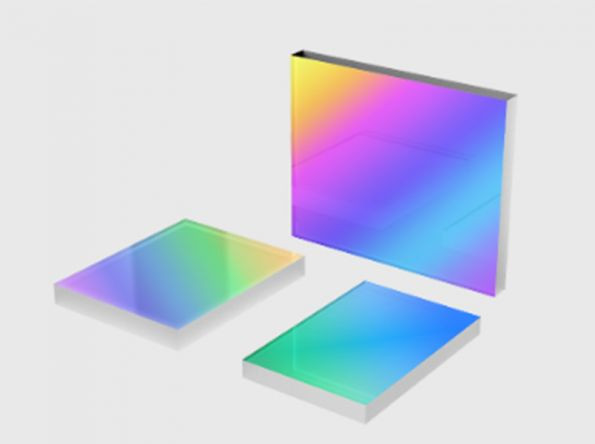
Grating is an optical element composed of a series of equidistant parallel scribe lines. It is a dispersion element that uses the principle of light diffraction and interference to split light. It is widely used in biochemical instruments, spectroscopic instruments, spectrophotometers and other related products. or related fields. There are two types of gratings: transmissive and reflective. Reflective gratings are often applied to spectrometers. Each equal-width and parallel groove acts as an optical slit. There are 1200, 1800, and 2400 lines per millimeter. Wait, there will be hundreds of thousands of reticles on the whole grating, which will effectively split the light. In the general reflective grating, because the main pole of the zero-order diffraction without dispersion ability in the grating diffraction occupies 80% of the diffracted light intensity, the light intensity becomes weaker with the increase of the main pole, so the line groove is carved into a zigzag shape. It has the ability of directional blazing, so that the ability can be concentrated and distributed in the required wavelength range. From the production method, it can be divided into ruled grating and holographic grating. The ruled grating is made by marking the reflective surface with a marking machine, while the holographic grating is made by laser interference photography. Shanghai Optics provides various types of transmission gratings, planar diffraction ruled gratings and planar holographic gratings.
 Save to Favorites
Overview
Specifications
| Parameter | Value |
|---|---|
| Material | UV Fused Silica, B270, Float Glass |
| size | 12.7*12.7*2;25*25*2;50*50*2 |
| Dimensional tolerance | ±0 . 5mm |
| Thickness Tolerance | ±0 . 2mm |
| Effective aperture | >90% |
| surface finish | 60/40 |
| Number of lines | 60-4000 |
| Shine corner | 2︒-40︒ |
Datasheet
Please provide your email to download the datasheet.
Invalid email format. Please try again.
Supplier Information
Related Products
-
 Micro-Refractive/Diffractive Array
Diffractive Optics
Shxfop
-
 Diffractive Optical Element (DOE) Laser
Diffractive Optics
Elite-lasers
Output Power: ≤200 mW Transverse Mode: Multimode Drive Mode: Analog Modulation, Digital Modulation, Computer Control
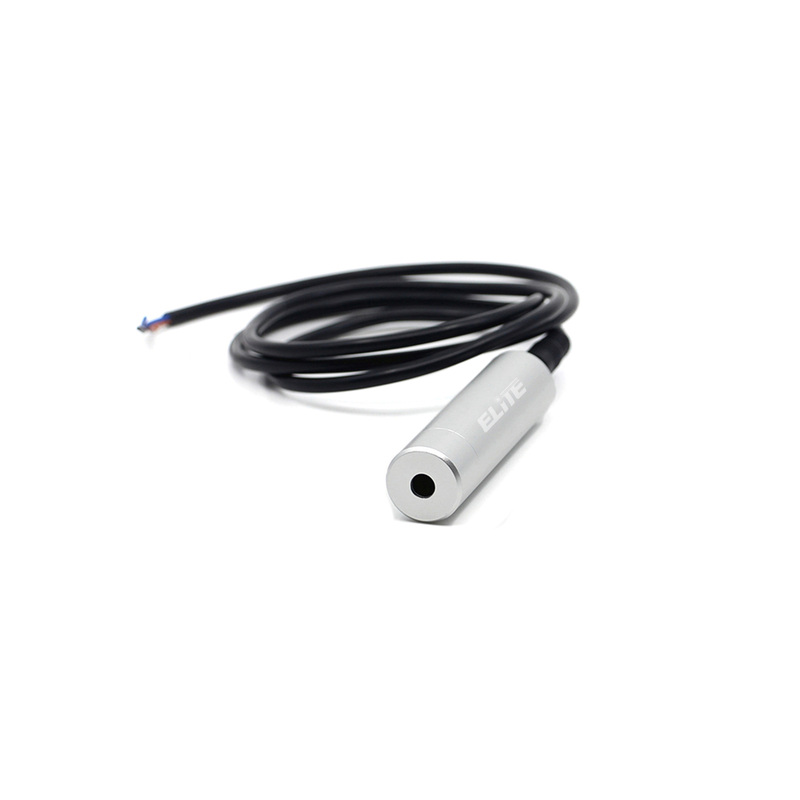
Diffractive optical elements (DOEs) are an emerging class of optics. Micro/nano-etching typically forms two-dimensional arrays of diffractive units with defined geometry and refractive index to control laser-wavefront phase precisely. Light diffracts at each unit and interferes at a distance, usually infinity or a lens focal plane, to create a specified intensity distribution. ELITE works with overseas DOE suppliers and offers customized elements. Sixteen patterns are available, including dot matrices and 3-, 5-, 7-, 11- and 81-line patterns.
-
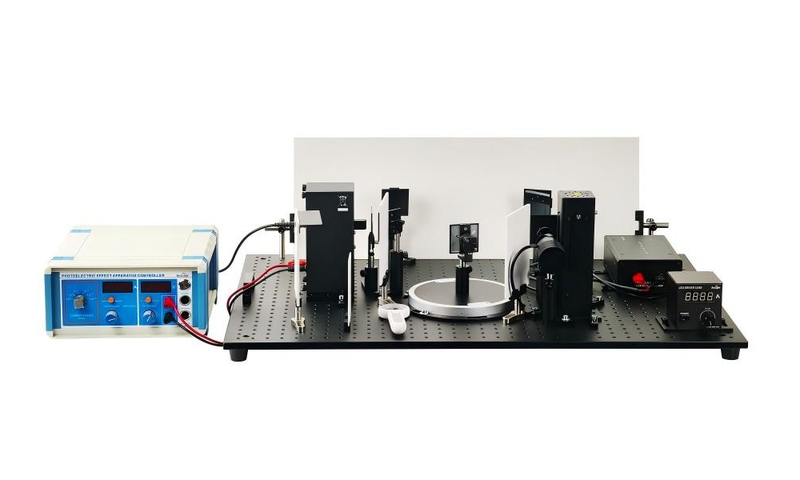 BEX-8518 grating-based comprehensive photoelectric effect experiment instrument
Diffractive Optics
Brolight
Light-splitting element: Reflection diffraction grating Light-source system: Low-pressure mercury lamp (wavelength calibration) + broadband LED source (continuous spectrum) Output Wavelength: Continuously adjustable (covering the visible region)
The BEX-8518 diffraction-grating-based comprehensive photoelectric-effect apparatus was jointly developed by Boyuan Optoelectronics and Southeast University. It won first prize in the thirteenth self-made-instrument competition of the national university experimental-physics teaching research association and is a new-generation system for introductory university physics laboratories. Traditional experiments combine mercury-lamp lines with bandpass filters, providing only five discrete wavelengths: 365nm, 405nm, 436nm, 546nm, and 577 nm. Students cannot observe continuous spectral response. This apparatus uses a reflective diffraction-grating monochromator with a low-pressure mercury lamp and broadband LED source to provide continuously tunable monochromatic light. The mercury lamp calibrates wavelength; the broadband LED supplies a continuous spectrum, from which the grating selects any wavelength to illuminate the phototube. The controller acquires photocurrent and stopping voltage for Planck-constant determination, spectral-response studies, and current-voltage measurements, allowing wave-particle duality to be verified within one apparatus. All optics mount on a precision breadboard with an open, visible path, showing the complete collimation-dispersion-focusing structure. This overcomes the teaching limitations of enclosed monochromator black boxes and supports both verification experiments and design-oriented inquiry in general- and modern-physics teaching.
-
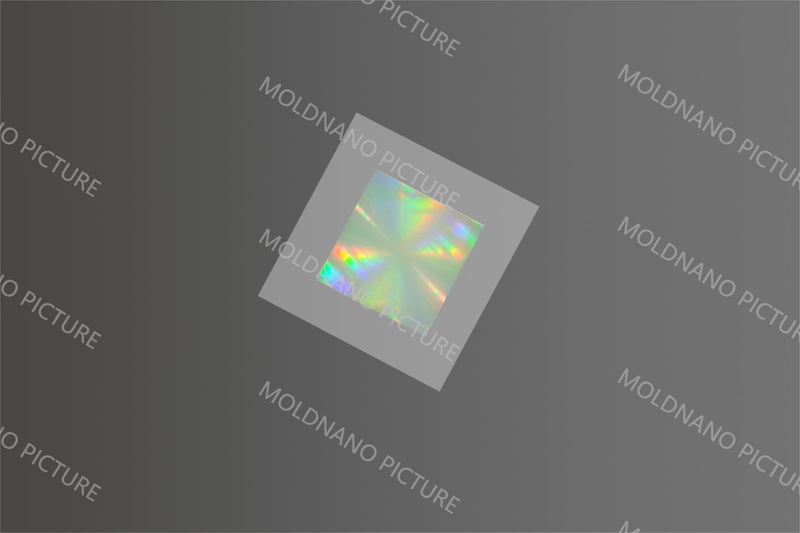 Meta-Optical Device
Diffractive Optics
Moldnano
Metalens Metasurface Uses Varied Subwavelength Arrays for Phase/Amplitude/Focus/Imaging,Thin/Light for Integration;慕德微纳 Nanometre High-Aspect Arrays for Visible/NIR.
-
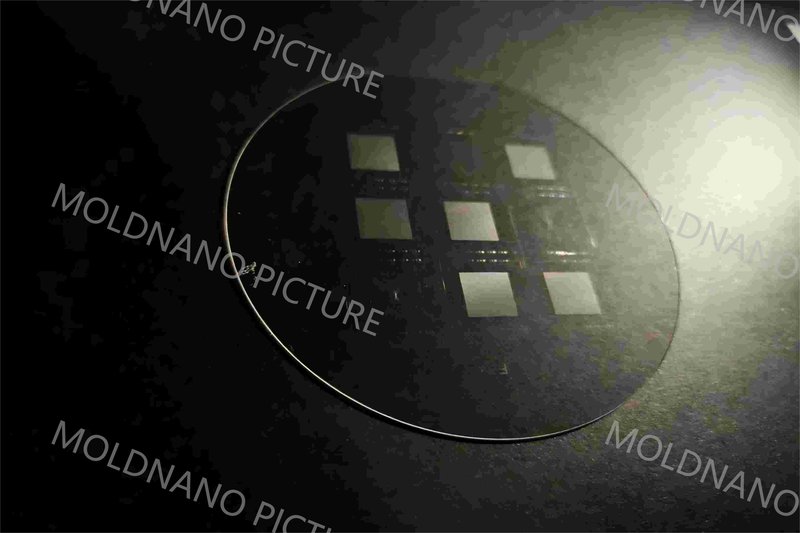 Diffractive Optical Element
Diffractive Optics
Moldnano
DOE Phase Gradient: Order 2-8 Minimum Linewidth: ≥250nm
Diffractive optical elements (DOEs) precisely control light's phase and amplitude at micro- and nanoscale dimensions. Designing the phase distribution enables various beam-shaping operations. The DOE product range mainly includes beamsplitters, homogenizers, CPA diffraction gratings and metal wire grids. 慕德微纳 offers DOE fabrication and DOE nanoimprint-template preparation, with phase-gradient levels of 2–8 and minimum line width ≥250nm.
Related Articles
VCSEL, short for Vertical Cavity Surface Emitting Laser, is a widely used semiconductor laser component in modern optoelectronics. Unlike traditional edge-emitting lasers, VCSEL emits laser light vertically from its chip surface. Thanks to its low power consumption, stable beam quality, low cost, and easy integration, it has become the core light source for 3D sensing, wearable devices, and high-speed optical communication.
As fundamental refractive optical components, plano‑convex spherical lenses consist of one convex spherical surface and one flat surface.
FiDAR, the fiber‑optic radar vehicle positioning and tracking system developed by Jianhe Bafang, is a high‑sensitivity distributed fiber‑sensing solution designed for intelligent traffic road monitoring. It outputs real‑time spatial coordinates of every vehicle across the full road section around‑the‑clock, delivering a brand‑new sensing technology for vehicle‑road cooperation, smart highway construction and urban traffic management.
Raybowlaser, a professional manufacturer of high-power laser chips, has officially launched its upgraded new-generation 1470nm high-performance laser chip. Achieving groundbreaking progress in rated output power and wall-plug efficiency (WPE), this innovative laser chip delivers superior and reliable core light source solutions for medical cosmetology, industrial processing, agricultural applications and scientific research equipment.
Loading...
Name
Phone
Organization
Use Case

Database Platform