
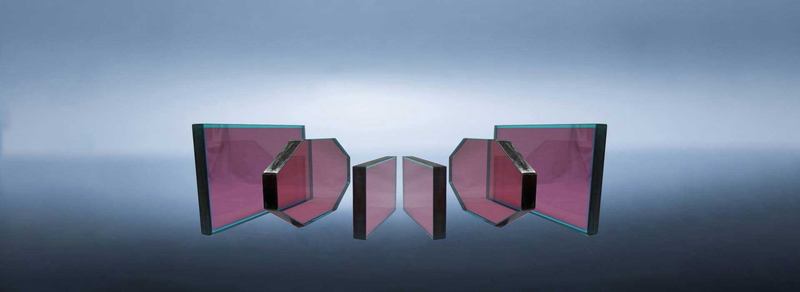
Neodymium-doped glass NAP2
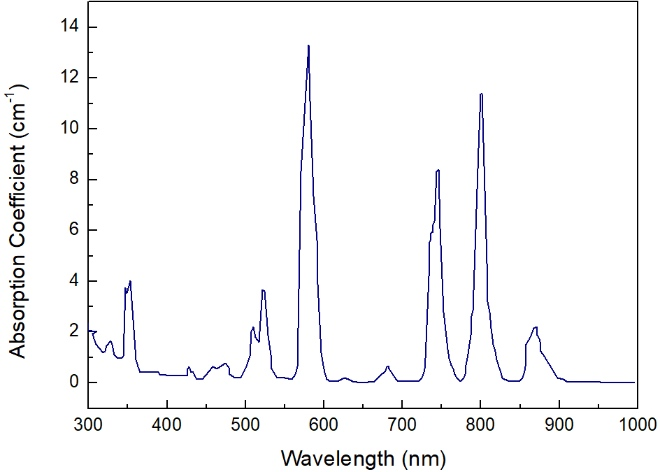
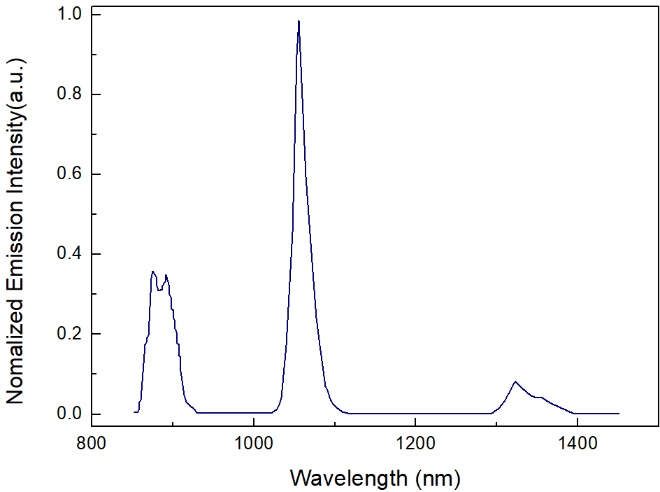
N₃₁ phosphate glass was developed for high-power laser equipment. It offers high energy storage, a large stimulated-emission cross section and a long fluorescence lifetime, and can readily be made in large sizes with good optical homogeneity. It is widely used in high-power laser systems and has been successfully applied in the Shenguang Ⅱ and Shenguang Ⅲ systems. N₄₁ neodymium-doped phosphate glass offers a high stimulated-emission cross section, a low nonlinear refractive index and good thermal properties, making it particularly suitable for high-power laser equipment. N₄₁ has a lower refractive index than N₂₁ and N₃₁. N₅₁ neodymium-doped phosphate glass offers high energy storage, a large stimulated-emission cross section, a long fluorescence lifetime and easy preparation in large sizes with good optical homogeneity, and is widely used as an amplifier medium in high-power laser systems. NAP neodymium-doped phosphate glass was developed for high-average-power applications. NAP2 and NAP4 are new laser glasses with high thermal-shock resistance, high thermal conductivity, low thermal expansion and moderate emission cross sections. They serve high-repetition-rate, high-energy-rate and high-energy laser systems, with applications in laser rangefinders, laser peening and pump lasers in OPCPA systems. NF neodymium-doped fluorophosphate glass offers a low nonlinear coefficient, a long fluorescence lifetime, scalable preparation, good glass-forming properties and good resistance to crystallization, meeting energy-storage and amplification requirements of high-energy laser systems. There are two NF glass types. NSG₂ neodymium-doped silicate glass uses neodymium as the active ion and silicate glass as the host. It offers a large stimulated-emission cross section, broad effective fluorescence linewidth and good laser and gain performance. It is widely applicable to laser manufacture. The broader glass linewidth and availability of shorter ultrashort pulses make it a preferred material for high-energy, high-peak-power lasers.
 Save to Favorites
Overview
Specifications
| Parameter | Value |
|---|---|
| Stimulated emission cross section | 3.6±0.1 10⁻²⁰cm² |
| Lifetime at 1053nm | ≥360(Nd₂O₃:0.5wt%) |
| Lifetime at 1053nm | ≥350(Nd₂O₃:1.0wt%) |
| Lifetime at 1053nm | ≥330(Nd₂O₃:2.0wt%) |
| Lifetime at 1053nm | ≥310(Nd₂O₃:3.0wt%) |
| Effective bandwidth | 25.4 nm |
| Fluorescence peak wavelength | 1052 nm |
| Absorption coefficient [1053nm] | ≤0.0015(1053nm) |
| Absorption coefficient [400nm] | ≤0.25(400nm) |
| Absorption coefficient [3333nm] | ≤1.5(3333nm) |
| Nonlinear refractive-index coefficient n² | ≤1.25 ×10⁻¹³e.s.u |
| Refractive Index [1053 nm] | 1.537±0.003 |
| Abbe value | 67 |
| Transition temperature | 500 ℃ |
| Softening temperature | 550 ℃ |
| Linear coefficient of thermal expansion [30〜100℃] | 87 10⁻⁷ / K |
| Thermal coefficient of optical path length [50〜100℃] | 3.8 10⁻⁶/ K |
| Heat conduction [25℃] | 0.76 W / Mk |
| Specific heat capacity [25℃] | 0.757 J / Gk |
| Density | 2.84 g/cm³ |
| Young's modulus | 58 Gpa |
| Poisson's ratio | 0.25 |
| Knoop hardness | 382 kg/cm² |
| Mpa.m1 / 2 | 0.68 |
| Deliquescence coefficient (mg / (cm² /day)) [H₂O 98℃] | 0.003 |
Datasheet
Supplier Information
Related Products
-
 Er:Yb:Glass+Co:spinel
Laser Crystals
Xkpho
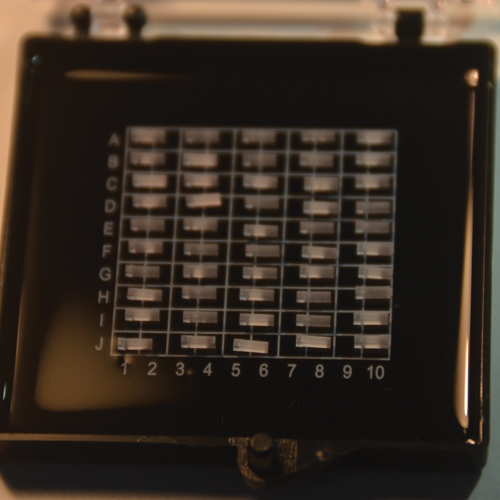
Material: Er:Yb:Glass+Co:MgAl2O4 Dimension: 0.9 mm × 0.9 mm × 3.7 mm Pumping: 915-955nm
-
 Nd:YVO4
Laser Crystals
Xkpho
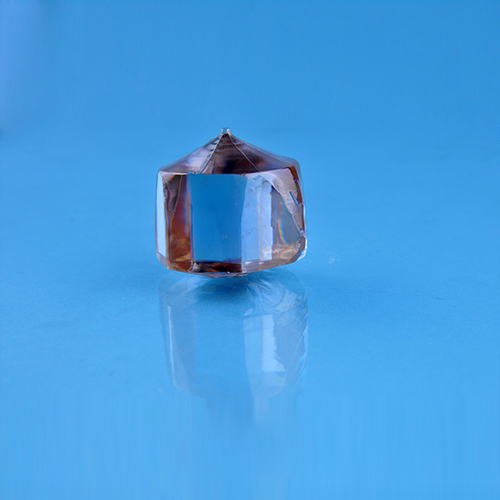
Atomic Density [Nd1.0%]: 1.26x10²⁰ atoms/cm3 (Nd1.0%) Crystal Structure: Zircon Tetragonal, space group D4h-I4/amd a=b=7.1193A,c=6.2892A Density: 4.22g/cm3
Nd:YVO4 is one of the most promising commercially available diode pumped solid state laser materials. It has high laser induced damage threshold and good mechanical in addition to optical properties. Its large stimulated emission cross-section and high absorption of pump laser make it a right crystal for pocket laser. Nd: YVO4 can produce IR green and blue laser by using minor different set-up. A broad absorption band centered at 808nm and favorable mechanical properties make Nd:YVO4 well suited for compact, efficient, high power diode-pumped lasers. Natural birefringence gives rise to a highly polarized output at 1064.3 and 1342nm.
-
 Titanium Sapphire Tunable Laser LX329
Laser Crystals
Antelaser
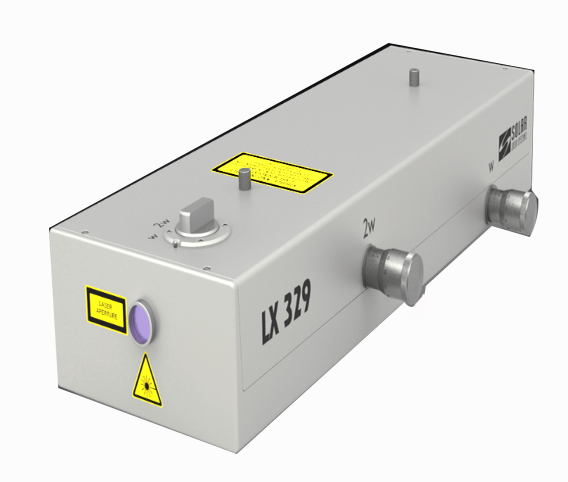
Maximum Pumping Energy: 110 mJ Repetition Rate: 10-30 Hz Harmonizing Range , nm / Base frequency: 700…980
-
 LSX-213 G2+ Nd:YAG Laser Ablation System
Laser Crystals
Hl-instruments
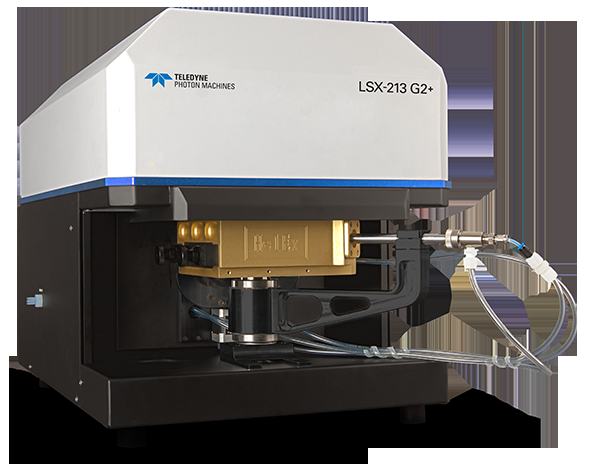
Laser Source: Five times. 213nm Q-switched Control Nd:YAG Solid Laser Source Laser Energy: >4mJ/pluse Pulse Width: <5ns
LSX-213 G2+ Optimized optical design using state-of-the-art technology 。 Use leather for durable use 、 And many harsh tests. LSX-G2 Platform , Provide super-stabilized optical performance and job stability 。 Provide all performance indicators required for routine analysis , Low operating cost , Easy to maintain 。 LSX-213 G2+ It's a closed-in. Pumping Lights and MIL One. SPEC Standard Designed and made. Laser Source , It's a super-stabilized operation. Laser Energy and minimal maintenance costs 。 It's ready. High Precision After the independent seismic optical platform ,LSX-213 G2+ Multiple sample analysis in multiple demanding environments 。 LSX-213 G2+ High performance hardware and high performance hardware with the latest technology High Precision Optical component design manufacture , It provides excellent optical resolution. , Achieving clear observations with a broad vision 。 Quality equipped 、 Multi-array and Brightness Adjustable Transmitting and reflecting lighting systems , Make sure you can also see the samples clearly at a very large multiplication. 。 LSX-213 G2+ A concise and practical structural design , Not only provide stable performance , It's also very easy to maintain. 。 Designed using open sample pool location , It's a multi-species pool. , and support users Custom Sample pool 。 Software Control Internal Aperture Auto Switch , Ripping the dot diameter range 4μm One. 200μm; System realization and ICP Two-way communications , Real time energy adjustment 、 Parameters such as dot size and scan speed ;CETAC The product facilitates your efficient work process , Achieving a fixed point —— Erosion —— Three step objectives of analysis 。
-
 Titanium Doped Sapphire
Laser Crystals
Rsgx
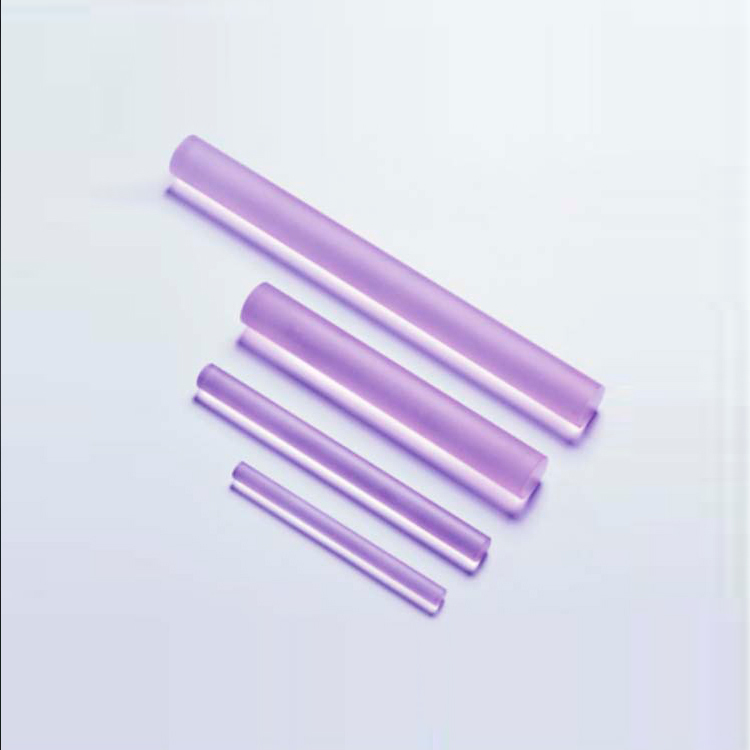
Ti203 Concentration: 0.06~0.5wt% Figure of Merit: 100~300 mm Dimension: 2~50 mm
Related Articles
As a professional ultraviolet‑laser solution provider, Precilasers has launched its 266 nm narrow‑linewidth industrial laser, delivering reliable single‑frequency output for high‑precision interference lithography, semiconductor inspection and precision metrology applications.
On November 28, 2024, the 3rd China Laser Star Enterprise Summit & Advanced Laser Processing Technology Summit, an annual influential event in the laser industry, was grandly held in Wuhan Optics Valley.
Within cutting‑edge ultrafast photonics research, asynchronous optical sampling (ASOPS) and synchronous sampling serve as fundamental technologies for terahertz excitation detection, coherent Raman imaging and other time‑resolved spectroscopy experiments.
A laser bar is an array semiconductor laser chip integrated with dozens of emitters, which realizes hundred-watt quasi-continuous output on a single chip. With regular emitter arrangement and controllable fill factor, integrated thermal design and superior wall-plug efficiency compared to single chips, it acts as the core light source for high-power pumping, medical lasers and precision processing.
Loading...
Name
Phone
Organization
Use Case

Database Platform