Innirais Hanabi Series‑Femtosecond Laser System for THz Excitation, Asynchronous & Synchronous Optical Sampling

Published: 2026-08-18 16:20:46 Views: 22

Within cutting‑edge ultrafast photonics research, asynchronous optical sampling (ASOPS) and synchronous sampling serve as fundamental technologies for terahertz excitation detection, coherent Raman imaging and other time‑resolved spectroscopy experiments.
ImageDescription
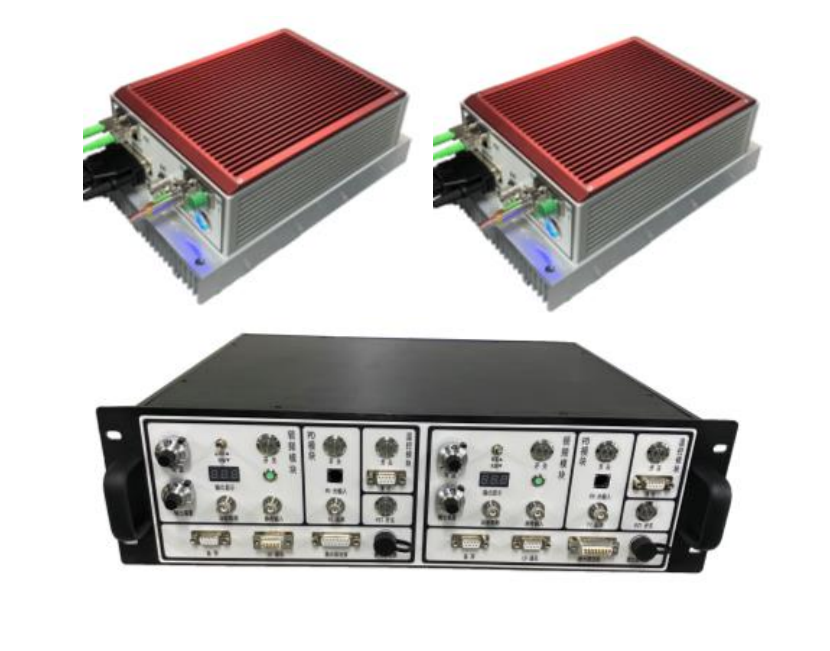
Innirais near‑infrared femtosecond laser product line enables flexible configuration by pairing any two femtosecond laser sources to realize either synchronous or asynchronous sampling performance, delivering an all‑in‑one dual‑laser measurement solution for ultrafast‑spectroscopy laboratories.

Currently, this dual‑laser system covers four mainstream wavelength bands: 515 nm, 1030 nm, 780 nm and 1560 nm. Standard repetition‑frequency options range from 100 MHz to 250 MHz, while custom‑built versions support a maximum repetition frequency up to 1.2 GHz. Three mature commercial models are available: Hanabi ALErFD100‑100, Hanabi ALEr100‑100 and Hanabi ALEr250‑200. The system provides ultra‑fine tuning for repetition‑frequency offset, with a minimum adjustment step of 10‑5 Hz for precise control of frequency difference between two laser beams.

Working Principle of Synchronous Sampling

For synchronous sampling operation, two femtosecond lasers at distinct wavelengths are locked at exactly identical repetition frequencies. Optical sampling signals are then generated through sum‑frequency generation of the two laser beams, supporting high‑precision time‑domain detection for experiments requiring strict timing synchronization.

Working Principle of Asynchronous Optical Sampling (ASOPS)

Asynchronous sampling mode employs two femtosecond lasers of the same wavelength, with a controllable repetition‑frequency offset. The commonly‑used frequency difference falls within 0‑100 kHz. High‑speed optical sampling is completed via beat‑frequency scanning between the two pulse trains. This technique eliminates the mechanical delay line and drastically accelerates spectral acquisition speed.

Typical Applications

The dual‑femtosecond‑laser sampling system is ideally suited for terahertz pump‑probe excitation and coherent anti‑Stokes Raman scattering (CARS) imaging. It can also be extended to other advanced ultrafast research fields, such as dual‑comb spectroscopy, pump‑probe dynamics measurement and multiphoton microscopy.
Related Products

Image Name Category Manufacturer Parameters Description
  • Non-Contact Type Laser-to-Fiber Coupler - Adapter Interface Fiber Optic Couplers Non-Contact Type Laser-to-Fiber Coupler - Adapter Interface Fiber Optic Couplers Shconnet

    In non-contact laser-to-fiber couplers, there is a certain air gap between the fiber and the coupling lens. This design is very flexible, allowing the use of various types of lenses with various focal lengths. The distance between the fiber and the lens in this coupler can be adjusted to compensate for small changes in laser wavelength. In high-power multimode fiber coupling systems, the distance between the fiber and the lens can be adjusted for defocusing to avoid fiber damage.

  • Non-Contact Type Laser-to-Fiber Coupler - Adapter Interface Fiber Optic Couplers Non-Contact Type Laser-to-Fiber Coupler - Adapter Interface Fiber Optic Couplers Shconnet

    In non-contact laser-to-fiber couplers, there is a certain air gap between the fiber and the coupling lens. This design is very flexible, allowing the use of various types of lenses with various focal lengths. The distance between the fiber and the lens in this coupler can be adjusted to compensate for small changes in laser wavelength. In high-power multimode fiber coupling systems, the distance between the fiber and the lens can be adjusted for defocusing to avoid fiber damage.

  • Non-Contact Type Laser-to-Fiber Coupler - Adapter Interface Fiber Optic Couplers Non-Contact Type Laser-to-Fiber Coupler - Adapter Interface Fiber Optic Couplers Shconnet

    In non-contact laser-to-fiber couplers, there is a certain air gap between the fiber and the coupling lens. This design is very flexible, allowing the use of various types of lenses with various focal lengths. The distance between the fiber and the lens in this coupler can be adjusted to compensate for small changes in laser wavelength. In high-power multimode fiber coupling systems, the distance between the fiber and the lens can be adjusted for defocusing to avoid fiber damage.

  • Non-Contact Type Laser-to-Fiber Coupler - Adapter Interface Fiber Optic Couplers Non-Contact Type Laser-to-Fiber Coupler - Adapter Interface Fiber Optic Couplers Shconnet

    In non-contact laser-to-fiber couplers, there is a certain air gap between the fiber and the coupling lens. This design is very flexible, allowing the use of various types of lenses with various focal lengths. The distance between the fiber and the lens in this coupler can be adjusted to compensate for small changes in laser wavelength. In high-power multimode fiber coupling systems, the distance between the fiber and the lens can be adjusted for defocusing to avoid fiber damage.

  • Non-Contact Type Laser-to-Fiber Coupler - Adapter Interface Fiber Optic Couplers Non-Contact Type Laser-to-Fiber Coupler - Adapter Interface Fiber Optic Couplers Shconnet

    In non-contact laser-to-fiber couplers, there is a certain air gap between the fiber and the coupling lens. This design is very flexible, allowing the use of various types of lenses with various focal lengths. The distance between the fiber and the lens in this coupler can be adjusted to compensate for small changes in laser wavelength. In high-power multimode fiber coupling systems, the distance between the fiber and the lens can be adjusted for defocusing to avoid fiber damage.

Contact Us

Loading...

A global database of 100,000 photonics products helps match you with the right product.

  • Expert Selection
  • Verified Suppliers
  • Quality Assured
AI Parametric Selection
Smart Match · Precise Recs
Enter Specifications
AI Smart Matching
Get Best Matches
Skip Manual Comparison
Find Best Solutions Fast
Select Now →