
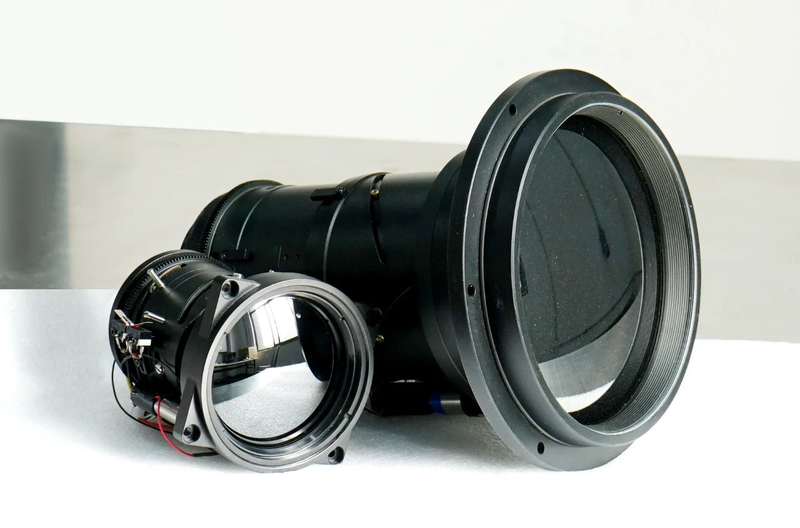
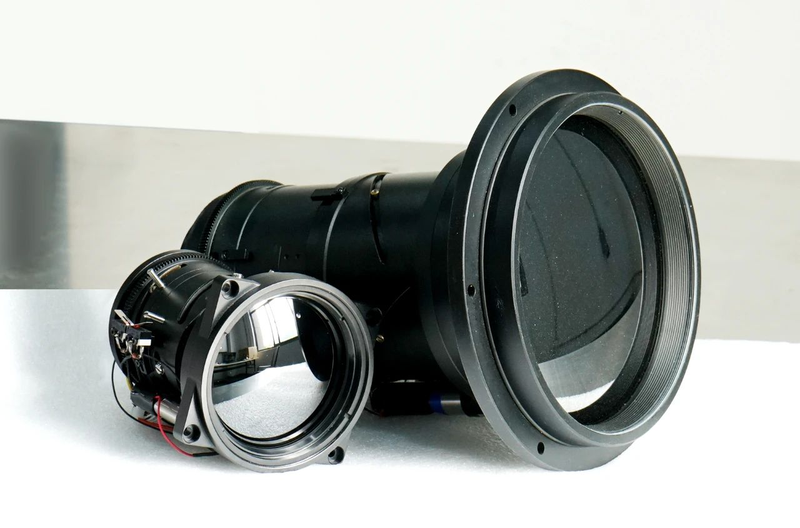
Infrared motorized lens autofocus system
The infrared motorized lens autofocus system uses an FPGA to acquire infrared lens images in real time, and applies an advanced image sharpness algorithm to quantitatively evaluate image quality. Based on the sharpness value output by the algorithm, the lens drive system employs a highly efficient search algorithm to automatically adjust the lens zoom position, requiring no manual intervention, rapidly obtaining the clearest infrared image and achieving intelligent, precise imaging results. The system is mainly applied to vehicle-mounted observation and sighting, airborne pods, urban security monitoring, forest fire prevention and warning, etc. Main components 1. Lens assembly Convex lenses and concave lenses: These lenses are the core part of the lens module, used to focus and form images of infrared light. Through precise arrangement and configuration, they effectively collect infrared radiation from objects and project it onto the photoelectric converter. Zoom lens group: To achieve the zoom function, the lens module usually contains one or more groups of movable lenses. These lens groups move relative to each other during zooming, thereby changing the focal length of the lens to adapt to the needs of different shooting distances and scenes. 2. Photoelectric converter Infrared detector: Converts infrared light into electrical signals. This is a key step in the imaging process, determining key parameters such as image resolution, sensitivity and signal-to-noise ratio. 3. Autofocus system Focus sensor: Used to detect the contour edges and contrast information of the image in real time. Through contrast and edge detection algorithms, the sensor can accurately determine the focus state of the lens and issue adjustment instructions. Drive mechanism: According to the instructions of the focus sensor, it drives the zoom lens group to move, thereby realizing the autofocus function. The drive mechanism usually includes components such as motors, gears and transmission devices. 4. Mechanical support structure Lens barrel and bracket: Used to support and fix key components such as the lens assembly, zoom mechanism, photoelectric converter and autofocus system. These components need to maintain precise relative positional relationships to ensure the imaging quality and stability of the system. Sealing and protection design: To prevent external factors such as dust and moisture from affecting the internal components of the lens module, the lens barrel and bracket usually adopt a sealed design and are equipped with appropriate protective measures. 5. Software algorithm The system integrates FPGA (Field Programmable Gate Array) image acquisition and processing with intelligent drive algorithms, improving the performance and functions of infrared imaging, while being able to complete autofocus in a short time, greatly improving imaging efficiency. The infrared motorized lens autofocus system has broad application prospects in many fields such as security, industry, medical care and scientific research. With the continuous advancement of technology and the continuous expansion of application scenarios, its application scope and performance will be further improved.
 Save to Favorites
Overview
Specifications
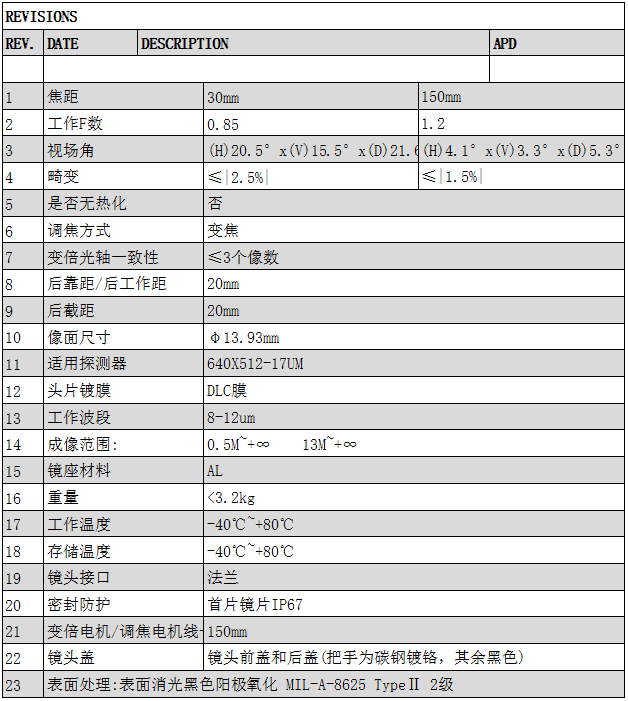
| Parameter | Value |
|---|---|
| Focal Length | 30 mm |
| Working F-number [30mm] | 0.85 |
| Field of view [30mm] | (H)20.5 ° x(V)15.5 ° |
| Distortion [30mm] | ≤|2.5 %| |
| Focal Length | 150 mm |
| Working F-number [150mm] | 1.2 |
| Field of view [150mm] | (H)4.1 ° x(V)3.3 ° x(D)5.3 ° |
| Distortion [150mm] | ≤|1.5 %| |
| Athermalization | No |
| Focusing method | Zoom |
| Zoom Optical Axis Consistency | ≤3 pixels |
| Back Focus Distance / Back Working Distance | 20 mm |
| Back Focal Length | 20 mm |
| Image Plane Size | φ13.93mm |
| Applicable Detector | 640X512-17UM |
| Front Lens Coating | DLC coating |
| Working waveband | 8-12um |
| Imaging Range: | 0.5M~∞ 13M~∞ |
| Lens Mount Material | AL |
| Weight | <3.2 kg |
| Operating Temperature | -40 °C~+80 °C |
| Storage Temperature | -40 °C~+80 °C |
| Lens mount | Flange |
| Sealing Protection | First Lens Element IP67 |
| Zoom Motor / Focus Motor Cable | 150 mm |
| Lens Cap | Lens Front Cover and Rear Cover (handle is chrome-plated carbon steel, the rest black) |
| Surface Treatment: | Matte black anodizing MIL-A-8625 TypeⅡ Class 2 |
Applications
Datasheet
Please provide your email to download the datasheet.
Invalid email format. Please try again.
Supplier Information
Related Products
-
 Line-scan lens
Imaging Lenses and Objectives
Astarphotonics
Focal length [Resolution(Pixel):4K / Relative aperture:F2.8 / Mount:M42X1 / Image format(“):Φ43mm / Field of view(°):53]: 25mm Resolution Pixel [Focal length(mm):25mm / Relative aperture:F2.8 / Mount:M42X1 / Image format(“):Φ43mm / Field of view(°):53]: 4K Relative aperture [Focal length(mm):25mm / Resolution(Pixel):4K / Mount:M42X1 / Image format(“):Φ43mm / Field of view(°):53]: F2.8
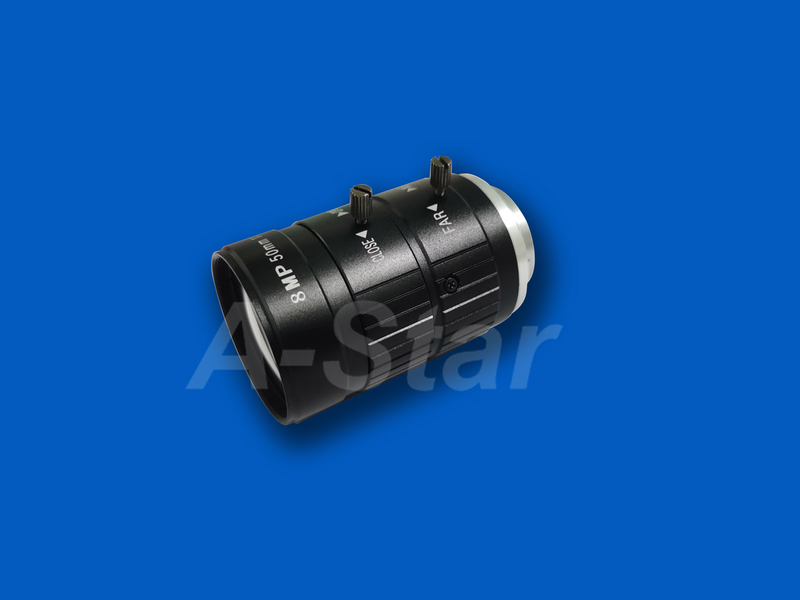
Line-scan lenses are machine-vision lenses mainly used for production-line inspection, including pharmaceutical fill-level and label inspection, date and batch-code reading, safety-seal inspection and dimensional consistency checks. Chenzheng Optoelectronics provides various line-scan lens designs and customization.
-
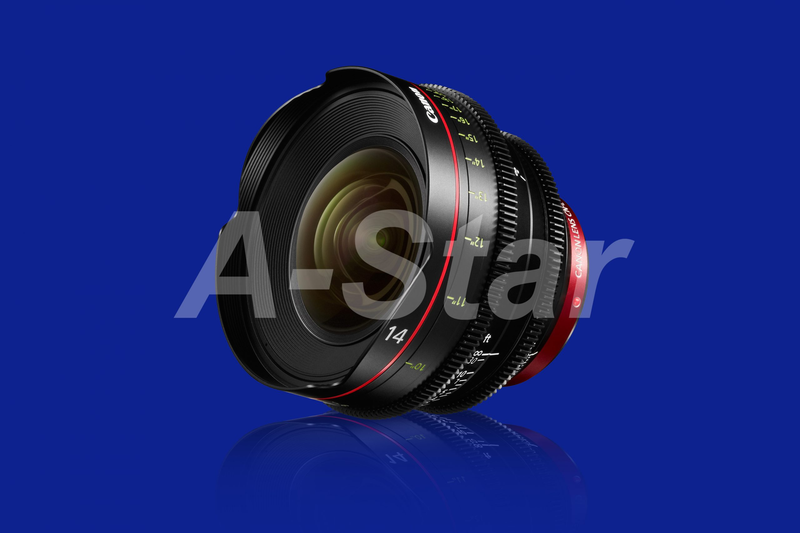 Digital camera lens
Imaging Lenses and Objectives
Astarphotonics
Focal length [Relative aperture:1:1.8 / Mount:Various options available / Image format(“):APS-C Half-frame / Horizontal field of view(°):51°]: 25mm Relative aperture [Focal length(mm):25mm / Mount:Various options available / Image format(“):APS-C Half-frame / Horizontal field of view(°):51°]: 1:1.8 Interface Mount [Focal length(mm):25mm / Relative aperture:1:1.8 / Image format(“):APS-C Half-frame / Horizontal field of view(°):51°]: Various options available
Chenzheng Optoelectronics produces various digital-camera lenses and provides lens design and customization.
-
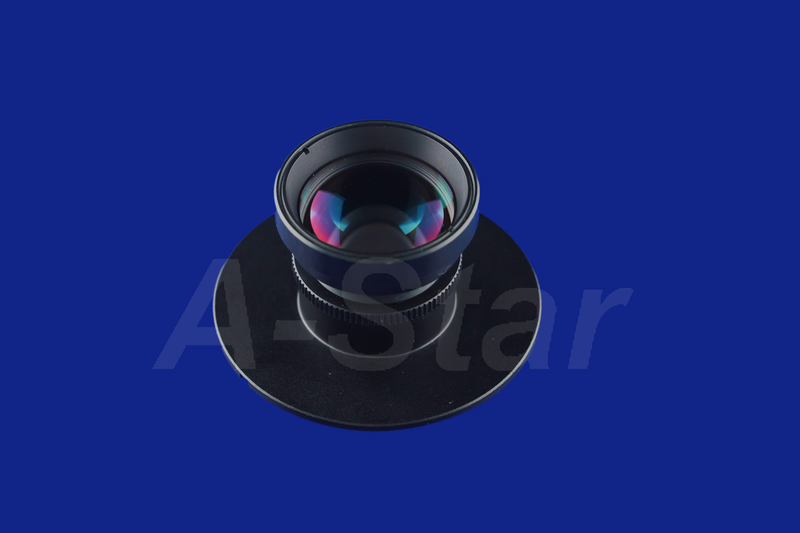 UAV aerial imaging lens
Imaging Lenses and Objectives
Astarphotonics
Focal length [Resolution(Pixel):35MP / Relative aperture:1:5.6 / Mount:SONY NEX-E / Image format(“):APS-C half-frame / Horizontal field of view(°):51]: 25mm Resolution Pixel [Focal length(mm):25mm / Relative aperture:1:5.6 / Mount:SONY NEX-E / Image format(“):APS-C half-frame / Horizontal field of view(°):51]: 35MP Relative aperture [Focal length(mm):25mm / Resolution(Pixel):35MP / Mount:SONY NEX-E / Image format(“):APS-C half-frame / Horizontal field of view(°):51]: 1:5.6
UAV aerial-photography lenses, also called surveying lenses, support aerial imaging, mapping and geological surveys. Chenzheng's lenses feature ultralow distortion, high-transmission multilayer coatings, lightweight construction and ED glass. Various designs and customization are available.
-
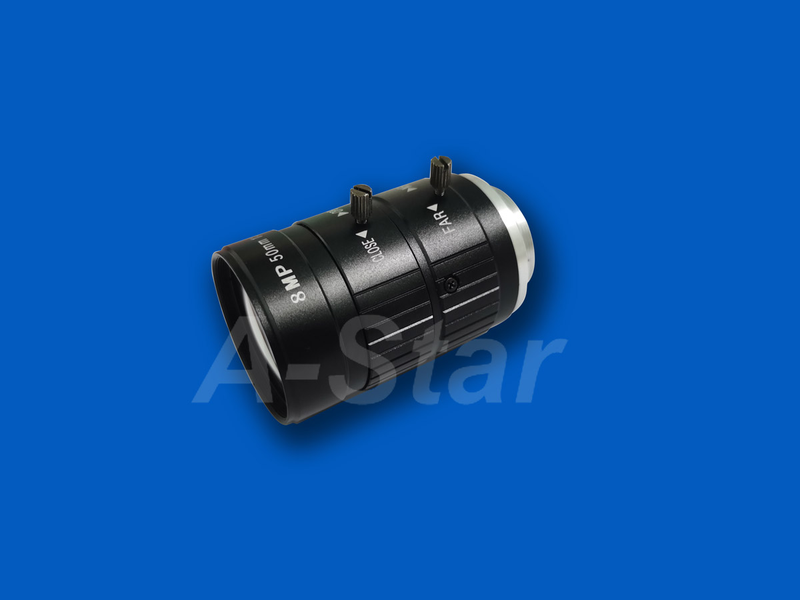 Machine vision lens
Imaging Lenses and Objectives
Astarphotonics
Focal length [Resolution (Pixel) :8MP / Relative aperture :1:2.8 / Mount :C / Image format (“):1/1.8 / Horizontal field of view Horizontal field view(°):18]: 25mm Resolution Pixel [Focal length Focal length(mm):25mm / Relative aperture :1:2.8 / Mount :C / Image format (“):1/1.8 / Horizontal field of view Horizontal field view(°):18]: 8MP Relative aperture [Focal length Focal length(mm):25mm / Resolution (Pixel) :8MP / Mount :C / Image format (“):1/1.8 / Horizontal field of view Horizontal field view(°):18]: 1:2.8
Machine-vision lenses inspect products on production lines, including electronic-component defects, batch numbers, manufacturing dates and expiry dates. Chenzheng's lenses offer large image formats, 4K resolution, ultralow distortion and high-transmission multilayer broadband coatings, designed for automated factory lines. Various types are available.
-
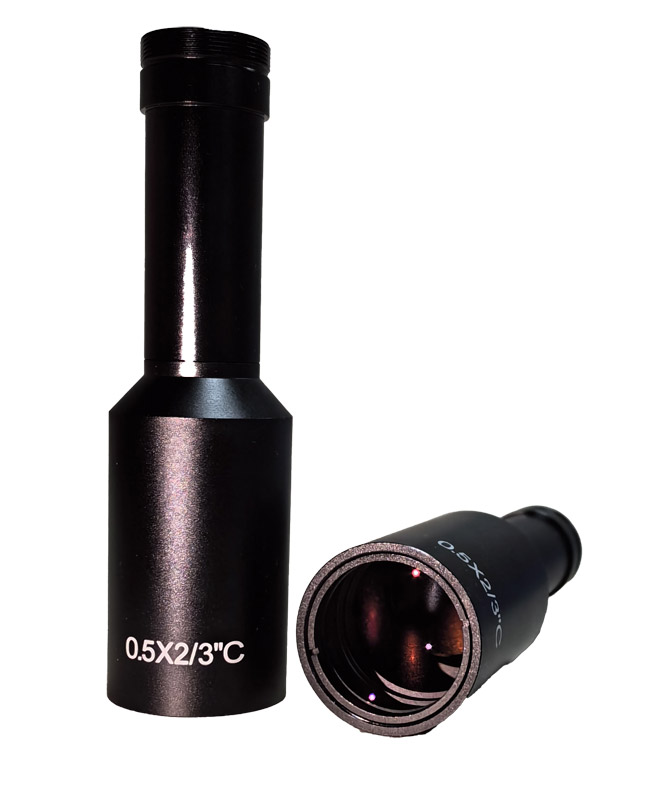 Telecentric lens (Telecentric)
Imaging Lenses and Objectives
Astarphotonics
Operating Wavelength: 400 – 700nm Optical magnification: 0.5X Working distance: 110mm±3%
Telecentric lenses correct parallax in conventional industrial lenses by maintaining constant magnification over a specified object-distance range, particularly useful when measured objects lie in different planes. This lens combines excellent telecentricity and low distortion with a fixed aperture and lockable focus for stable performance in measurement systems, workshops and assembly lines.
Related Articles
In photonics and laser technology, devices that manipulate optical signals via the electro-optic effect form the backbone of precision optical systems. Electro-optic phase modulators and electro-optic deflectors are two prominent examples of this device category. As a critical hardware solution for high-speed, high-accuracy laser beam direction control, electro-optic deflectors are widely deployed across industrial and research settings. Below is a detailed overview of their core structure, key performance drivers, and primary use cases.
As a top‑tier supplier of tunable laser chips, Shandong Zhongxin Optoelectronics Technology Company has newly launched the world’s first budget‑friendly fiber‑Bragg‑grating (FBG) demodulator and scanning module.
A laser bar is an array semiconductor laser chip integrated with dozens of emitters, which realizes hundred-watt quasi-continuous output on a single chip. With regular emitter arrangement and controllable fill factor, integrated thermal design and superior wall-plug efficiency compared to single chips, it acts as the core light source for high-power pumping, medical lasers and precision processing.
BEIJING JIEPU TREND supplies YAG+Er:YAG+YAG bonded composite slab laser crystals for high‑power solid‑state laser systems. The monolithic slab consists of two undoped YAG end‑cap layers and a central Er‑doped YAG gain segment. The overall dimension is 9 mm×9 mm×9 mm.
Loading...
Name
Phone
Organization
Use Case

Database Platform