
A Brief History of Zero-Expansion Glass
Wu Bailin Keywords: zero-expansion glass, glass-ceramics, ULE, ZERODUR, Sitall Comparison of Glass-Ceramics and ULE Parameters and comparative advantages of Russian glass-ceramics In terms of technical route, zero-expansion glass falls into two camps. One is the American CORNING ULE glass; the other is Europe's SCHOTT ZERODUR and the Russian camp's SITALL CO-115M glass-ceramics. In terms of time, the successful development and application of zero-expansion glass began in 1961, still relatively young. In the era of the US-Soviet rivalry, we relied on the former Soviet Union's SITALL CO-115M glass-ceramics to achieve successful applications in aerospace, astronomy and inertial navigation. With the dissolution of the former Soviet Union and the easing of China-US and China-Europe relations, we could also purchase American ULE and German ZERODUR materials through compliant channels. Over the past 10-plus years, materials from these three companies have all had relatively successful applications in China. Today, the cavity and mirror materials of China's laser gyroscopes are absolutely dominated by ZERODUR and SITALL CO-115M. In astronomy, the famous LAMOST project mainly uses Russian SITALL CO-115M. Therefore, in the astronomy field, Germany's SCHOTT ZERODUR and Russia's SITALL CO-115M both have markets in China. In the aerospace field, the market is divided among three parties. As for the specific technical specifications and parameters of the three companies' products, we will set them aside for now; if needed, you can contact us by phone or email/WeChat to request them, and we will not repeat the publicly available material parameters here. Here we talk about some content that cannot be seen from parameter sheets or other public channels. First, although the American CORNING is famous for ULE, it also possesses glass-ceramic technology and capability, which had already matured and been finalized in 1961. Only after comparing the pros and cons of ULE and glass-ceramics did it, on balance, abandon glass-ceramics and choose ULE. Why? Is ULE better than glass-ceramics? The conclusion is that each has advantages and disadvantages. Whether it is an advantage or disadvantage depends on the specific operating environment. The Americans ultimately chose ULE, and did not abandon glass-ceramics either, but put it to civilian use. The CORNING glass-ceramic cookware on the market is quite classy. But this glass-ceramic is not aerospace-grade. Let's first talk about the comparative advantages between ULE and glass-ceramics (not discussing the content on the parameter sheets). ULE is essentially quartz doped with Ti, and in terms of material structure it is a single-phase material. Glass-ceramics, on the other hand, are glassy substances. Glass is a mixture. Glass-ceramics are a mixture in which oxides of multiple substances such as silicon, aluminum and titanium are melted together in a specific ratio range. Comparing the two in terms of material structure is like comparing natural rock crystal with stone. Stone will weather, while rock crystal will not. This is why the mountains we see are all bun-shaped, while crystal deposits remain forever in their original appearance. The second obvious difference is the adaptability to operating environment temperature. The crystal nuclei of glass-ceramics are formed by heat treatment at around 130 degrees Celsius, producing a certain proportion range of so-called glass-ceramic crystal nuclei with negative expansion coefficients. When the actual operating environment later approaches this temperature range, it means that annealing or reverse annealing will occur again, which inevitably affects the material structure and properties. ULE has no such concern, and its applicable temperature range is much wider, remaining unchanged up to 300 degrees Celsius at high temperature. It needs to be clarified that glass-ceramics can still be used at high temperature ranges, but their environmental adaptability and long-term stability are at a relative disadvantage — glass-ceramics are still glass-ceramics, but not the same glass-ceramics as before. Relatively speaking, glass-ceramics have better cutting and machining properties while ULE is relatively more brittle, but ULE has better welding (fusing) properties; each side scores one point in this respect. Of course, glass-ceramics also have advantages. In manufacturing high-precision laser gyroscope cavities and mirrors, because of their absolutely superior sealing properties, glass-ceramics hold an absolute monopoly and ULE can only concede defeat. The author personally experienced two such incidents. When China first imported these two materials, the full characteristics, pros and cons of the two materials were not clear. Both appeared to be zero-expansion materials, and one of them was even American. Although we despised the paper tiger and looked down on their having more steel than spirit, some people might have thought the paper tiger's weapons were still okay. So the relevant units considered using this material on gyroscopes — who knows, maybe the performance would be even better? Later, the author inadvertently learned about the weakness of ULE material in He leakage, and conducted targeted exchanges with units of CASIC and AVIC respectively, both of which verified it. Unfortunately, one of the units did not draw inferences; although it used a glass-ceramic cavity, it used a quartz mirror, causing the consequence of He leakage to be exposed only several years later, which can be regarded as a small lesson and proof. Another disadvantage of ULE material is that the density and probability of striae are greater than those of glass-ceramics. This is also why the French SAGEM used glass-ceramics instead of ULE when making the 1.1-meter-aperture Fizeau (FIZEAU FLAT) reference flat. In terms of overall application, in astronomy, glass-ceramics and ULE are interchangeable; in the aerospace mirror field, they are interchangeable, with the US using ULE while Europe and Russia use glass-ceramics; China uses both. The overall trend is that the share of silicon carbide has been increasing in recent years. In the laser gyroscope field, glass-ceramics are unrivaled; in atomic clocks, ULE is the undisputed choice, while other etalons split the market in two. Japanese glass-ceramics also entered the stage after the 1980s, and the recent TMT project even adopted Japanese glass-ceramics. But they have almost no presence in China. The reasons are: first, the material properties are slightly different from the European channel, and there are some small problems in complete substitution; second, political reasons — although Japan has technical advantages over China, its attitude of extreme wariness and miserliness toward China is even more off-putting than that of the US and Europe. Combined with the attitudes of user industries toward the historical entanglements between the two nations, the decline of Japanese glass-ceramics in China is inevitable. Finally, let's talk about the history and current status of domestic independent glass-ceramics. In the 1980s, the Shanghai Xinhu Glass Factory began developing glass-ceramics, and at one point claimed success. However, with the successive shattering of two domestically produced Xinhu glass-ceramic blanks in the 2.16-meter telescope project, it was a hard-luck story that dealt a heavy blow to its glass-ceramic business. Afterwards, although the LAMOST project once used a small amount, that was a thing of the past. Later, with industrial restructuring, the Xinhu Glass Factory was closed and key personnel went to the United States, bringing this matter to an end for a while. After entering the new millennium, a Beijing institution restarted the glass-ceramic project in the form of a state-funded project, and passed expert acceptance, but it was never adopted for fielding. The reason, as for why, you know. After 2010, the Guangming factory became involved in the R&D of this product and has been offering it for several years now. But judging from the actual market, it is far from the stage of fully replacing imports. A few years ago, a European company even specifically tested the Guangming factory's glass-ceramics and ultimately did not adopt them. As consolation, glass-ceramic panels for induction cookers and gas stoves in the civilian market have generally been domestically produced, and their material mechanism is largely the same as that of glass-ceramics for aerospace and space applications, except that the technical requirements are lower. Of course, with the improvement of our country's economic and political status, the strengthening of purchasing power, and the expansion of market scale, under the law that the world bustles for profit, the embargo on such products has basically become nominal, and for our country, material supply is no longer a big problem. Let him be strong, the breeze brushes the mountain ridge; let him be overbearing, the bright moon shines over the great river; let him be ruthless and wicked, my one breath of true qi is enough. Let everyone do their own job well and improve their strength, and friends will naturally grow in number. After all, those who wish to clash with the strong are few; those who clash with both the strong and real economic interests — that would be sick, wouldn't it? For the technical comparison of Russian glass-ceramics, due to space limitations, please refer to the author's other article "Russian Glass-Ceramics". If you have related needs or technical questions to discuss, or need any detailed material technical parameter sheets, you can send an email to: this email address is protected by anti-spam plugin. To display it you need to enable JavaScript in your browser. Or contact Shanghai Lianken Optoelectronics. For more information, please follow the official WeChat account of Shanghai Lianken Optoelectronics: oeengine-com
 Save to Favorites
Overview
Applications
Key Features
Datasheet
Please provide your email to download the datasheet.
Invalid email format. Please try again.
Supplier Information
Related Products
-
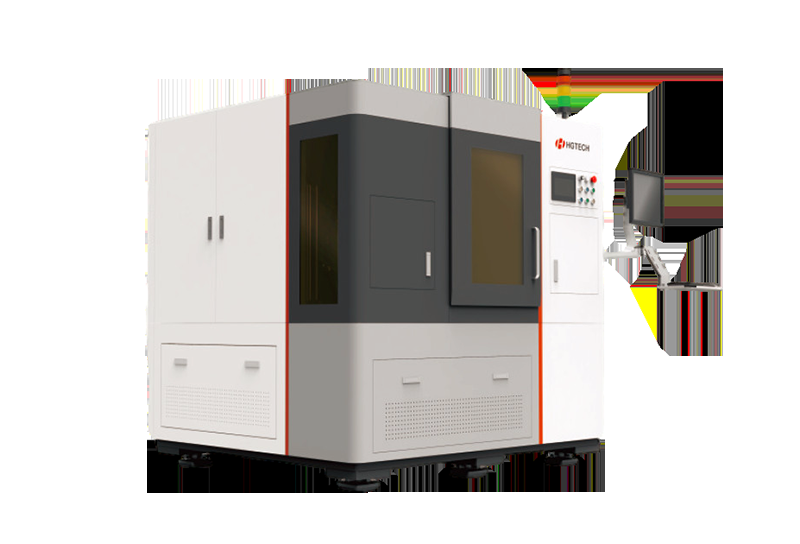 RCUT fully automated sapphire cutting device
Optical Material
Hglaser
RCUT fully automated sapphire cutting device
Optical Material
Hglaser
Average output power: ≥30W/≥70W Pulse width: <10ps Single pulse energy: >270u(j 150KHz)
The rapid cutting of sapphire mobile phone windows is being developed; new technologies for leather-second lasers are being introduced; and the processing of original lasers has the advantage of speed, fall edge and no cone. Devices can also be used for sapphire lens caps, home key cutting; various optical glass cuttings; wide application
-
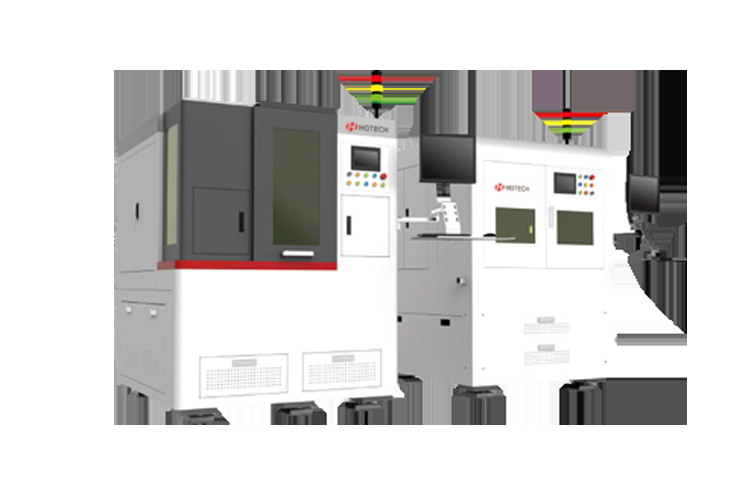 Full automatic leather seconds laser sapphire cutting/fissile equipment
Optical Material
Hglaser
Full automatic leather seconds laser sapphire cutting/fissile equipment
Optical Material
Hglaser
• Use of leather-second laser processing; efficient cutting of transparent materials such as sapphire, glass, etc. • High processing accuracy; no cones; drop edges of less than 10 m; precise optical circuit design with high-speed high-precision straight-line electric power; and guaranteed quality laser transmission. • Equipment of automated processing systems
-
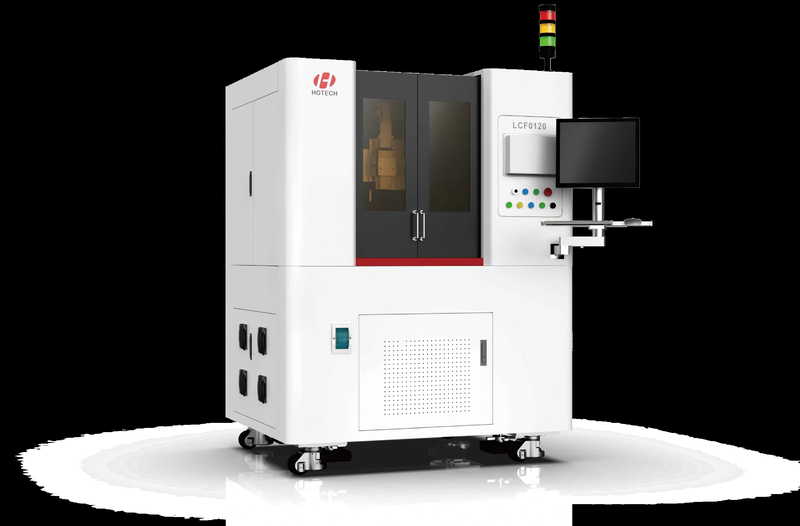 Silicon tablet laser cutting intelligence equipment
Optical Material
Hglaser
Silicon tablet laser cutting intelligence equipment
Optical Material
Hglaser
Flat: <0.15mm Parallel degrees: <0.3mm
Laser cutting for flat-wire silicon steel. They consist mainly of marble racks, XY-line electrical platforms, visual capture systems, super-fast laser systems and cooling systems
-
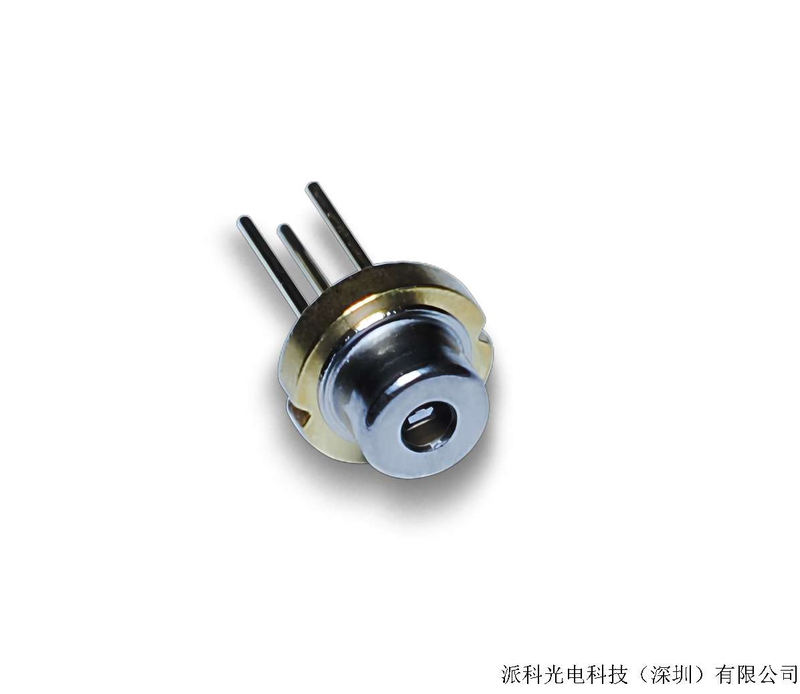 TO Large Power Blue Light Laser (Silon Carbide Thermal Deposition)
Optical Material
Iqpackage
TO Large Power Blue Light Laser (Silon Carbide Thermal Deposition)
Optical Material
Iqpackage
Seal Size: TO5 Materials: Deforestable alloy/copper Driver current: 3.2A
Our company's blue-light lasers use carbide silica heat; they significantly increase dispersive performance; they use nitrogen containment to improve product reliability; they apply to laser lighting, laser engraving, laser welding, laser display, etc
-
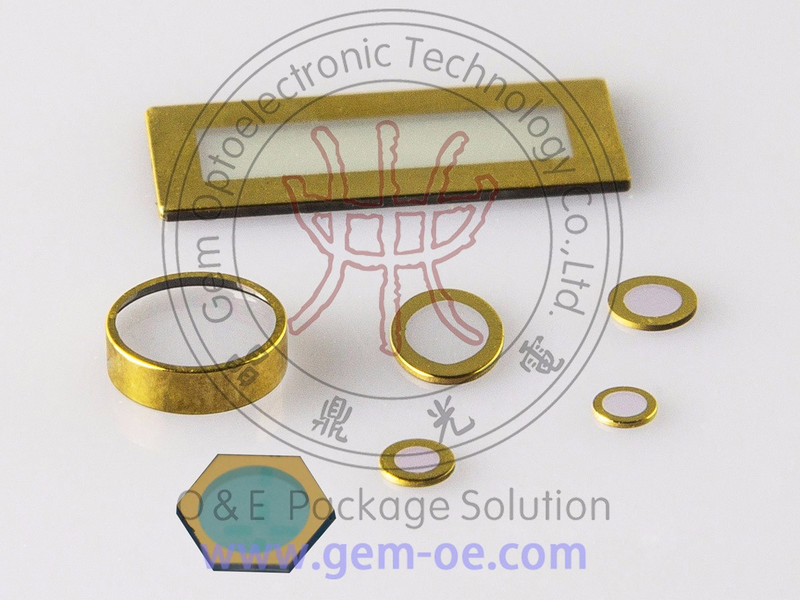 Sapphire window
Optical Material
Gem-oe
Sapphire window
Optical Material
Gem-oe
Optical valid calibre: Φ1; Φ0.85; Φ1.6; Φ2.2; Φ3.2; Φ11; Φ26; 8.58.59; 137; 16x4 Metalized area: ≥Φ1.25; ≥Φ1.15; ≥Φ1.8; ≥Φ2.4; ≥Φ3.4; ≥Φ11.4; ≥Φ26.4; ≥8.98.9; ≥13.47.4; ≥16.4x4.4
The flat windows should be used in areas such as light communications, photoelectronics and sensors that can be seen in near-infrared bands; the main products are sapphire, stone, and K9 glass windows. The main specifications for sapphire flat windows are: φ1.8 x 0.28; φ2.0 x 0.28; φ2.5 x 0.28; φ2.87 x 0.28; φ2.9 x 0.28; etc.; customisation as required by the client
Related Articles
CytoViva delivers comprehensive hyperspectral imaging solutions covering visible to near-infrared spectrum, compatible with brightfield, fluorescence and proprietary enhanced darkfield microscopy modes.
Wuhan Optics Valley Quantum Technology Co., Ltd. is a leading domestic developer of high‑speed semiconductor optical chips and photodetector components. Our product portfolio covers InGaAs avalanche photodiode bare dies and PIN photodetector chips designed for fiber‑optic communication
Founded in 2019, Jilin JC Ultrafast Equipment Co., Ltd. is a high-tech enterprise incubated by the Ultrafast Optoelectronics Center of Jilin University. Our R&D team owns 15 years of profound experience in femtosecond laser micro-nano fabrication.
Driven by the continuous pursuit of higher precision and efficiency in optical communication and optoelectronic device manufacturing, OLCR-1000 Low-Coherence Interferometer, independently developed by Wuhan Guanggu Interconnect Technology Co., Ltd., provides an innovative technical solution for distributed return loss testing of optical fibers and optoelectronic devices.
Loading...
Name
Phone
Organization
Use Case

Database Platform