

Broadband Single-Mode Fiber Coupler
The fiber couplers produced by Shanghai Hanyu using mature fused biconical taper (FBT) technology feature low loss, low cost and mature processes, and are suitable for making single-mode, multimode and other optical couplers. However, because the coupling region produced by the fused biconical taper (FBT) technology is wavelength-sensitive, it is subject to constraints such as wavelength and fiber type. Currently, our company can provide single-mode fiber couplers of various wavelengths. The 1x2/2x2 standard fused biconical taper fiber couplers are made of Corning SMF-28 single-mode fiber. The operating wavelength can be set to 1310nm, 1480nm, 1550nm, 1625nm, etc. Other operating wavelengths in the 1280nm-1650nm range can be specified. The fiber couplers produced by fused biconical taper technology offer accurate wavelength and provide a settable splitting ratio within a certain bandwidth, and by bandwidth can be divided into narrowband, wideband and ultra-wideband types. The most basic unit is the 2x2 (1x2) type, but various structures of optical couplers can be made by cascading. Shanghai Hanyu's single-window wideband single-mode fiber couplers can ensure that all performance specifications are fully met within an operating bandwidth of +/-40nm around the center wavelength, while having very low excess loss (typical value less than 0.05dB). Therefore, the devices have excellent long-term stability and reliability, and the comprehensive specifications of the products represent the world-leading level.
 Save to Favorites
Overview
Specifications
| Parameter | Value |
|---|---|
| Split Ratio | 50:50% |
| Polarization Dependent Loss | ≤0.05dB |
| Split Ratio | +/-0.4% |
| Wavelength Dependent Loss (WDL) | +/-0.4 |
Key Features
Datasheet
Supplier Information
Related Products
-
 1×N(2×N) Single Mode Coupler Module
Fiber Optic Couplers
Zshx
1×N(2×N) Single Mode Coupler Module
Fiber Optic Couplers
Zshx
Model@FiberType: fiber Installation@Installation: 118×29.2(2-Φ6)
⚫ High Return Loss;
-
 Multimode fiber optic Coupler
Fiber Optic Couplers
Zshx
Multimode fiber optic Coupler
Fiber Optic Couplers
Zshx
Low PDL;
-
 Tap coupler+Isolator hybrid device
Fiber Optic Couplers
Zshx
Tap coupler+Isolator hybrid device
Fiber Optic Couplers
Zshx
⚫ High Isolator;
-
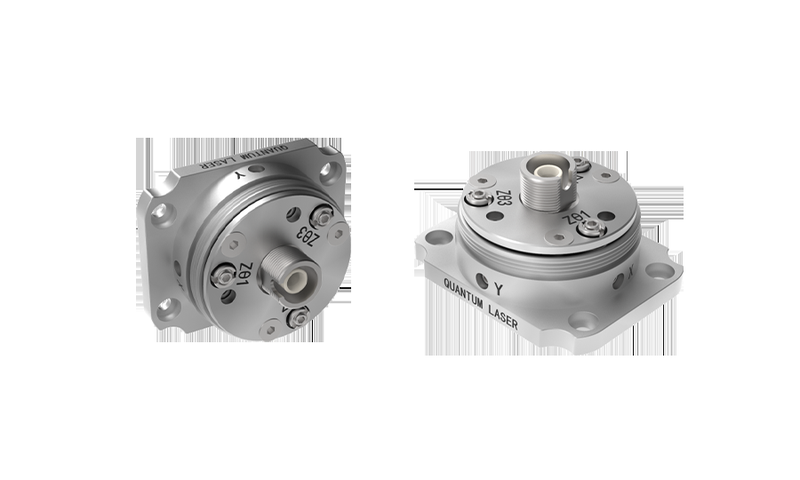 Multi-axis fibre-optic coupling
Fiber Optic Couplers
Qtlaser
Multi-axis fibre-optic coupling
Fiber Optic Couplers
Qtlaser
Combination efficiency: ≥70% Valid focal length: Customise Transminal Type: 350-700nm、600-1050nm、1050-1620nm
Multi-axis fibre-optic couplings regulate the design through high precision five-axis; maintain the interface and fibre-optics in motion; align the positions of the inner lenses X and Y, respectively; and align the Z-axis orientations with the angles of the Z-axis based on the three Z-axis regulators; and meet the user ' s laser alignment/associate straightness functional needs. The overall structure is compact; it is easy; it is heat-stabilized; it is high resolution-to-structure; it is suitable for long-term or short-term alignment/precision. In addition; the position of the K key at the fibre-optic interface can be reconciled with three fixed screws of screwdrivers; and the alignment of the fibre-optics for protection purposes. The locks on the Z-axis adjuster can be locked by locking the wrench; fixed lenses can be leaned over and tilted at an angle. The panel position contains a tight screw with an X/Y axis regulator; the X/Y axis regulator can be fined up by the adjustment tension. X/Y axle adjuster with a lock screw on the side X/Y axle; normally without locking; if in a larger vibration and impact environment; if a lock screw lock is required Tight
-
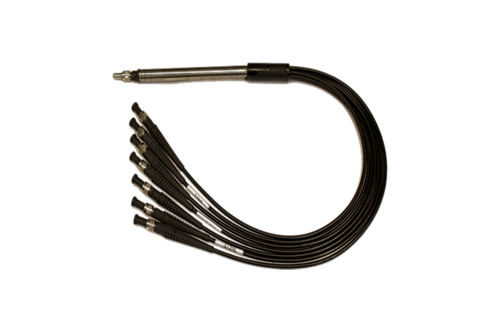 Fibre-optic coupling/decompositioners
Fiber Optic Couplers
Leirte
Fibre-optic coupling/decompositioners
Fiber Optic Couplers
Leirte
Related Articles
For low-frequency RF, electromagnetic testing and power combining systems, conventional resistive power dividers bring high insertion loss, while standard directional couplers cannot provide equal-amplitude signals with 180° phase shift. They fail differential circuits, balanced amplifiers and signal cancellation systems.
Recently, our R&D crew carried‑out performance tests on domestically‑made third‑party LiDAR hardware. The original built‑in sensor chip was replaced by Optics‑Valley Quantum’s new‑generation D‑XXLA200‑02 chip.
Within cutting‑edge ultrafast photonics research, asynchronous optical sampling (ASOPS) and synchronous sampling serve as fundamental technologies for terahertz excitation detection, coherent Raman imaging and other time‑resolved spectroscopy experiments.
Shanghai Connet Laser Technology Co., Ltd. focuses on technological innovation, delivering cutting-edge photonic products & solutions for industrial lasers, LiDAR, fiber optic sensing, coherent telecom, cold atom physics and precision spectroscopy research & mass manufacturing.
Loading...
Name
Phone
Organization
Use Case

Database Platform