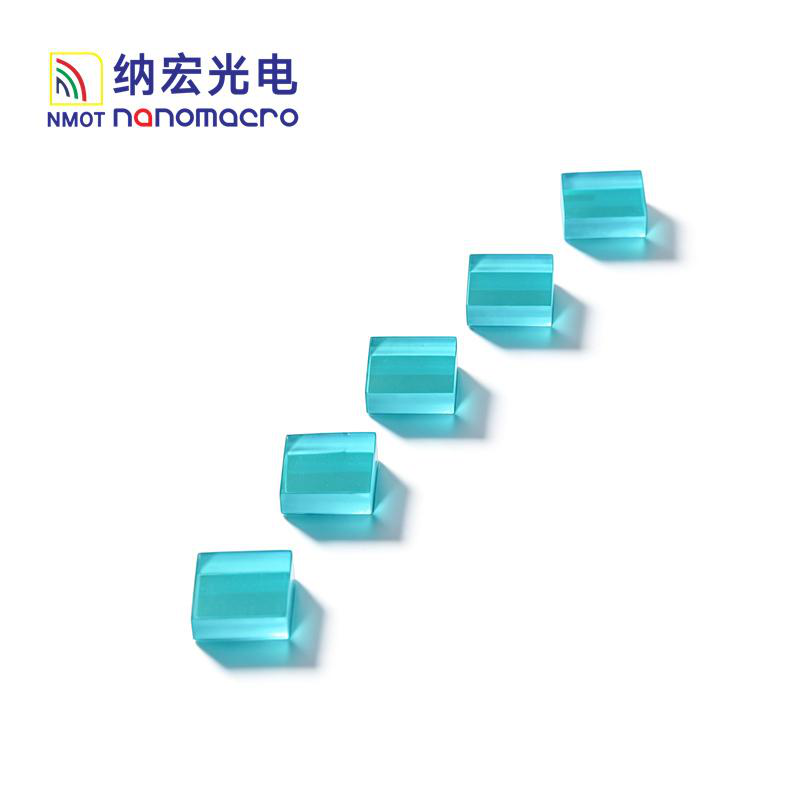
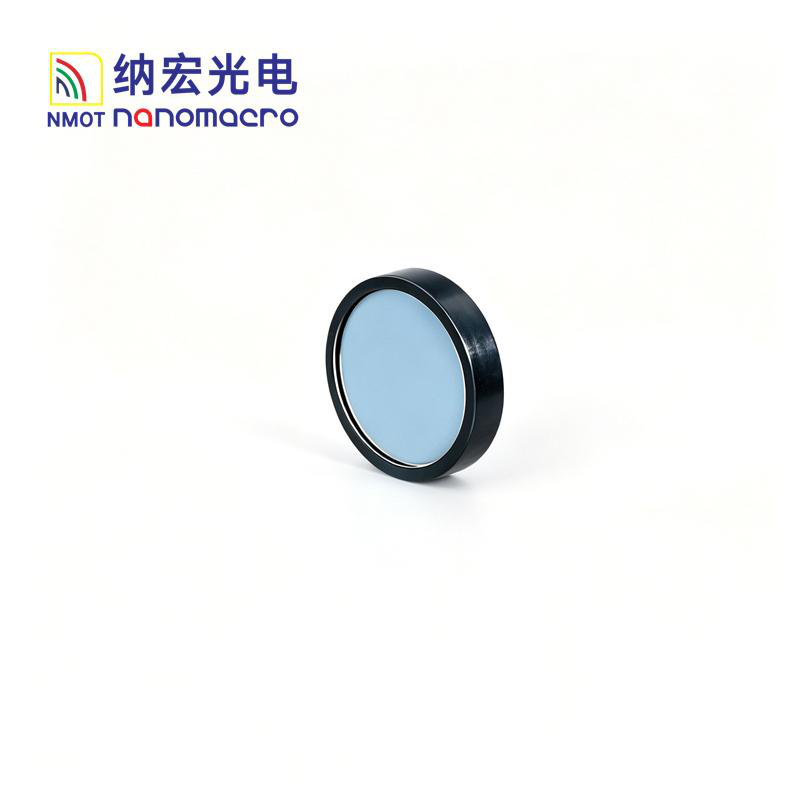
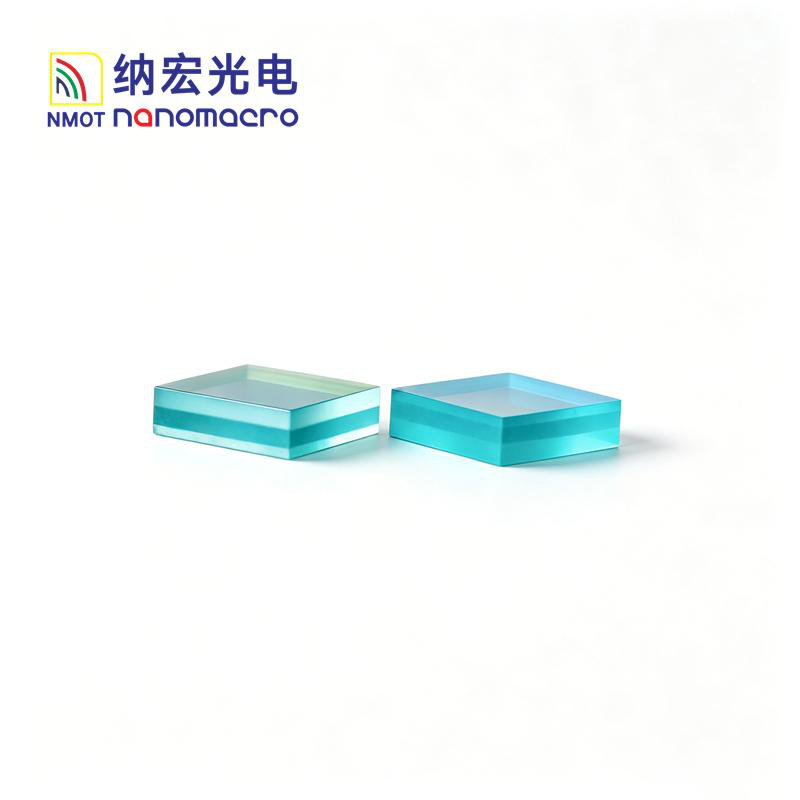
Innovation Photoelectric 850 940nm Narrow Bandpass Filter for Security Monitoring

Published: 2026-08-25 16:18:06 Views: 8

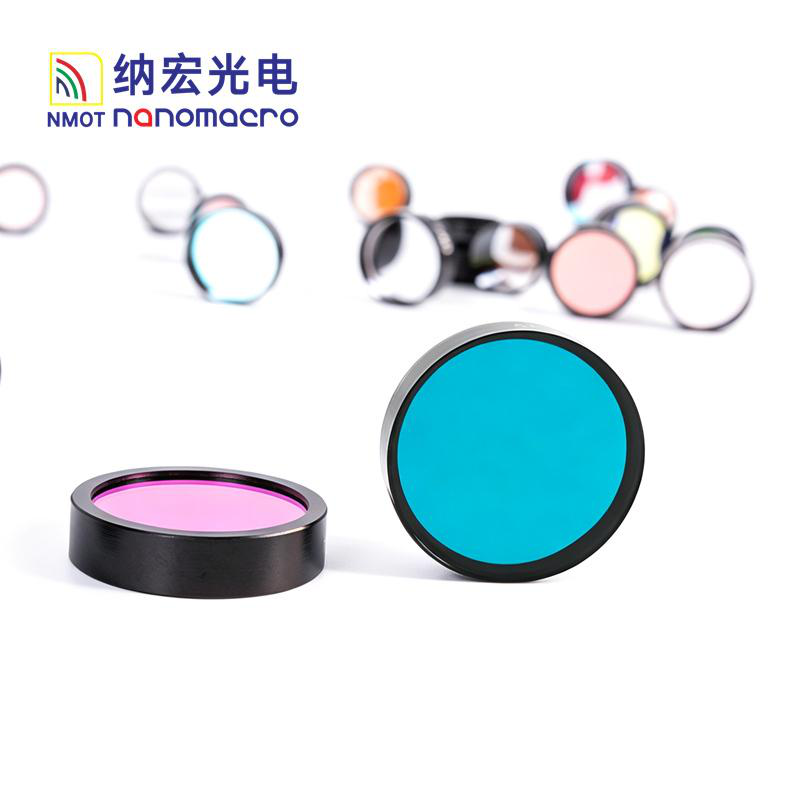
The 850 nm and 940 nm infrared narrow‑bandpass filters launched by Innovation Photoelectric are core optical components specially designed for day‑and‑night security cameras. They effectively eliminate image interference during visible‑light and infrared‑illumination switching, delivering stable round‑the‑clock monitoring performance.

1. Core Functional Features

These narrow‑bandpass filters realize high‑quality dual‑mode imaging. In bright daytime conditions, unwanted infrared radiation is blocked from reaching the image sensor, preventing color distortion and blurring so as to maintain accurate visible‑light reproduction. When ambient light fades at night, the filter transmits 850 nm or 940 nm infrared rays to cooperate with IR‑LED illuminators for night‑vision monitoring.

Thanks to precision‑coated narrow‑spectrum selection, only target infrared wavelengths pass through while stray ambient light is suppressed, greatly improving signal‑to‑noise ratio and image contrast. Clear and steady footage can still be obtained under low‑light, haze and other challenging environments to enhance monitoring reliability.

2. Difference Between 850 nm and 940 nm Filters

The primary distinction lies in operating wavelength and red‑glow effect from infrared LEDs.

The 850 nm narrow‑bandpass filter matches 850 nm infrared sources for higher night‑vision brightness. However, the IR‑LED generates a slight visible red glow, which is suitable for general‑purpose monitoring such as traffic surveillance, shopping‑mall security, where high brightness is prioritized over concealment.

The 940 nm narrow‑bandpass filter works with 940 nm infrared emitters. Since its wavelength sits further from the visible spectrum, red glow is nearly invisible, offering superior concealment. It is widely deployed in high‑security sites such as banks where covert monitoring is required.

3. Working Principle

Multilayer interference optical coatings achieve wavelength‑selective transmission. The coating stack forms a precise spectral pass‑window. Infrared disturbance is filtered out during daytime imaging to guarantee pure visible footage. At night, target‑band infrared light (850 nm or 940 nm) penetrates the filter and reaches the sensor, enabling seamless day‑night switching for continuous monitoring.

4. Typical Applications

24‑hour security surveillance: IP cameras and speed domes installed in banks, commercial buildings, transport hubs, residential communities and industrial parks;

IR supplementary‑lighting night‑vision systems, delivering clear monitoring images in dim environments;

Complex‑condition monitoring under haze, backlight and low‑illumination scenarios for stray‑light suppression and noise reduction.

5. Technical Advantages

Imaging performance is enhanced by stray‑light elimination, lower image noise, higher definition and faithful color reproduction.

Excellent all‑weather adaptability enables smooth switching between daytime visible‑light mode and nighttime infrared mode.

The 940 nm variant achieves minimal red glow, providing outstanding concealment for high‑security monitoring projects.

Conclusion

As essential optical elements for security cameras, 850 nm and 940 nm narrow‑bandpass filters resolve conflicts between daytime and nighttime imaging via accurate spectral selection. Innovation Photoelectric provides customized wavelength‑matched filter solutions according to brightness and concealment requirements, delivering robust optical support for diverse security‑monitoring systems.
Related Products

Image Name Category Manufacturer Parameters Description
  • Non-Contact Type Laser-to-Fiber Coupler - Adapter Interface Fiber Optic Couplers Non-Contact Type Laser-to-Fiber Coupler - Adapter Interface Fiber Optic Couplers Shconnet

    In non-contact laser-to-fiber couplers, there is a certain air gap between the fiber and the coupling lens. This design is very flexible, allowing the use of various types of lenses with various focal lengths. The distance between the fiber and the lens in this coupler can be adjusted to compensate for small changes in laser wavelength. In high-power multimode fiber coupling systems, the distance between the fiber and the lens can be adjusted for defocusing to avoid fiber damage.

  • Non-Contact Type Laser-to-Fiber Coupler - Adapter Interface Fiber Optic Couplers Non-Contact Type Laser-to-Fiber Coupler - Adapter Interface Fiber Optic Couplers Shconnet

    In non-contact laser-to-fiber couplers, there is a certain air gap between the fiber and the coupling lens. This design is very flexible, allowing the use of various types of lenses with various focal lengths. The distance between the fiber and the lens in this coupler can be adjusted to compensate for small changes in laser wavelength. In high-power multimode fiber coupling systems, the distance between the fiber and the lens can be adjusted for defocusing to avoid fiber damage.

  • Non-Contact Type Laser-to-Fiber Coupler - Adapter Interface Fiber Optic Couplers Non-Contact Type Laser-to-Fiber Coupler - Adapter Interface Fiber Optic Couplers Shconnet

    In non-contact laser-to-fiber couplers, there is a certain air gap between the fiber and the coupling lens. This design is very flexible, allowing the use of various types of lenses with various focal lengths. The distance between the fiber and the lens in this coupler can be adjusted to compensate for small changes in laser wavelength. In high-power multimode fiber coupling systems, the distance between the fiber and the lens can be adjusted for defocusing to avoid fiber damage.

  • Non-Contact Type Laser-to-Fiber Coupler - Adapter Interface Fiber Optic Couplers Non-Contact Type Laser-to-Fiber Coupler - Adapter Interface Fiber Optic Couplers Shconnet

    In non-contact laser-to-fiber couplers, there is a certain air gap between the fiber and the coupling lens. This design is very flexible, allowing the use of various types of lenses with various focal lengths. The distance between the fiber and the lens in this coupler can be adjusted to compensate for small changes in laser wavelength. In high-power multimode fiber coupling systems, the distance between the fiber and the lens can be adjusted for defocusing to avoid fiber damage.

  • Non-Contact Type Laser-to-Fiber Coupler - Adapter Interface Fiber Optic Couplers Non-Contact Type Laser-to-Fiber Coupler - Adapter Interface Fiber Optic Couplers Shconnet

    In non-contact laser-to-fiber couplers, there is a certain air gap between the fiber and the coupling lens. This design is very flexible, allowing the use of various types of lenses with various focal lengths. The distance between the fiber and the lens in this coupler can be adjusted to compensate for small changes in laser wavelength. In high-power multimode fiber coupling systems, the distance between the fiber and the lens can be adjusted for defocusing to avoid fiber damage.

Contact Us

Loading...

A global database of 100,000 photonics products helps match you with the right product.

  • Expert Selection
  • Verified Suppliers
  • Quality Assured
AI Parametric Selection
Smart Match · Precise Recs
Enter Specifications
AI Smart Matching
Get Best Matches
Skip Manual Comparison
Find Best Solutions Fast
Select Now →