
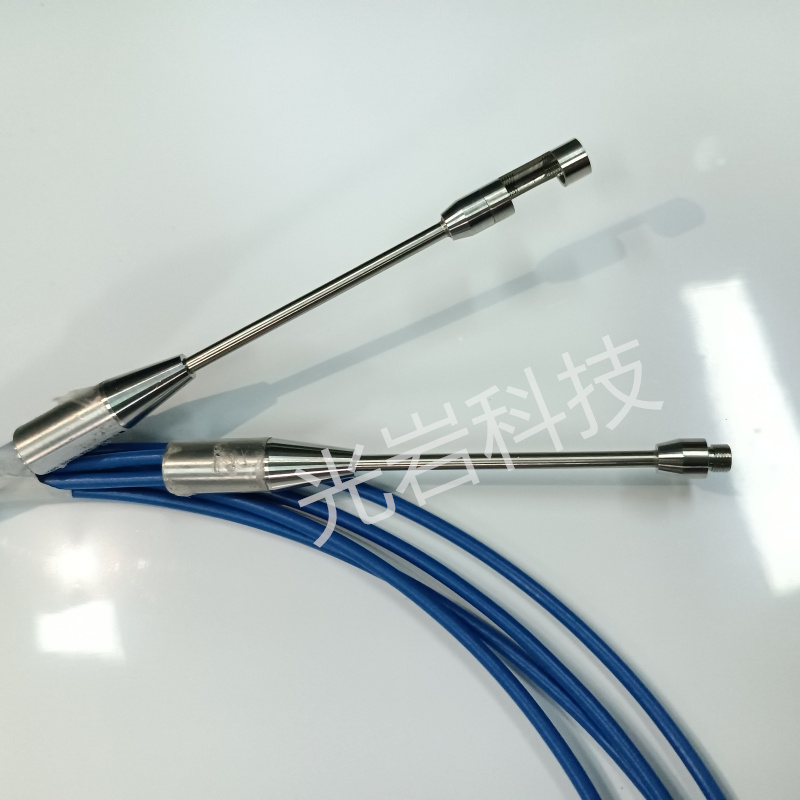
Reflectance Fiber Optic Probe FSTT-06
A reflective fiber probe is a measurement sensor that guides light to a target surface and collects the reflection for an instrument. It enables measurements where physical access is restricted or environments are harsh. Unlike the source's 'radiative (diffuse-reflectance)' probe, it is better suited to smooth, bright, or highly reflective surfaces. Working principle: 1. A source such as an LED or laser sends light through a fiber to the target. 2. Light reflects from the surface. 3. A receiving fiber adjacent to the transmitting fiber collects the reflection. 4. An instrument such as a spectrometer analyzes intensity, wavelength shifts, and other properties to determine surface information. Design considerations: 1. Sensor-target distance must suit the application for appropriate reflectance and signal quality. 2. Packaging must address chemical resistance, waterproofing, vibration resistance, and other environmental requirements. 3. Plastic, glass, or special alloys may provide the required chemical compatibility and mechanical strength. 4. Suitable sources/detectors must match the spectral range and reflectance. Such probes suit precise noninvasive measurements, especially when direct contact is difficult or impossible, such as on rapidly rotating shafts or under unusual temperatures. Selection/design parameters: 1. Numerical aperture (NA) determines light acceptance. Larger NA captures more reflected light and increases signal but may reduce resolution. 2. Working distance must be close enough for adequate collection but far enough to avoid contact or thermal damage. 3. Probe diameter/configuration determines physical fit and projected/received beam size at a given distance. 4. Fiber material/bend radius must provide chemical resistance and safe bending without damage. 5. Probe and connected LEDs, lasers, spectrometers, and other equipment must be optimized for the desired spectral range. 6. Consider temperature, humidity, chemical exposure, impact, and pressure. 7. If lenses or focusing elements are included, choose focal length for the operating distance and resolution. 8. Source type must match probe design, brightness, and wavelength requirements. 9. Transmitting/receiving fiber arrangement determines coupling efficiency and how much reflected light is collected. 10. Signal amplification, filtering, and processing are essential; electronics must handle the returned signal. 11. Some applications require high mechanical strength against loads or impacts. 12. Fiber end-face treatment, such as polishing, affects reflectance and measurement accuracy. Evaluating these parameters helps select or design an appropriate reflective probe for the required application performance.
 Save to Favorites
Overview
Specifications
| Parameter | Value |
|---|---|
| Optical Path Length | 2/10/20/Custom |
| Optical fiber material | High-temperature-resistant UV-resistant silica fiber |
| Fiber connector | SMA905 |
| Fiber core count | Dual-Core/7-Core/Custom |
| Pressure | Atmospheric Pressure |
| Wavelength Range | 190-1100 nm |
| Probe diameter | Custom |
| Mirror coating | Gold/Silver/Aluminum/Custom |
| Operating Temperature | -190 ~ +380 ℃ |
| Connector material | 316L/Hastelloy/PEEK/PVC/Custom |
| Structure type | Customized on Request |
| Fiber Type | Step-index type |
| Optical fiber specification | Customer specified (50-1000μm) |
| Length | Customer specified |
| Protective tube diameter | Customer specified |
| Protective tube type | Customer specified |
| Coating material | Polyimide |
| Numerical Aperture | 0.22 |
| REACH report | Compliant with standards |
| RoHS report | Compliant with standards |
Applications
Key Features
Datasheet
Please provide your email to download the datasheet.
Invalid email format. Please try again.
Supplier Information
Related Products
-
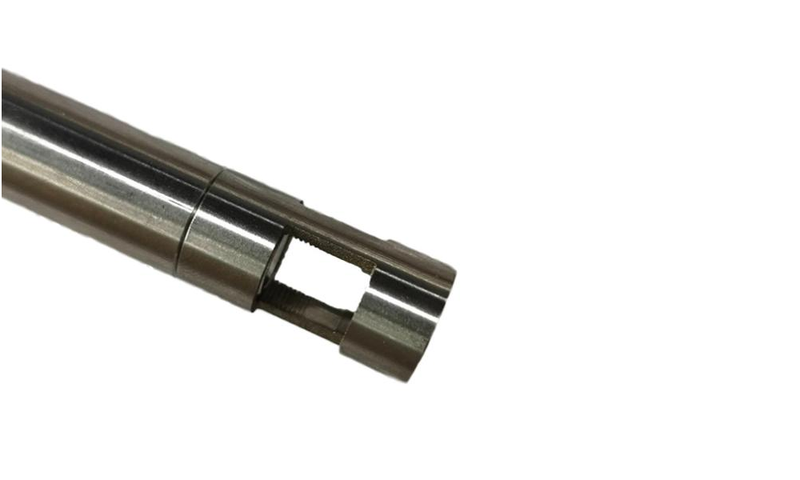 SIM-6122 series immersion fiber probes SIM-6122-0615
Fiber Probes
Brolight
Core Diameter: 600µm Fiber Count: 2 Material: UV-resistant quartz optical fiber
SIM-6122 immersion fiber probes use Y-type fiber structures with customizable core diameter, fiber count, length and connectors. A specially designed reflective tip acts as a miniature cuvette for real-time liquid sampling. Used with spectrometers and light sources, they measure liquid absorbance in online water-quality or biochemical monitoring.
-
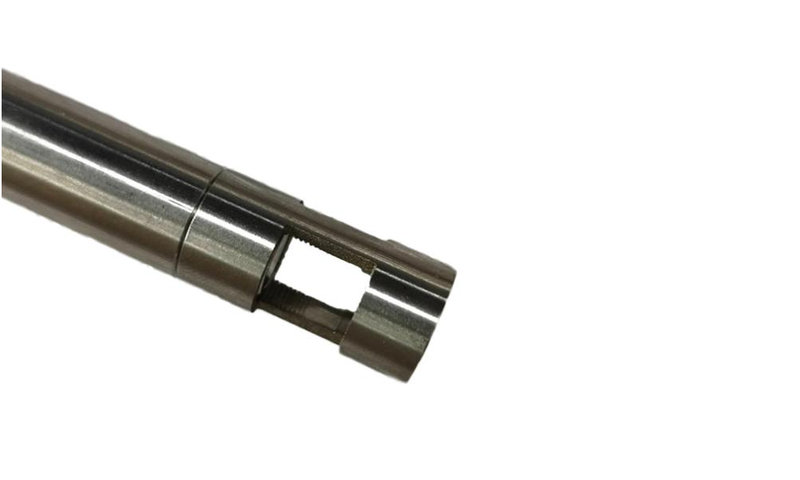 SIM-6122 series immersion fiber probes SIM-6122-0620
Fiber Probes
Brolight
Core Diameter: 600µm Fiber Count: 2 Material: UV-resistant quartz optical fiber
SIM-6122 immersion fiber probes use Y-type fiber structures with customizable core diameter, fiber count, length and connectors. A specially designed reflective tip acts as a miniature cuvette for real-time liquid sampling. Used with spectrometers and light sources, they measure liquid absorbance in online water-quality or biochemical monitoring.
-
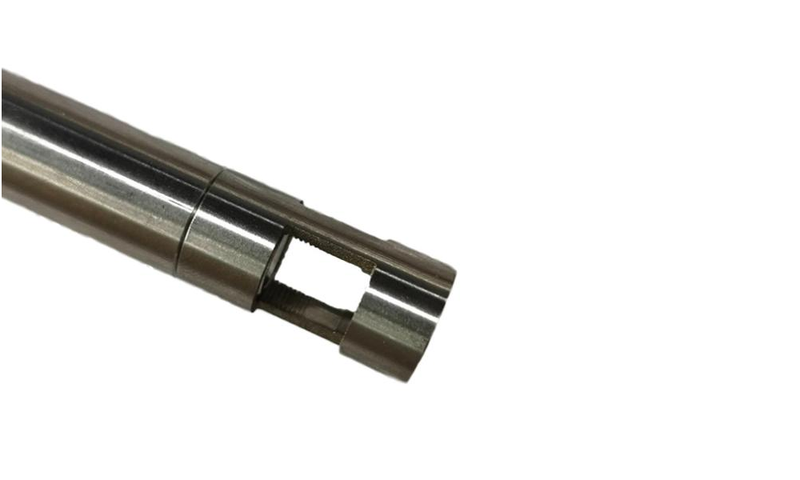 SIM-6122 series immersion fiber probes SIM-6122-H02
Fiber Probes
Brolight
Liquid thickness [Optional; SIM-6122-0615、SIM-6122-0620]: 2mm Optical Path Length [Optional; SIM-6122-0615、SIM-6122-0620]: 4mm
SIM-6122 immersion fiber probes use Y-type fiber structures with customizable core diameter, fiber count, length and connectors. A specially designed reflective tip acts as a miniature cuvette for real-time liquid sampling. Used with spectrometers and light sources, they measure liquid absorbance in online water-quality or biochemical monitoring.
-
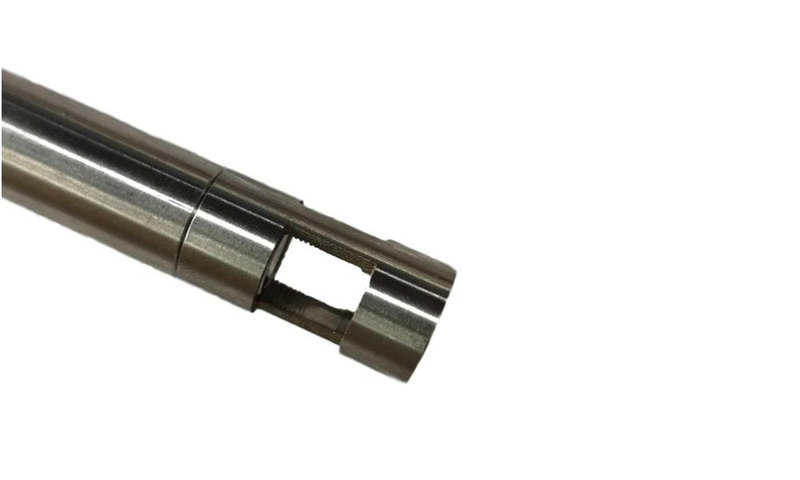 SIM-6122 series immersion fiber probes SIM-6122-H05
Fiber Probes
Brolight
Liquid thickness [Optional; SIM-6122-0615、SIM-6122-0620]: 5mm Optical Path Length [Optional; SIM-6122-0615、SIM-6122-0620]: 10mm
SIM-6122 immersion fiber probes use Y-type fiber structures with customizable core diameter, fiber count, length and connectors. A specially designed reflective tip acts as a miniature cuvette for real-time liquid sampling. Used with spectrometers and light sources, they measure liquid absorbance in online water-quality or biochemical monitoring.
-
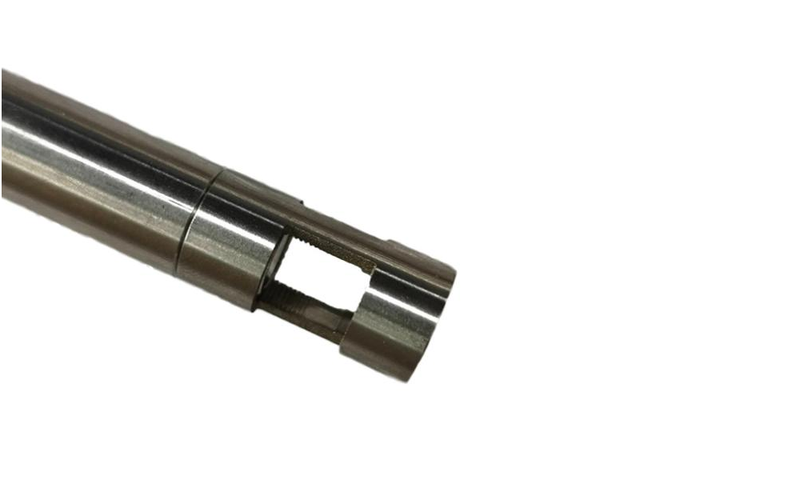 SIM-6122 series immersion fiber probes SIM-6122-H10
Fiber Probes
Brolight
Liquid thickness [Optional; SIM-6122-0615、SIM-6122-0620]: 10mm Optical Path Length [Optional; SIM-6122-0615、SIM-6122-0620]: 20mm
SIM-6122 immersion fiber probes use Y-type fiber structures with customizable core diameter, fiber count, length and connectors. A specially designed reflective tip acts as a miniature cuvette for real-time liquid sampling. Used with spectrometers and light sources, they measure liquid absorbance in online water-quality or biochemical monitoring.
Related Articles
Founded in 2019, Jilin JC Ultrafast Equipment Co., Ltd. is a high-tech enterprise incubated by the Ultrafast Optoelectronics Center of Jilin University. Our R&D team owns 15 years of profound experience in femtosecond laser micro-nano fabrication.
VCSEL, short for Vertical Cavity Surface Emitting Laser, is a widely used semiconductor laser component in modern optoelectronics. Unlike traditional edge-emitting lasers, VCSEL emits laser light vertically from its chip surface. Thanks to its low power consumption, stable beam quality, low cost, and easy integration, it has become the core light source for 3D sensing, wearable devices, and high-speed optical communication.
As a professional ultraviolet‑laser solution provider, Precilasers has launched its 266 nm narrow‑linewidth industrial laser, delivering reliable single‑frequency output for high‑precision interference lithography, semiconductor inspection and precision metrology applications.
Precise spectral screening is essential for high-precision medical detection, spectroscopic analysis and intelligent imaging systems. Tailored for visible and near-infrared spectral separation, the SP900 shortpass optical filter delivers high-efficiency light transmission and deep infrared blocking performance. It effectively eliminates stray light interference, improves signal-to-noise ratio (SNR), and serves as a core optical component for biomedical instruments, scientific analysis equipment and machine vision systems.
Loading...
Name
Phone
Organization
Use Case

Database Platform