
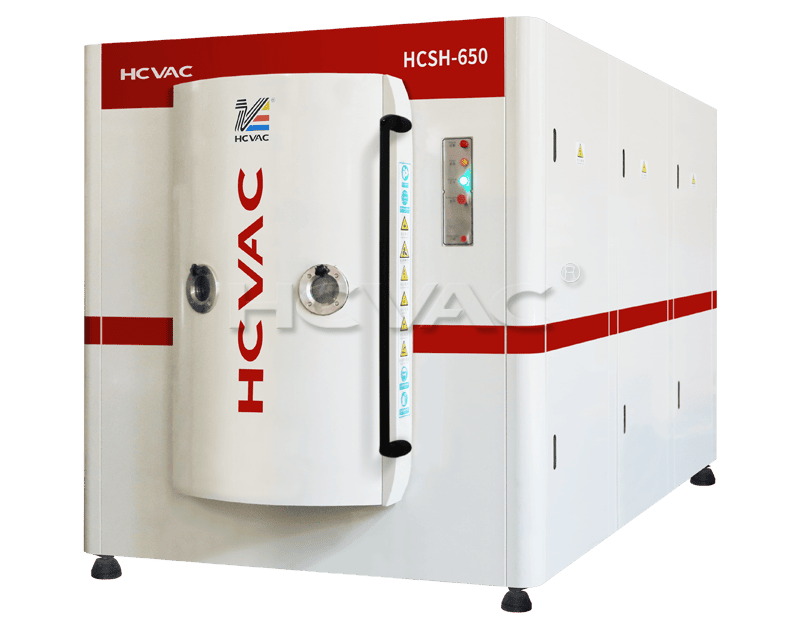
Diamond-like carbon DLC coating equipment HCSH-400
This series offers multiple DLC deposition technologies in a modular coater. Filtered cathodic arc, closed-field magnetron sputtering, PACVD and ion-source modules can be used individually or in combination to customer application requirements, supporting research, product development and batch production. Advanced technology, easy operation, low energy consumption and environmental friendliness support use in machinery, electronics, optics, energy and decoration. HCVAC DLC coatings provide good adhesion, high hardness and wear resistance, low friction and low roughness on metal and alloy tools, molds and components. Unique low-temperature technology also coats temperature-sensitive materials such as plastics.
 Save to Favorites
Overview
Specifications
| Parameter | Value |
|---|---|
| Effective plasma region [Selecting sputtering (UBM, RF, etc.) appropriately reduces the effective height] | D400×H450mm |
| Maximum Operating Temperature | 550℃ |
| Pretreatment | ARC, AEG, DC, MF, HIPIMS |
| Cathode | D120 / D160 / W125 |
| Vacuum conditions | Ultimate vacuum ≤5×10₋₄Pa; Operating vacuum ≤5×10₋₃Pa |
| Process cycle | Door-close to door-open 4~5h; TiN: 2~2.5um; TiAlN: 2~2.5um; TiSiN: 2~3.5um |
| Standard rotating rack | D140×4 axes |
| Maximum loading capacity | 200KG |
Applications
Key Features
Datasheet
Please provide your email to download the datasheet.
Invalid email format. Please try again.
Supplier Information
Related Products
-
 Semiconductor Laser Optical Coating
Optical Coatings
Lambdaoptics
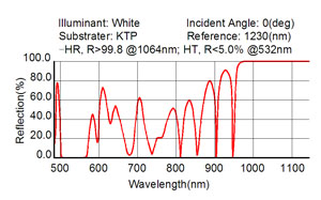
Lambda provides Nd-laser application coatings. These coatings are deposited on substrates of BBO, KTP, Nd:YVO4, Nd:YAG and BK7, mainly used in Nd-Laser and their harmonic generations.
-
 W-Type Double Antireflection Coating
Optical Coatings
Lambdaoptics
-
 Reflective Coating
Optical Coatings
Lambdaoptics
-
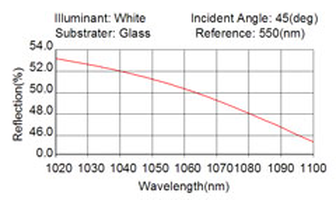 Single-Band Partial-Reflection Coating (SPR)
Optical Coatings
Lambdaoptics
When a narrow wavelength radiation is incident on this coating, part of the radiation is reflected and part is transmitted. Such coatings always show a high reflectivity for S-polarization radiation and high transmission for P-polarization radiations. The main application of this coating is to form a beamsplitter with 45 degee of incident.
-
 Cemented Lens
Optical Coatings
Fuzhouzhiyi
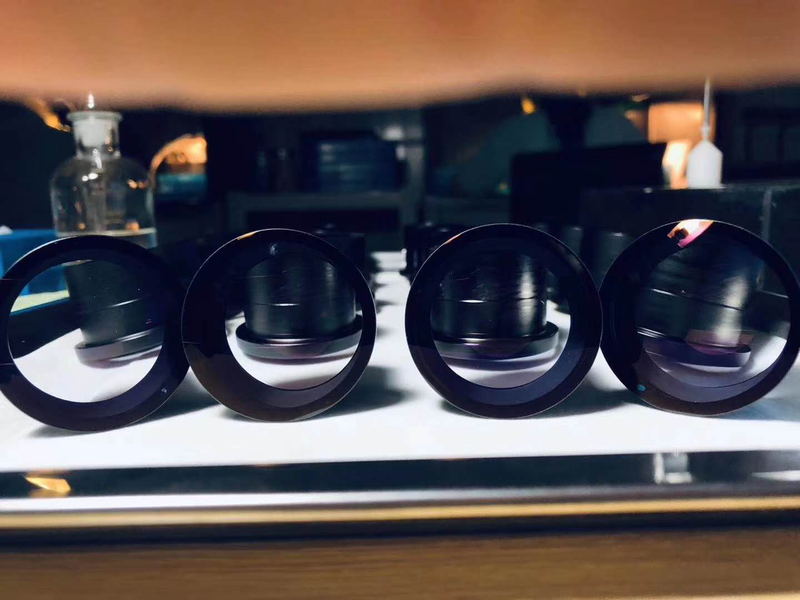
This Product's Center Thickness: 29.486 Material: H-1F H-ZPK1
Achromat Minimizes/Eliminates Chromatic/Spherical Aberration for Inspection/Spectroscopy,etc.,Smaller Spots than Singlets.
Related Articles
VCSEL, short for Vertical Cavity Surface Emitting Laser, is a widely used semiconductor laser component in modern optoelectronics. Unlike traditional edge-emitting lasers, VCSEL emits laser light vertically from its chip surface. Thanks to its low power consumption, stable beam quality, low cost, and easy integration, it has become the core light source for 3D sensing, wearable devices, and high-speed optical communication.
As fundamental refractive optical components, plano‑convex spherical lenses consist of one convex spherical surface and one flat surface.
FiDAR, the fiber‑optic radar vehicle positioning and tracking system developed by Jianhe Bafang, is a high‑sensitivity distributed fiber‑sensing solution designed for intelligent traffic road monitoring. It outputs real‑time spatial coordinates of every vehicle across the full road section around‑the‑clock, delivering a brand‑new sensing technology for vehicle‑road cooperation, smart highway construction and urban traffic management.
Raybowlaser, a professional manufacturer of high-power laser chips, has officially launched its upgraded new-generation 1470nm high-performance laser chip. Achieving groundbreaking progress in rated output power and wall-plug efficiency (WPE), this innovative laser chip delivers superior and reliable core light source solutions for medical cosmetology, industrial processing, agricultural applications and scientific research equipment.
Loading...
Name
Phone
Organization
Use Case

Database Platform