
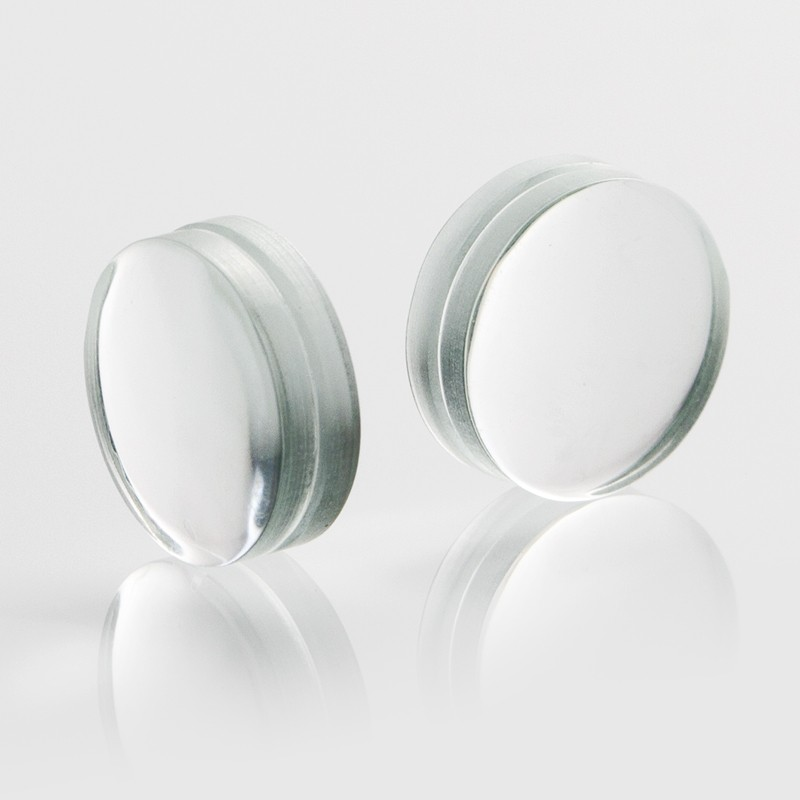
Miniature Projection RGB Focus Lens Group
Miniature Projection RGB Focus Lens Group is A complex optical system. , For the purpose of Miniature Projection Equipment design , For Red (R)、 Green (G)、 Blue (B) Three-colour light precise focus , Ensure clarity of projection images 、 Colour accuracy and high resolution 。 It's usually a multi-species. Lens ( Double convex 、 Hibong 、 Double dent 、 Deck 、 Non-spherical ) A complex optical system that combines. , For the purpose of Miniature Projection Equipment design 。 It's made of fine optical design and manufacturing. , Achieving high-quality image projection , Extensive application Miniature Projection Yi! 、AR/VR Equipment 、 Car HUD in particular 。 1. Functions - Three colored light focus. : Will RGB Three colors of light converge to the same plane. , Avoid color difference , Make sure the color superimproves are accurate. 。 - Like a correction. : Through multiple pieces Lens Group design , Correct the ball differential 、 Like a break. 、 The optics of deformity. 。 - High Resolution Image : Optimizing optical performance , Projection image with high resolution 。 - Minimised Design : Adaptation Miniature Projection Yi! 、AR/VR Equipment, etc. Weight Strict application scenario required 。 2. Structure Miniature Projection RGB Focus Lens Groups are usually of different types. Lens Combined to Form , Common Lens Type includes : Biconvex Lens : For focus light , Enhance the focus of optical systems 。 Plano Convex Lens : To reduce the ball differential , Optimizing image quality 。 Biconcave Lens : For the dispersing light , Correct Colour and Image Disparities 。 Plano Concave Lens : For correction of image differentials , Balancing Optical System Performance 。 Aspheric Lens : For further reduction of the image differential ( Like a ball. 、 Like a break. ), Enhance image quality 。 Defunct Optical Component (DOE): For color correction and beam integer 。 These. Lens By fine organization and grouping , It's a complete optical system. 。 3. The rationale. 2. Initial focus : Through double cones or Plano Convex Lens Initial focus on light 。 3. Colour correction : Through double dents or Plano Concave Lens Correct Different Wavelength The color difference of the light , Ensure RGB Three colored light focus on the same plane. 。 4. Like a margin optimization. : Pass. Aspheric Lens Further Optimizes Aberrations , Increase image clarity 。 5. Final Focus : There's plenty of light going through. Lens Adjusted , And finally, it's focused on the projection. , Forms Clear 、 Colour-Accurate Images 。 4. Technical characteristics - High Precision Design : Lens Table Surface Figure Status 、 Curvature and spacing require precision and optimization 。 - Tighter structure : Lens Group design is small , Adaptation Miniature Projection Volume limits for equipment 。 - Hot stability. : Material The choice is based on the heat stability. , To deal with it. High Power Thermal effects of light sources 。 5. Parameters for prior cases 6. Application - Miniature Projection Yi! : For portable projector equipment , Like a hand-held projector. 、 Embedded projection module, etc. 。 - AR/VR Equipment : Making reality stronger. (AR) And virtual reality. (VR) Equipment , For projecting images into a near-eye screen or optical system 。 - Car HUD( Heads up ): It's used to project driving information into the wind. Glass Go, go, go! 。 - Smart wear equipment : Like in smart glasses. Miniature Projection System 。 7. Technical challenges 1. Colour correction : Because RGB Three-colored. Wavelength Different. , Lens Group needs to be effectively corrected for color differentials , Make sure the color is superimposed. 。 2. The balance between miniaturization and high performance : High resolution in limited space 、 Low-modity optical design 。 3. Heat management : Miniature Projection Equipment is usually of high power , Lens Material It needs good heat stability. 。
 Save to Favorites
Overview
Specifications
| Parameter | Value |
|---|---|
| 1. Light Injection | RGB Three colored light from the light ( Like LED or Laser ) Send , Enter Lens Group 。 |
| Coating Technology | Lens The surface is usually plating. Antireflection Coating , To reduce light loss and increase light efficiency 。 |
| Material [Plano Convex Lens] | H-ZLAF50E |
| Center Thickness [Plano Convex Lens] | 3 |
| Diameter [Plano Convex Lens] | 7.3 |
| Decentration Error [Plano Convex Lens] | 2 |
| Surface Figure [Plano Convex Lens] | N=3,△N=1 |
| Back Focal Length [Plano Convex Lens] | 5.5 |
| Radius of Curvature [Plano Convex Lens] | 4.5 |
| Material [Biconvex Lens] | H-K9L |
| Material [Biconvex Lens] | H-ZF50 |
| Center Thickness [Biconvex Lens] | 1.5 |
| Center Thickness [Biconvex Lens] | 1.33 |
| Diameter [Biconvex Lens] | 12 |
| Diameter [Biconvex Lens] | 11 |
| Decentration Error [Biconvex Lens] | 2 |
| Surface Figure [Biconvex Lens] | N=3,△N=1 |
| Back Focal Length [Biconvex Lens] | 43 |
| Radius of Curvature [Biconvex Lens] | 45 |
| Radius of Curvature [Biconvex Lens] | 40 |
| Decentration Error c [Biconvex Lens] | 2 |
| It works. Focal Length [Biconvex Lens] | 26.8 |
| Material | Optical Glass |
Datasheet
Please provide your email to download the datasheet.
Invalid email format. Please try again.
Supplier Information
Related Products
-
 Projection Lens
Display Technologies
Running-oe
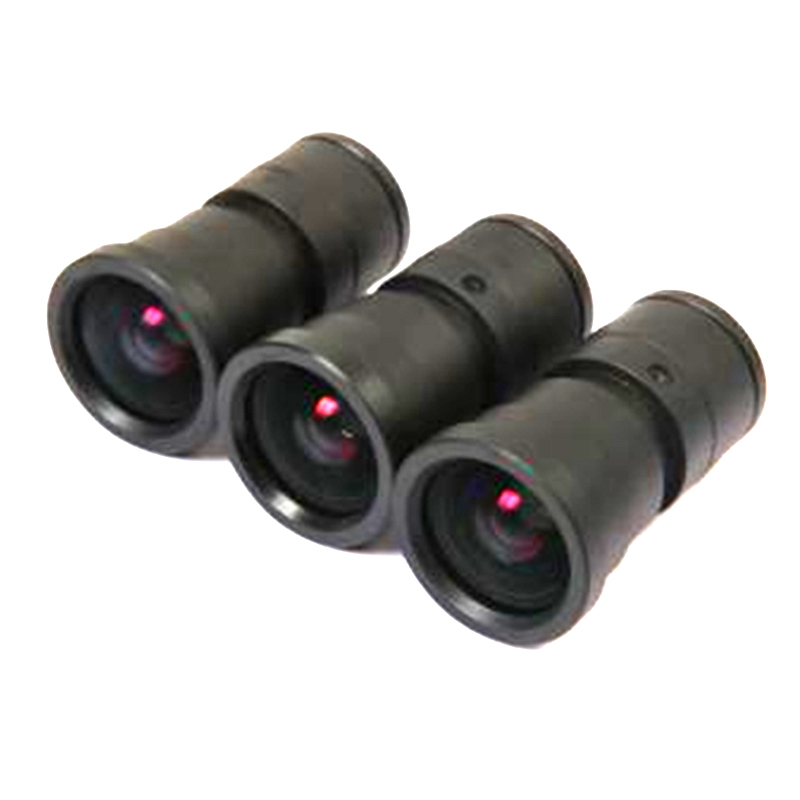
An objective transforms/modulates a beam; in machine vision it images the target on the sensor's photosensitive surface. Lens quality affects overall performance, making selection/mounting essential. Match camera mount and CCD size. C/CS mounts dominate: small security cameras commonly use CS, while factory automation mostly uses C. Typical CCD sizes range from 2/3 to 1/3 inch by application. Lens design combines precision-ground curved elements of differing glass indices, based on principles used since Galileo; new glasses/aspheres continue improving clarity. The stated interchangeability is that C lenses work with C/CS cameras, while CS lenses work only with CS cameras. KERARE describes black peripheral regions when a camera uses a lens designed for a smaller CCD.
-
 Laser Projection System
Display Technologies
Scanneroptics
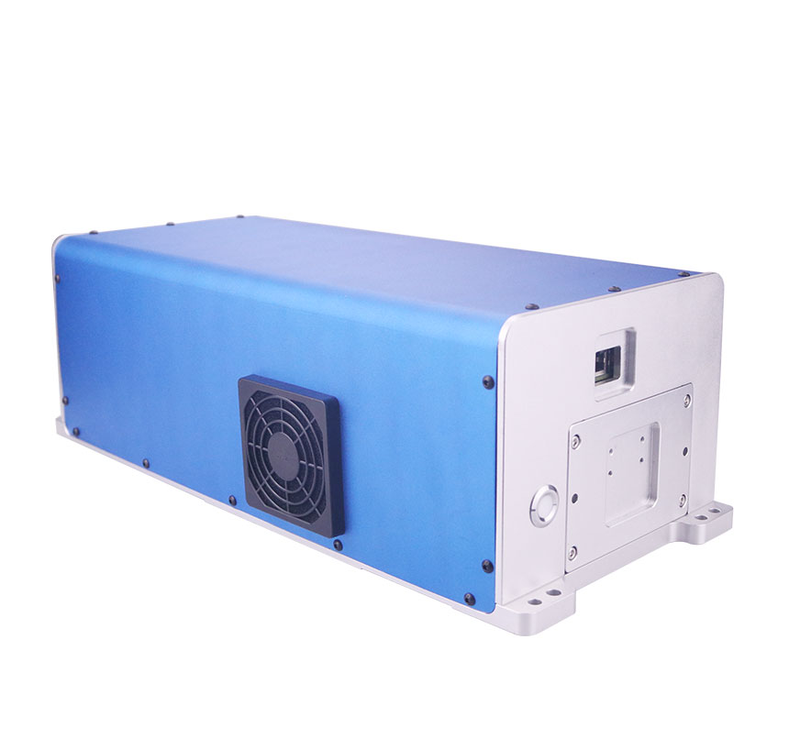
Laser Beam-Spot Diameter: ≤2.5 mm Laser Wavelength: 532,(Green) Positioning Accuracy: ±0.1 mm/m
思特光学's laser-projection system uses customized software to control high-speed galvos and accurately project outlines and locating points onto surfaces at 1:1 scale. It helps operators position large workpieces/items efficiently, reducing layout, setup and assembly time and improving productivity. Fewer operator errors reduce manufacturing mistakes, rework and rejects. Optimized custom software supports common 3D file formats, very-large-area calibration and easy operation.
-
 400G DR4 Optical Engine
Display Technologies
Youopto
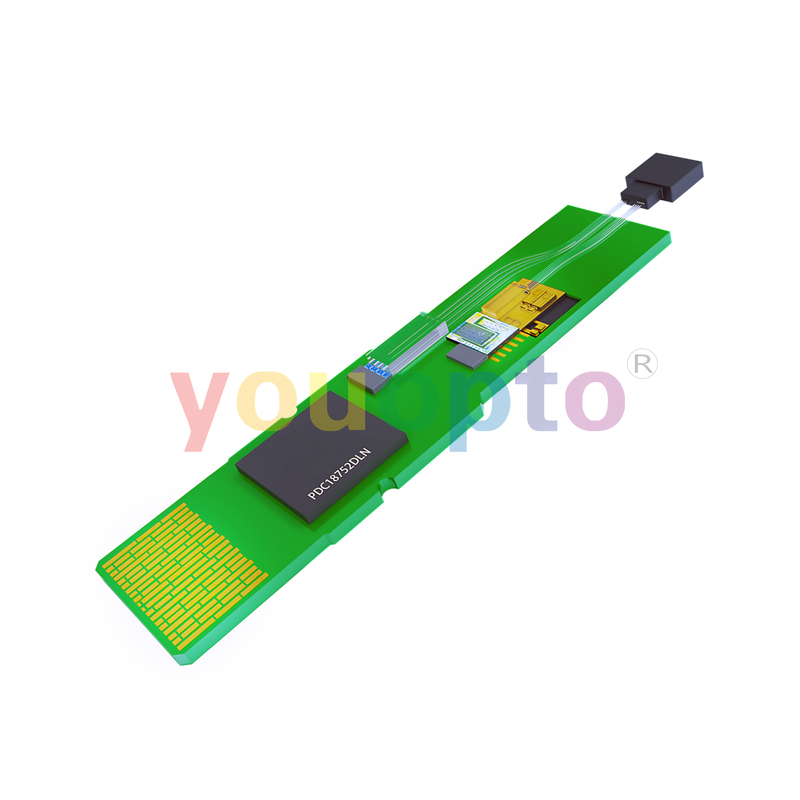
Operating Temperature: -5~75℃
Youopto400G DR4 Optical Engine,400GBASE-DR4/DR4+ and Four100G Lambda MSA or100G FR Interfaces,400GbE/4×100GbE,up to2km.
-
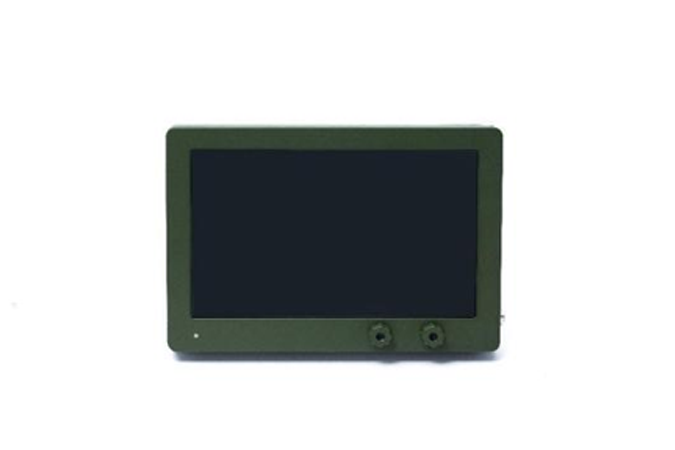 Vehicle Night-Vision Display and Control System HTT-ASH-01A
Display Technologies
Tera-aurora
Display Resolution: 1920(H)×1200(V) Display Area Dimensions: 10.1 英寸 Refresh Rate: 50 HZ
Vehicle Night-Vision Display and Control System HTT-ASH-01A
-
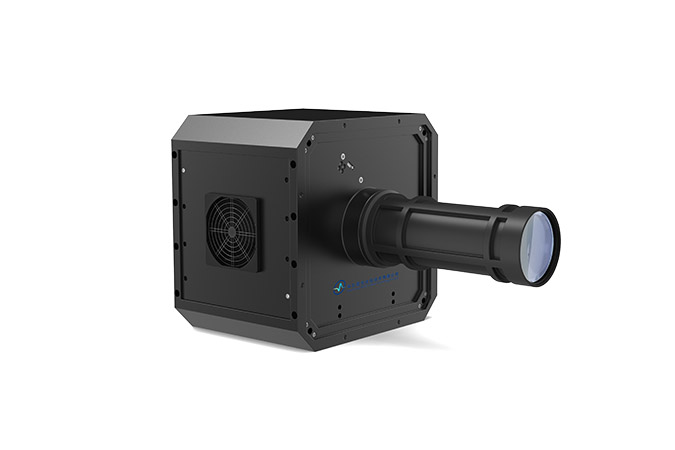 Short-Wave Infrared Target Simulator
Display Technologies
Tera-aurora
Wavelength Band [Customizable]: 2~3 μm Resolution: 1024×1024 Effective Field of View: 4°×4°
DMD/Precision Optics/Fast Electronics/Intelligent Control Simulates Dynamic2–3μm IR Targets with High Fidelity,Stable Accurate Ground-Test Source for IR Sensor Performance/Reliability.
Related Articles
VCSEL, short for Vertical Cavity Surface Emitting Laser, is a widely used semiconductor laser component in modern optoelectronics. Unlike traditional edge-emitting lasers, VCSEL emits laser light vertically from its chip surface. Thanks to its low power consumption, stable beam quality, low cost, and easy integration, it has become the core light source for 3D sensing, wearable devices, and high-speed optical communication.
As fundamental refractive optical components, plano‑convex spherical lenses consist of one convex spherical surface and one flat surface.
FiDAR, the fiber‑optic radar vehicle positioning and tracking system developed by Jianhe Bafang, is a high‑sensitivity distributed fiber‑sensing solution designed for intelligent traffic road monitoring. It outputs real‑time spatial coordinates of every vehicle across the full road section around‑the‑clock, delivering a brand‑new sensing technology for vehicle‑road cooperation, smart highway construction and urban traffic management.
Raybowlaser, a professional manufacturer of high-power laser chips, has officially launched its upgraded new-generation 1470nm high-performance laser chip. Achieving groundbreaking progress in rated output power and wall-plug efficiency (WPE), this innovative laser chip delivers superior and reliable core light source solutions for medical cosmetology, industrial processing, agricultural applications and scientific research equipment.
Loading...
Name
Phone
Organization
Use Case

Database Platform