

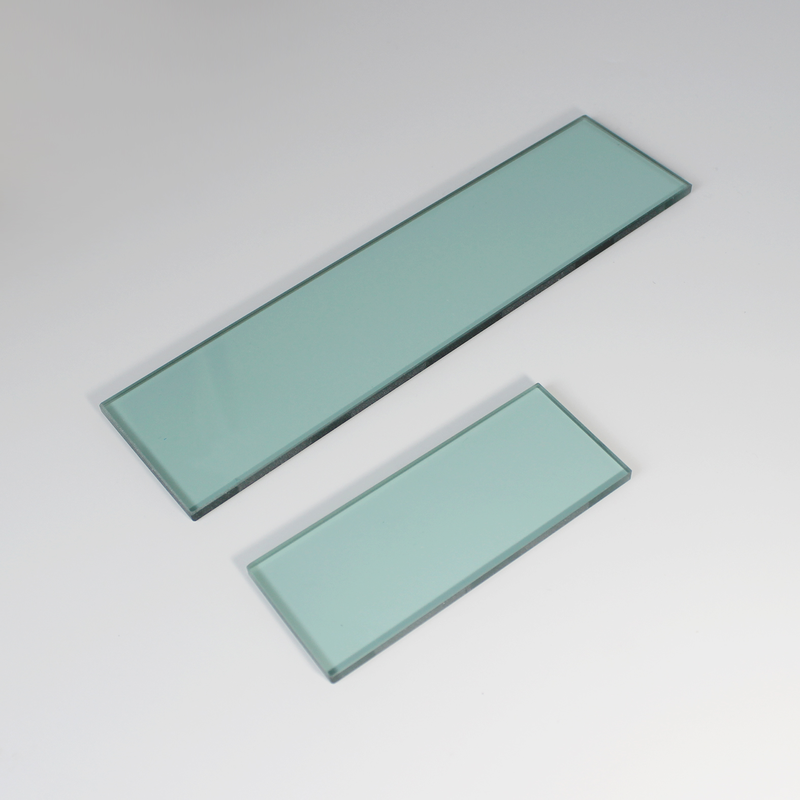
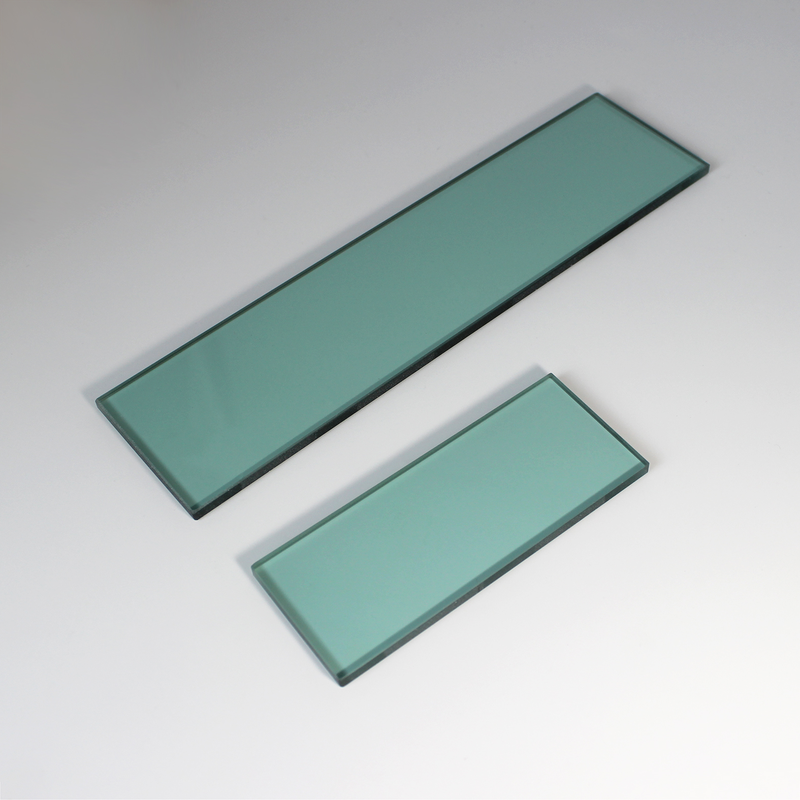
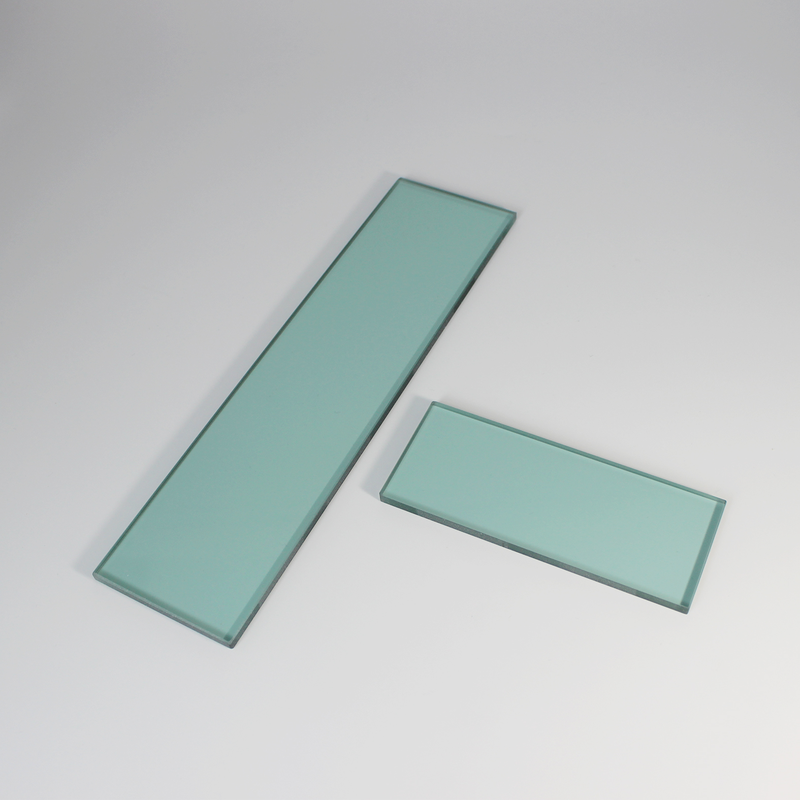
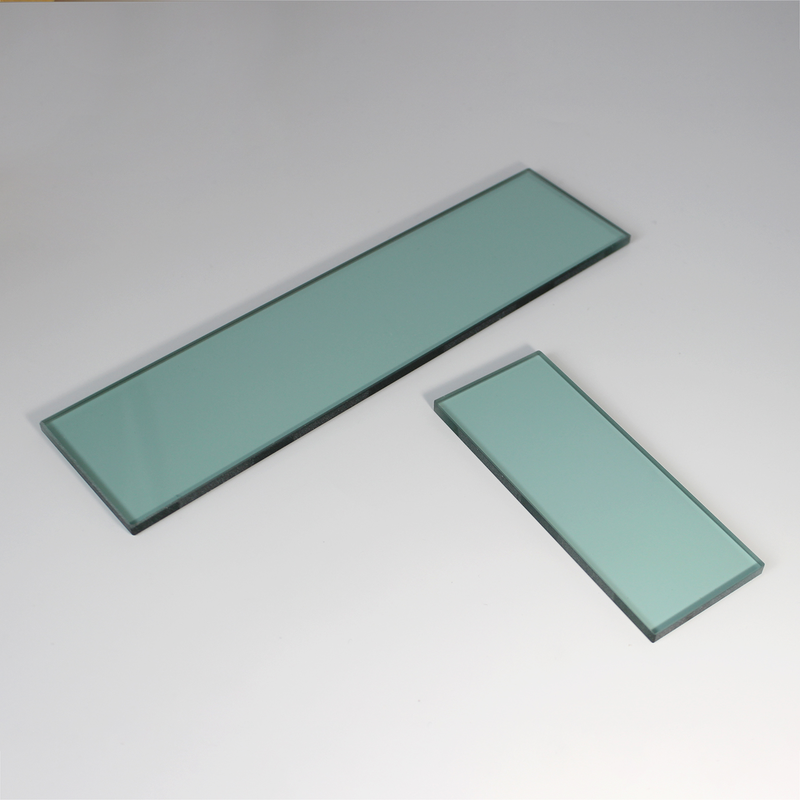
Custom Optical Heat Absorbing Glass Grb1 Kg2 Kg5 Optical Shortpass Filters X-P23F3T16601
Heat absorbing glass filter is used to reduce heat transfer from the optical system. Heat absorbing glass filters high transmission in the visible wavelength region and absorption in the infrared wavelength region.VY Optoelectronics Co.,Ltd. can customize Heat absorbing filter according to your requirements. Dimension: 3mm-300mm Thickness: 1.0mmm, 1.10mm CWL: 808nm+/-5nm, 920nm, 880nm or as requested FWHM: 20nm Transmission: 90% Heat Absorbing Filters feature high transmittance in the visible region and good absorption of heat rays (infrared rays). They efficiently absorb thermal radiation emitted from light sources and are highly effective when employed for slide projectors and illumination equipment. Heat-absorbing filters in lighting systems get hot during operation. The heat is efficiently dissipated from an optical system by directly cooling or by ventilation of the absorbing filter glass. We recommend the filters’ thermal tempering after the polishing and shaping processes whenever heat-absorbing glass must withstand an increased operating temperature. Center Wavelength (CWL), used in defining bandpass filters, describes the midpoint of spectral bandwidth over which the filter transmits. Traditional Coated Optical Filters tend to achieve a maximum transmission near the center wavelength, whereas Hard Coated Optical Filters tend to have a fairly flat transmission profile over the spectral bandwidth. Bandwidth is a wavelength range used to denote a specific part of the spectrum that passes incident energy through filters. Bandwidth is also referred to as FWHM (Figure 1). FIGURE 1: ILLUSTRATION OF CENTER WAVELENGTH AND FULL WIDTH AT HALF MAXIMUM Full Width-Half Maximum (FWHM) describes the spectral bandwidth over which a bandpass filter will transmit. The upper and lower limit of that bandwidth is defined at the wavelengths where the filter achieves 50% of the maximum transmission. For example, if the maximum transmission of the filter is 90%, the wavelengths at which the filter achieves 45% transmission will define the upper and lower limits of the FWHM. FWHM’s of 10nm or less are considered narrow band and often used for laser clean-up and chemical detection. FWHM’s of 25 – 50nm are often used in machine vision applications; FHWM’s of more than 50nm are considered broadband and typically used in fluorescence microscopy applications. Blocking Range is wavelength interval used to denote a spectral region of energy that is attenuated by the filter (Figure 2). The degree of its blocking is typically specified in terms of optical density. FIGURE 2: ILLUSTRATION OF BLOCKING RANGE Slope is a specification often defined on edge filters, such as short pass or long pass filters, to describe the bandwidth over which the filter transitions from high blocking to high transmission. Given as the percent of the cut-wavelength, slope can be specified from a variety of starting and end points. Optical Density (FIGURE 3) describes the amount of energy blocked or rejected by a filter. A high optical density value indicates low transmission, and low optical density indicates high transmission. Optical densities of 6 or greater are used for extreme blocking needs such as Raman spectroscopy or fluorescence microscopy. Optical densities of 3.0 – 4.0 are ideal for laser separation and clean-up, machine vision, and chemical detection, while optical densities of 2.0 or less are ideal for color sorting and separating spectral orders. FIGURE 3: ILLUSTRATION OF OPTICAL DENSITY Cut-On Wavelength is a term used to denote the wavelength at which the transmission increases to 50% throughput in a long pass filter. Cut-on wavelength is indicated by λ cut-on in Figure 4. FIGURE 4: ILLUSTRATION OF CUT-ON WAVELENGTH Cut-Off Wavelength is a term used to denote the wavelength at which the transmission decreases to 50% throughput in a short pass filter. Cut-off wavelength is indicated by λ cut-off in Figure 5. FIGURE 5: ILLUSTRATION OF CUT-OFF WAVELENGTH VY Optoelectronics Co.,Ltd. can supply a full range of filter.They are short pass Filter, long pass Filter, band pass Filter, ultraviolet Filter, infrared Filter, heat absorbing Filter, and color temperature conversion filters. We use material by China to Schott, Hoya, and other manufacturers to process them. Metallic films, colored glasses and thin dielectric films filter are all available per your requirements. People also ask What is the difference between absorption filter and interference filter? Absorption Filters. Explore how gelatin and glass absorption filters are used to pass a specific band of wavelengths. Interference Filters – These filters differ from absorption filters in the fact that they reflect and destructively interfere with unwanted wavelengths as opposed to absorbing them. What are the advantages of heat absorbing glass? The tinted heat-absorbing glass has been wrought to absorb the excessive heat at the exterior of a building, thereby keeping the interiors cool and saving on air conditioning costs. This absorptive property keeps the rooms cooler without additional efforts. What is the best glass to stop heat? Toned glass – A tint is applied to the glass during manufacture to reduce the amount of heat transmitted through it. Tinted, or toned glass can also reduce light and heat gain in winter as well as Summer. Reflective coatings – Can be applied to new and existing windows. What does an optical filter do? Optical filters are passive optical devices that consist of specialized optical coatings applied onto a substrate. The coatings modify the refractive index of the substrate, enabling them to reflect, transmit, or absorb incoming light depending on its wavelength.
 Save to Favorites
Overview
Specifications
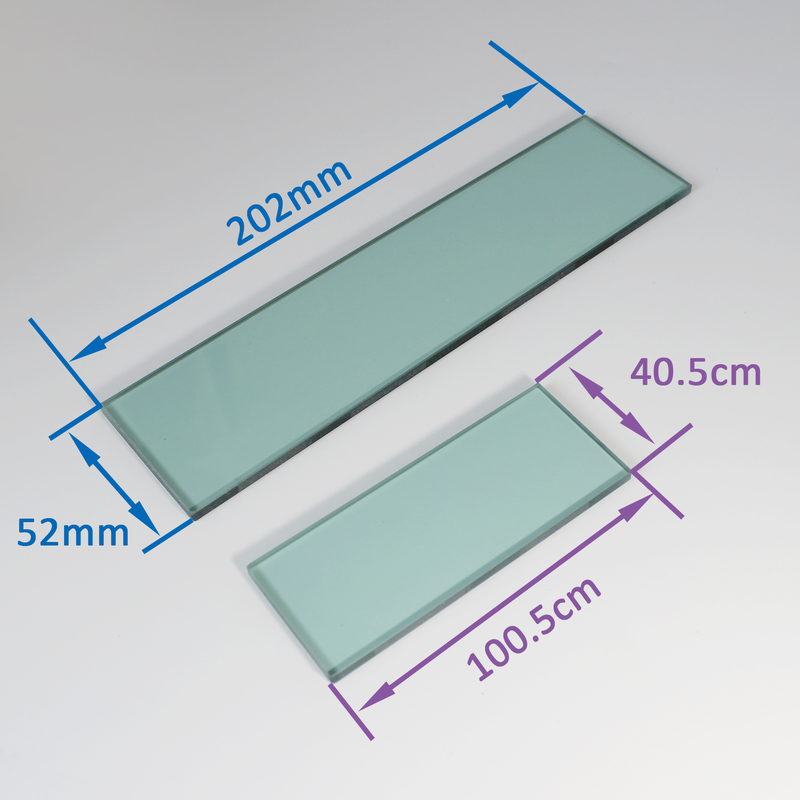
| Parameter | Value |
|---|---|
| Material | KG5 |
| Length | 100.5mm/202.0mm |
| Width | 40.2mm/52.0nm |
| Thickness | 4.5nm |
Applications
Datasheet
Please provide your email to download the datasheet.
Invalid email format. Please try again.
Supplier Information
Related Products
-
 FL490FF-FISH FISH Excitation Block
Optical Filters
Situoli
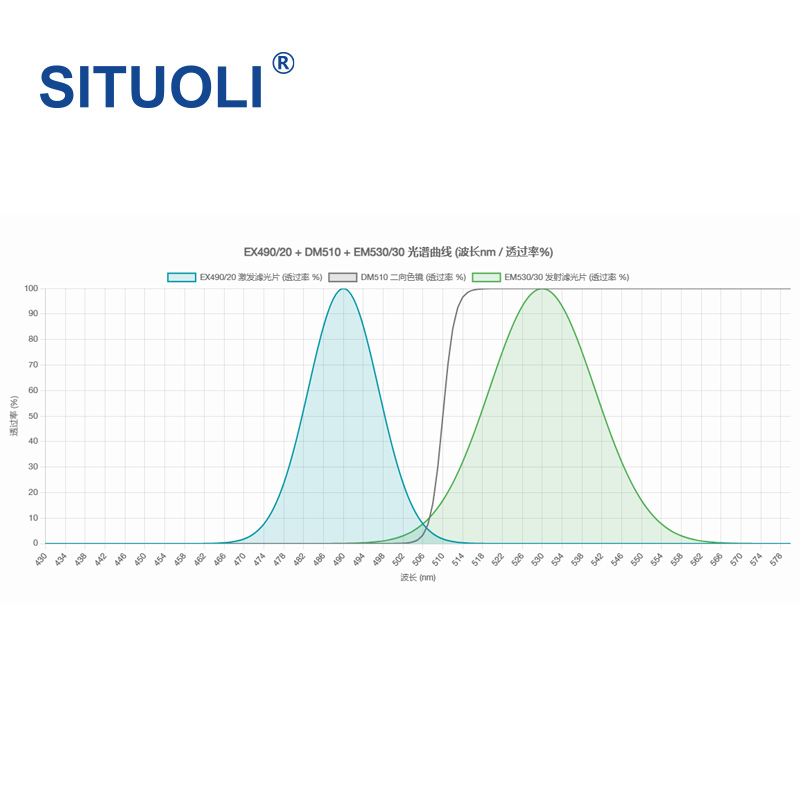
EX490/20 Excitation Filter - Center Wavelength: 490nm EX490/20 Excitation Filter - Half Bandwidth: 20nm EX490/20 Excitation Filter - Effective Wavelength Band [Narrowband Cyan-Green Light Excitation]: 480nm ~ 500nm
Full product name: Mirror Unit for fluorescence microscopy, bandpass fluorescence excitation block specifically for FISH-Green. Optical configuration: excitation filter EX490/20 + dichroic beamsplitter DM510 + emission filter EM530/30. Standard accessory: dedicated protective storage case (including case). Compatible fluorescence systems: FISH-Green green probes, GFP green fluorescent protein and Green-series fluorescent dyes.
-
 FL435LFF-FISH FISH Excitation Block
Optical Filters
Situoli
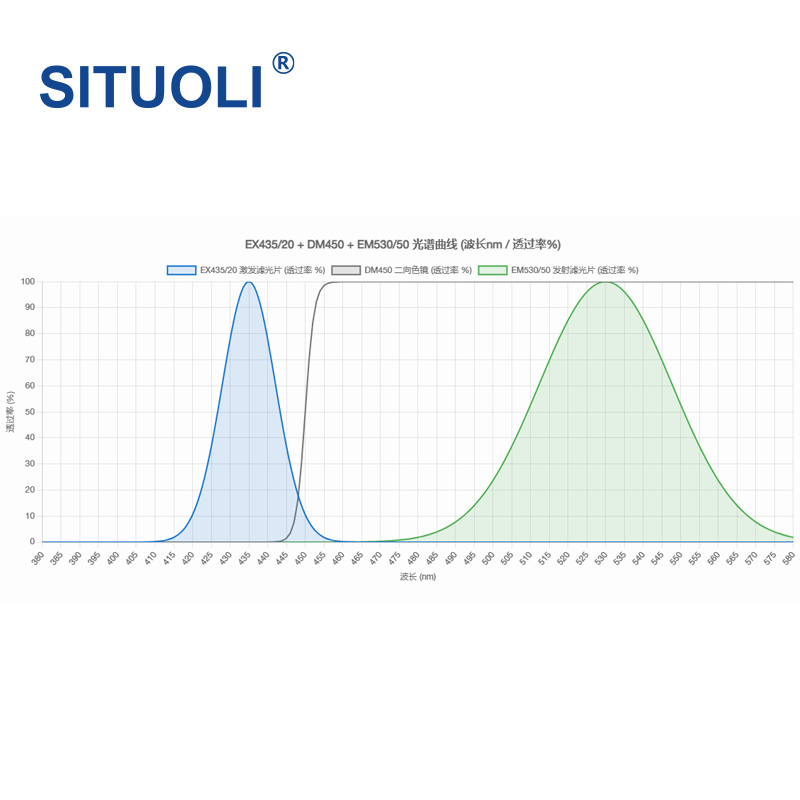
EX435/20 Excitation Filter - Center Wavelength: 435nm EX435/20 Excitation Filter - Half Bandwidth: 20nm EX435/20 Excitation Filter - Effective Wavelength Band [Blue Narrowband Excitation]: 425nm ~ 445nm
Full product name: Mirror Unit for fluorescence microscopy, bandpass fluorescence excitation block specifically for FISH-Aqua. Optical configuration: excitation filter EX435/20 + dichroic beamsplitter DM450 + emission filter EM530/50. Standard accessory: dedicated protective storage case (including case). Compatible fluorescence systems: FISH-Aqua probes, green fluorescent dyes and broadband green fluorescent labels.
-
 FL390FF-FISH FISH Excitation Block
Optical Filters
Situoli
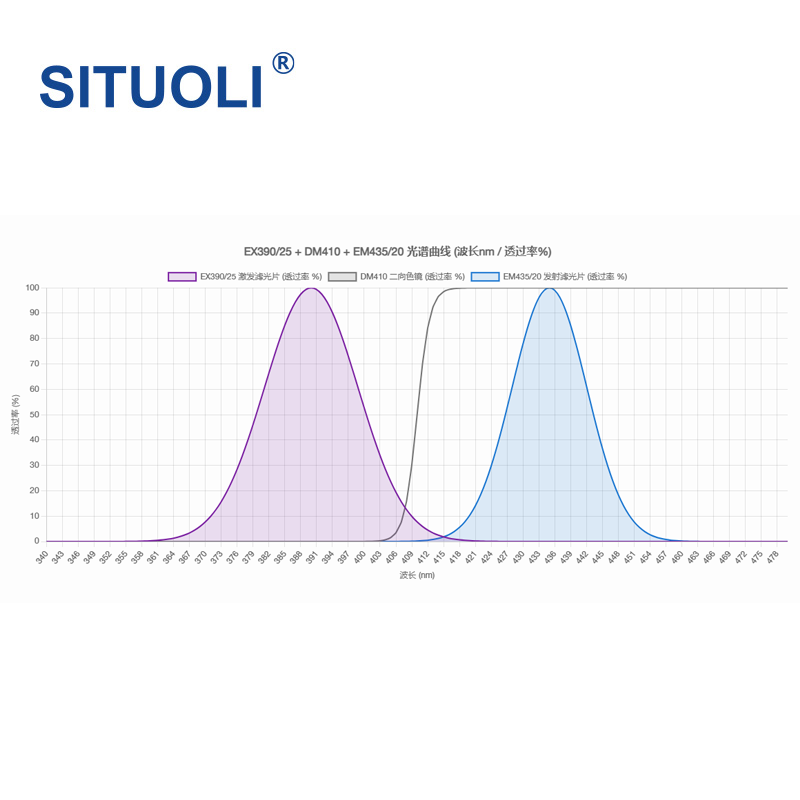
EX390/25 Excitation Filter - Center Wavelength: 390nm EX390/25 Excitation Filter - Half Bandwidth: 25nm EX390/25 Excitation Filter - Effective Wavelength Band [Narrowband UV-Blue Light Excitation]: 377.5nm ~ 402.5nm
Full product name: Mirror Unit for fluorescence microscopy, bandpass fluorescence excitation block specifically for FISH-Blue. Optical configuration: excitation filter EX390/25 + dichroic beamsplitter DM410 + emission filter EM435/20. Standard accessory: dedicated protective storage case (including case). Compatible fluorescence systems: FISH-Blue blue probes, DAPI, Hoechst 33342 and blue fluorescent protein.
-
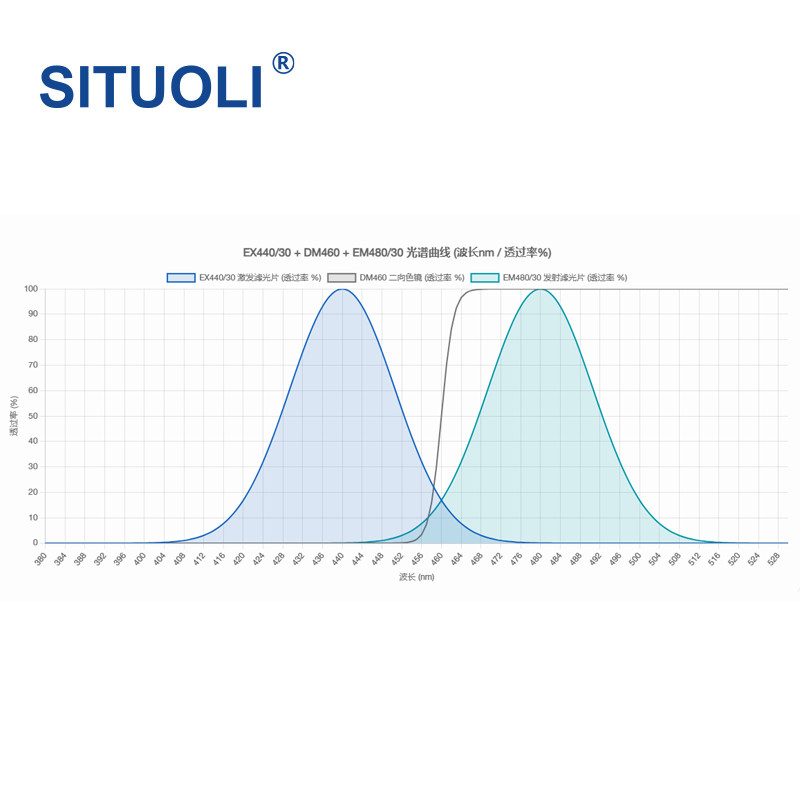 FL440FF-FISH FISH Excitation Block
Optical Filters
Situoli
EX440/30 Excitation Filter - Center Wavelength: 440nm EX440/30 Excitation Filter - Half Bandwidth: 30nm EX440/30 Excitation Filter - Effective Wavelength Band [Blue Narrowband Excitation]: 425nm ~ 455nm
Full product name: Mirror Unit for fluorescence microscopy, bandpass fluorescence excitation block specifically for FISH-Aqua. Optical configuration: excitation filter EX440/30 + dichroic beamsplitter DM460 + emission filter EM480/30. Standard accessory: dedicated protective storage case (including case). Compatible fluorescence systems: FISH-Aqua cyan fluorescent probes, CFP cyan fluorescent protein and Aqua-series fluorescent dyes.
-
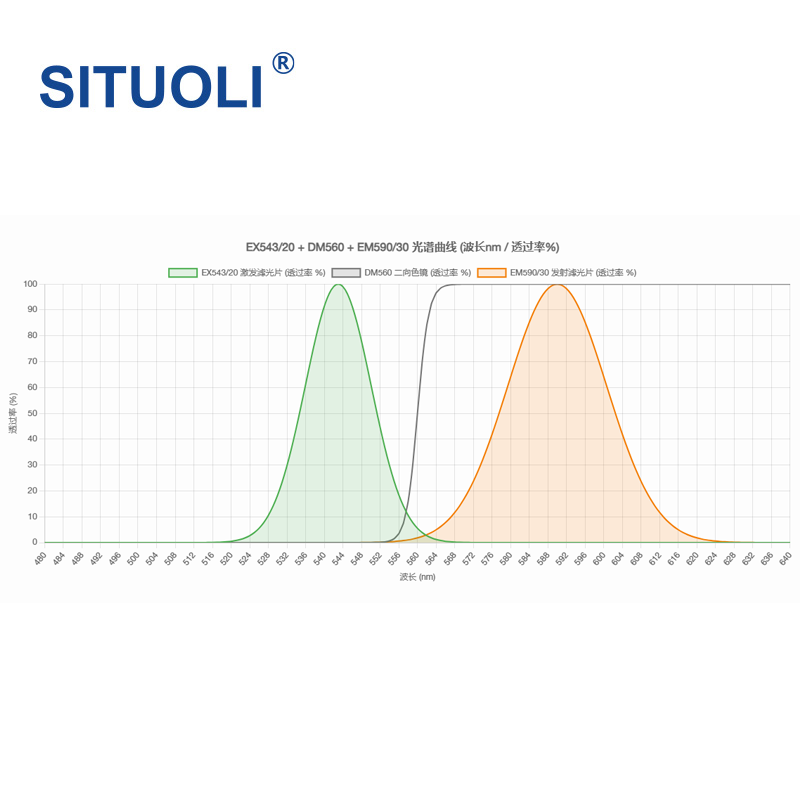 FL543FF-FISH FISH Excitation Block
Optical Filters
Situoli
EX543/20 Excitation Filter - Center Wavelength: 543nm EX543/20 Excitation Filter - Half Bandwidth: 20nm EX543/20 Excitation Filter - Effective Wavelength Band [Narrowband Yellow-Green Light Excitation]: 533nm ~ 553nm
Full product name: Mirror Unit for fluorescence microscopy, bandpass fluorescence excitation block specifically for FISH-Orange. Optical configuration: excitation filter EX543/20 + dichroic beamsplitter DM560 + emission filter EM590/30. Standard accessory: dedicated protective storage case (including case). Compatible fluorescence systems: FISH-Orange orange fluorescent probes, Orange-series fluorescent dyes and ROX dye.
Related Articles
An infrared transmitter (IR transmitter) is a basic electronic component that sends invisible infrared light signals for short-range wireless control. It is widely used in daily electronics, smart home devices, and industrial equipment due to its low cost, low power consumption, and stable performance.
In photonics and laser technology, devices that manipulate optical signals via the electro-optic effect form the backbone of precision optical systems. Electro-optic phase modulators and electro-optic deflectors are two prominent examples of this device category. As a critical hardware solution for high-speed, high-accuracy laser beam direction control, electro-optic deflectors are widely deployed across industrial and research settings. Below is a detailed overview of their core structure, key performance drivers, and primary use cases.
Founded in 2019, Jilin JC Ultrafast Equipment Co., Ltd. is a high-tech enterprise incubated by the Ultrafast Optoelectronics Center of Jilin University. Our R&D team owns 15 years of profound experience in femtosecond laser micro-nano fabrication.
Wuhan Optical Valley Interlink Technology Co., Ltd. was founded in 2013 by a technical team from Huazhong University of Science and Technology.
Loading...
Name
Phone
Organization
Use Case

Database Platform