
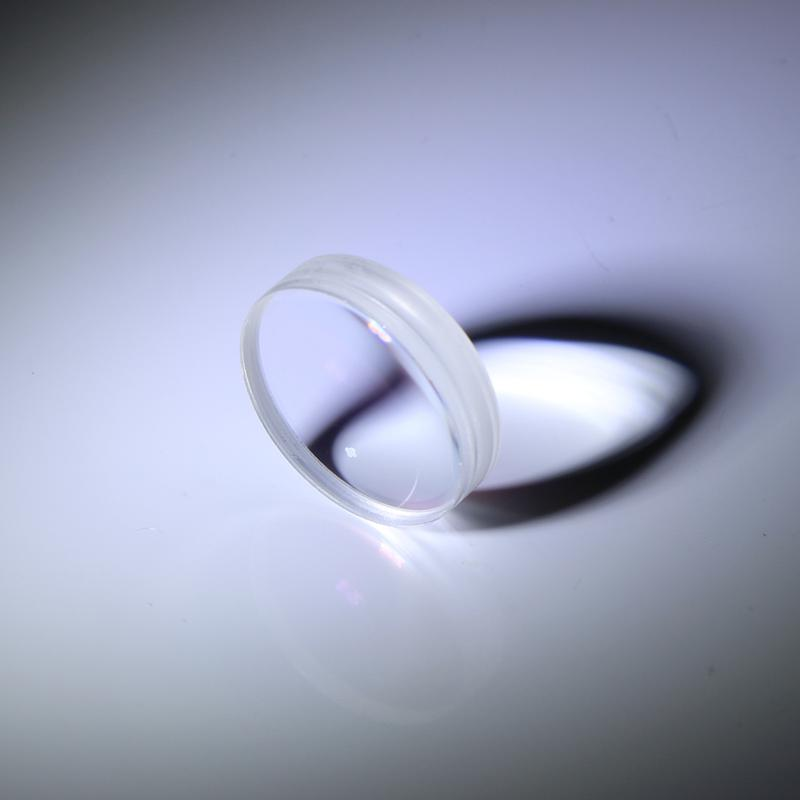
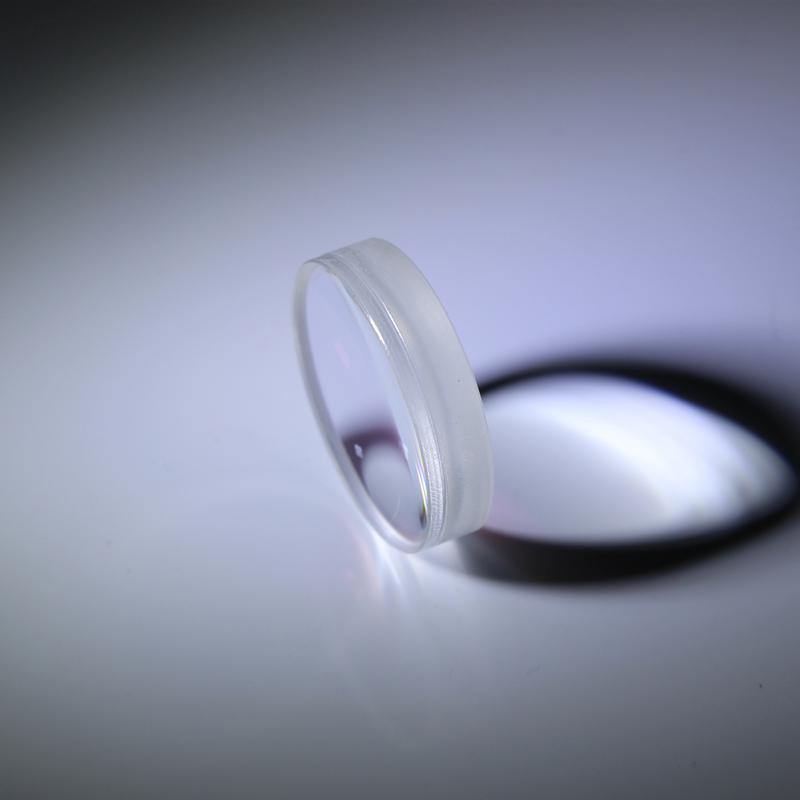
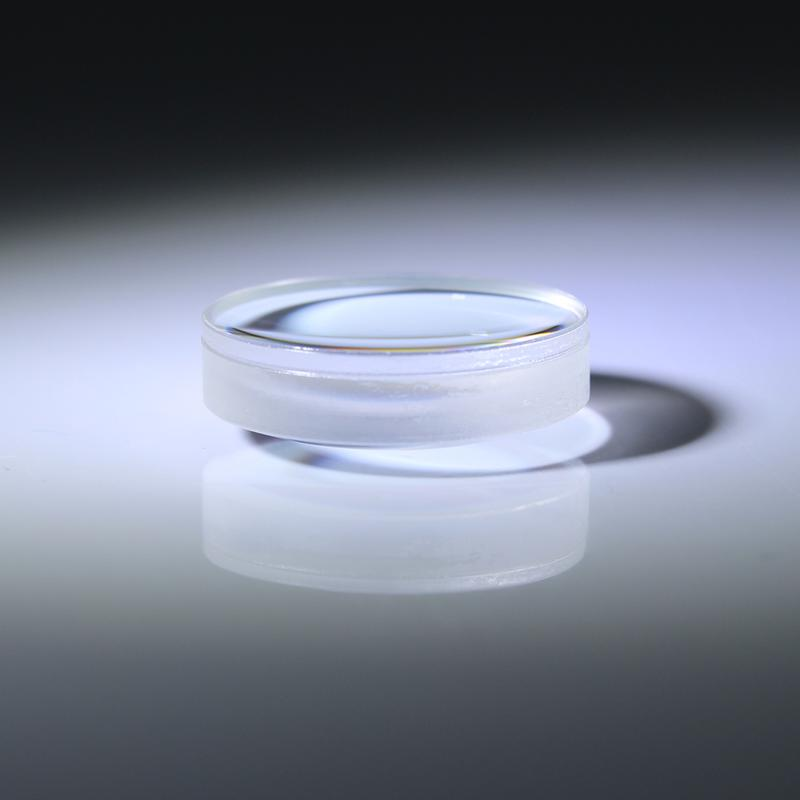
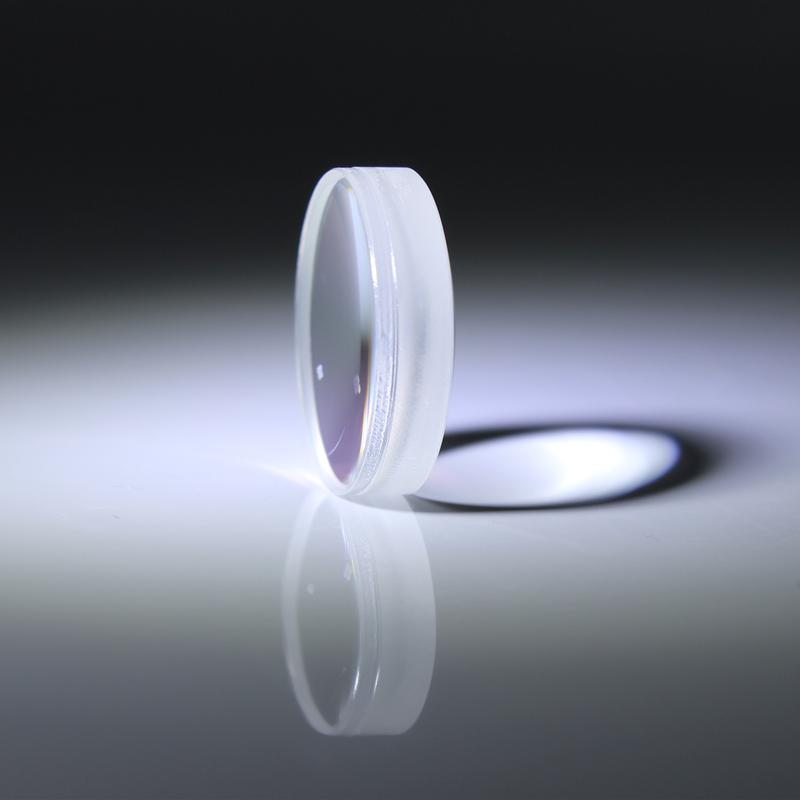
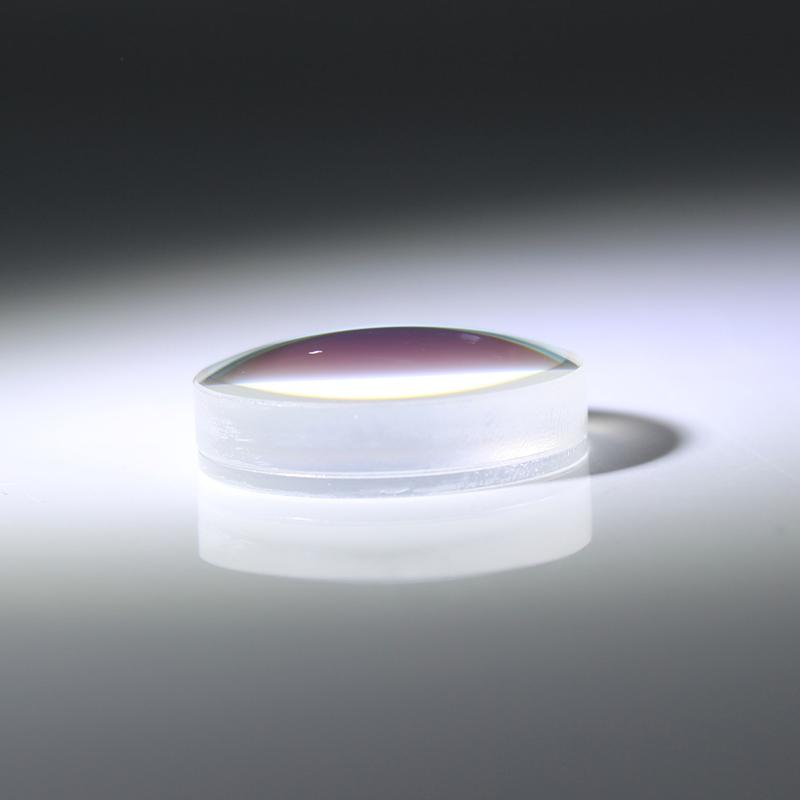
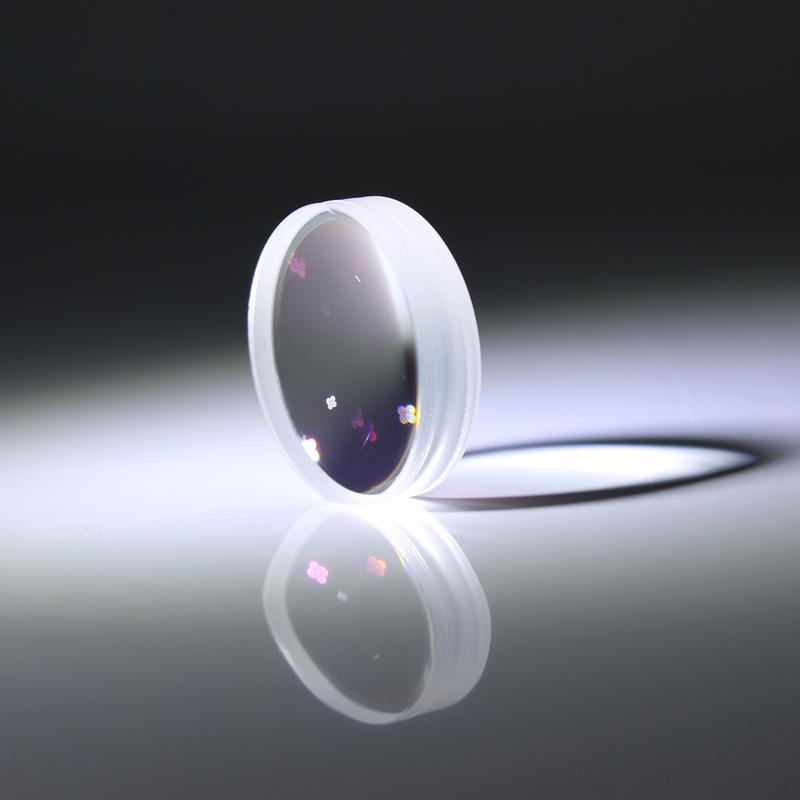
Optical glass ZK9 and ZF4 cemented lenses achromatic lenses VY_S10M42
Material: ZK9 and ZF4 Dimension: 21mm Tolerance: +/-0.01mm Surface Accuracy: lambda/10 Surface Quality: 40/20 Clear Aperature: 95% Coating: AR @400-700nm, R≤0.5% or Optional An achromatic lens, also referred to as an achromat, typically consists of two optical components cemented together, usually a positive low-index (crown) element and a negative high-index (flint) element. In comparison to a singlet lens, or singlet for short, which only consists of a single piece of glass, the additional design freedom provided by using a doublet design allows for further optimization of performance. Therefore, an achromatic lens will have noticeable advantages over a comparable diameter and focal length singlet. An achromatic lens comes in a variety of configurations, most notably, positive, negative, triplet, and aspherized. It is important to note that it can be a doublet (two elements) or triplet (three elements); the number of elements is not related to the number of rays for which it corrects. In other words, an achromatic lens designed for visible wavelengths corrects for red and blue, independent of it being a doublet or triplet configuration. Refer to Figures 1 — 4 for illustrations of each type. Most commonly used and the earliest example of an achromatic lens is the achromatic doublet. An achromatic doublet is made from a pair of glasses, of which one is typically a concave and another is convex. The concave element of the doublet is composed of flint glass (with higher dispersion); the convex element, however, is made up of crown glass (with low dispersion). These two elements are placed (cemented) next to each other in such a manner that the chromatic aberration of the one element is balanced by the chromatic aberration of another. There are various types of achromatic lenses, which differ in the type of lens elements and optical properties. ++ Achromatic lens doublet as picture show is cemented by a diameter 21mm double convex spherical lens and a concave convex lens with diameter 21mm, used for optical instrument. Please contact us freely if it’s interesting, we’d like to provide a best solution for your project and a best price for your reference. Thanks.
 Save to Favorites
Overview
Key Features
Datasheet
Please provide your email to download the datasheet.
Invalid email format. Please try again.
Supplier Information
Related Products
-
 Tera3001-SA dual-LENS multidaughterboard coupling equipment
Optical Lenses
Terawan
The Tera3001-s multidaughterboard automatic alignment platform serves 10G/14G/25G optical transceivers. It mainly aligns lenses in Chip On Board (COB) modules, with single- or dual-channel lens/source alignment, automatic dispensing, and UV curing. The Tera3001-S provides high coupling efficiency, stability, and UPH depending on customer design, plus one-button collision protection and UV protection.
-
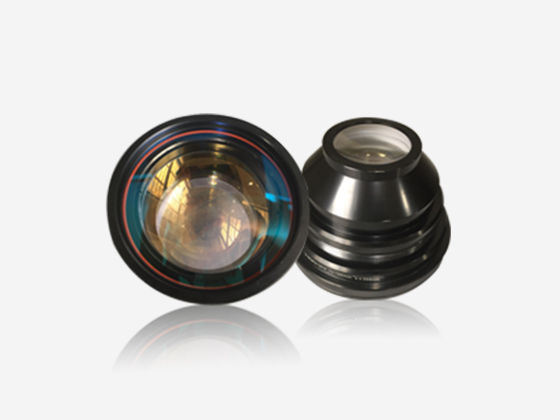 355 field lens
Optical Lenses
Central-laser
Focal Length [Original Table Row 2; Focal Length=100mm; Parallel Values in the Same Row Not Split into Separate Models or Configurations]: 100 mm Working Distance [Original Table Row 2; Focal Length=100mm; Parallel Values in the Same Row Not Split into Separate Models or Configurations]: 136 mm Scan Range [Original Table Row 2; Focal Length=100mm; Parallel Values in the Same Row Not Split into Separate Models or Configurations]: 70 mm² × 70 mm²
355 field lens: large zinc-selenide (ZnSe) focusing lens with a small spot for accurate marking. Imported lens material provides long service life and reduces removal, installation, and alignment. The 355nm scanning field lens is suitable for ultraviolet laser-marking machines.
-
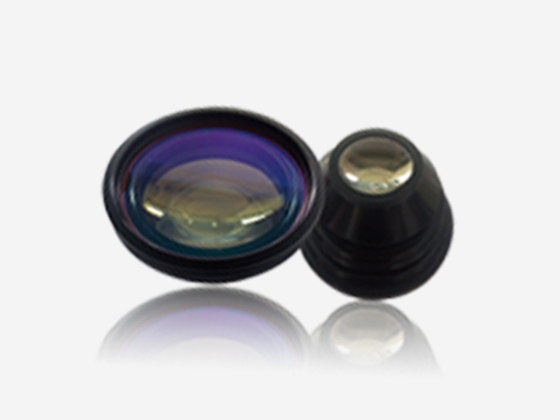 532 field lens
Optical Lenses
Central-laser
Focal Length [Original Table Row 2; Focal Length=100mm; Parallel Values in the Same Row Not Split into Separate Models or Configurations]: 100 mm Working Distance [Original Table Row 2; Focal Length=100mm; Parallel Values in the Same Row Not Split into Separate Models or Configurations]: 114.5 mm Scan Range [Original Table Row 2; Focal Length=100mm; Parallel Values in the Same Row Not Split into Separate Models or Configurations]: 70 mm² × 70 mm²
532 field lens: large zinc-selenide (ZnSe) focusing lens with a small spot for accurate marking. Imported lens material provides long service life and reduces removal, installation, and alignment. The 532nm field lens is suitable for green laser-marking machines.
-
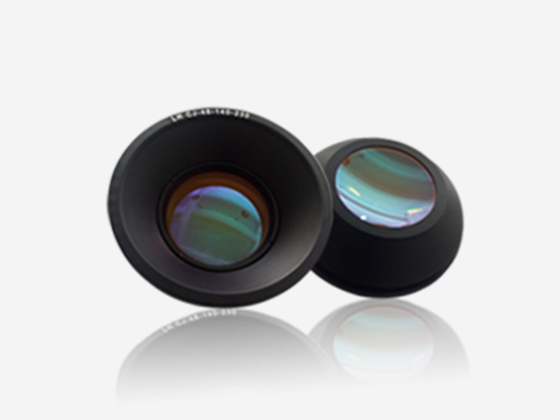 CO2 field lens
Optical Lenses
Central-laser
Focal Length [Original table row 2; Focal length=72mm; Parallel values in the same row, without additional model or configuration splitting]: 72 mm Mirror Diameter [Original table row 2; Focal length=72mm; Parallel values in the same row, without additional model or configuration splitting]: 48 mm Scan Range [Original table row 2; Focal length=72mm; Parallel values in the same row, without additional model or configuration splitting]: 50 mm² × 50 mm²
CO2 field lens: large zinc-selenide (ZnSe) focusing lens with a small spot for accurate marking. Imported lens material provides long service life and reduces removal, installation, and alignment. The 10640nm scanning field lens is suitable for CO2 laser-marking machines.
-
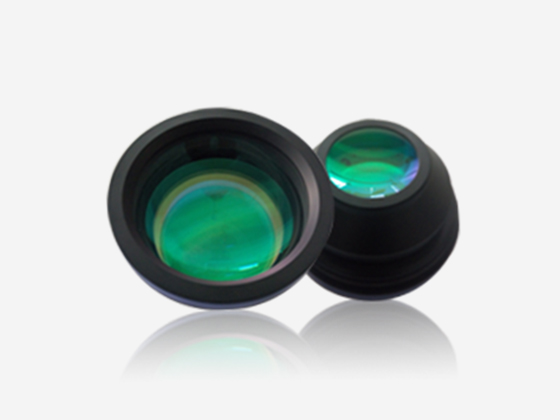 YAG field lens
Optical Lenses
Central-laser
Focal Length [Original table row 2; Focal length=63mm; Parallel values in the same row, without additional model or configuration splitting]: 63 mm Working Distance [Original table row 2; Focal length=63mm; Parallel values in the same row, without additional model or configuration splitting]: 78 mm Scan Range [Original table row 2; Focal length=63mm; Parallel values in the same row, without additional model or configuration splitting]: 50 mm² × 50 mm²
YAG field lens: large zinc-selenide (ZnSe) focusing lens with a small spot for accurate marking. Imported lens material provides long service life and reduces removal, installation, and alignment. The 1064nm scanning field lens is suitable for fiber laser-marking machines.
Related Articles
Founded in 2003, BWT Beijing Optoelectronics adheres to the mission "Let Dreams Fly With Light" and vision of becoming a Global Leader in Laser Solutions, guided by the core value "Innovate to Achieve Extraordinary".
As premium broadband light sources situated between traditional LEDs and laser diodes, MicroLight superluminescent‑diode (SLD) products combine broad spectral bandwidth, sufficient optical output power and low‑coherence performance.
Founded in November 2017, TIANJIN H‑CHIP TECHNOLOGY GROUP CORPORATION is a professional manufacturing‑service provider dedicated to micro‑nano optoelectronic chips. It holds multiple prestigious qualifications, including National High‑Tech Enterprise, one of Tianjin’s first Gazelle‑certified Enterprises, Specialized‑Refined‑Differentiated‑Innovative SME, and Leading Enterprise for Strategic Emerging Industries.
Looking for a market-verified 808nm pump laser diode? This guide introduces HAUCORE DM-8E5A-8OD (HGLD-808-COS-D-5W), its core advantages, key specs and mainstream industrial, medical & research applications.
Loading...
Name
Phone
Organization
Use Case

Database Platform