
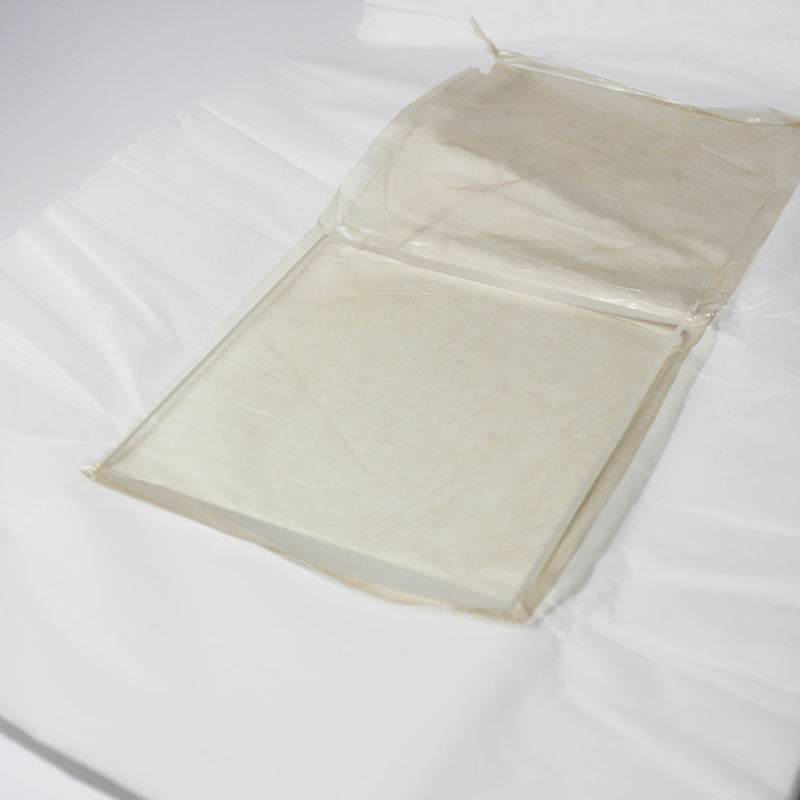
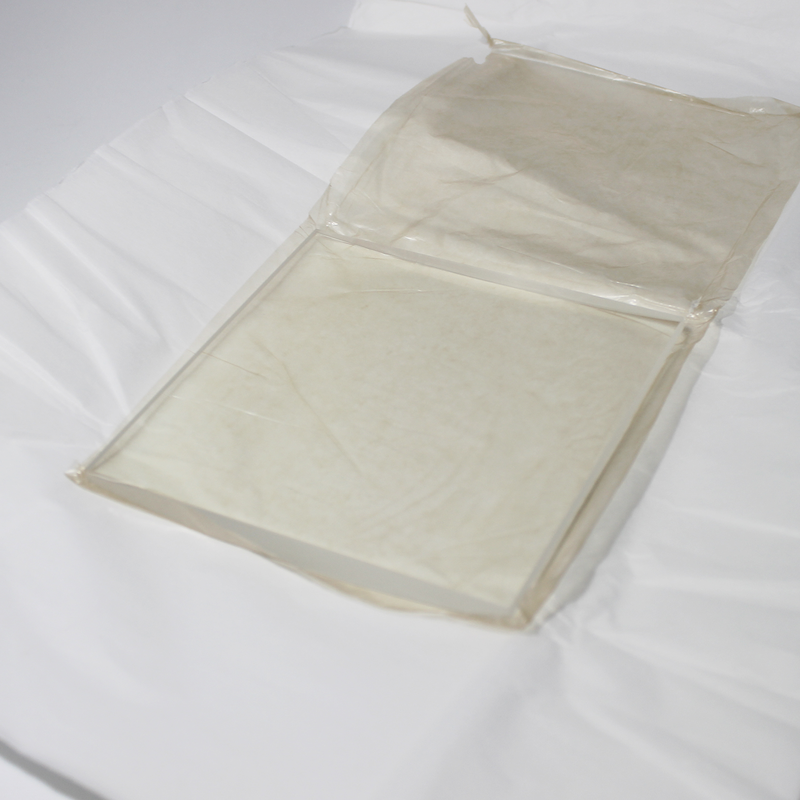
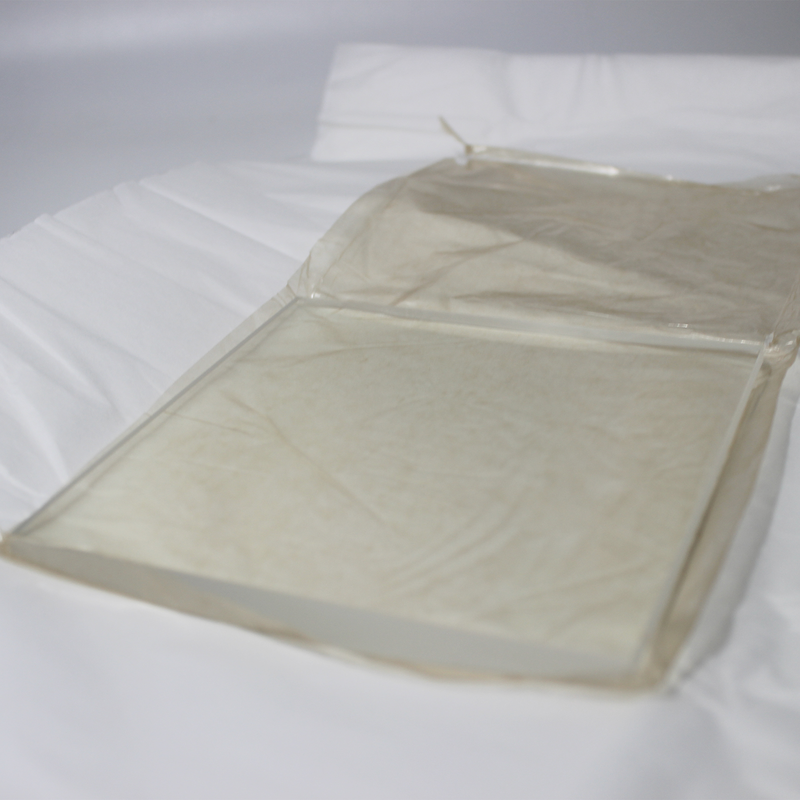
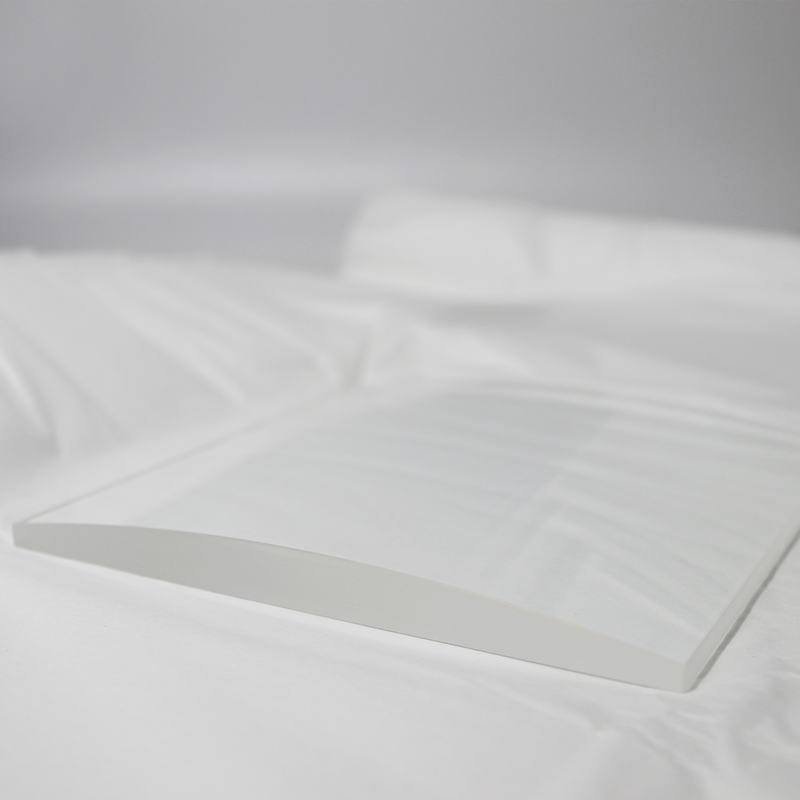

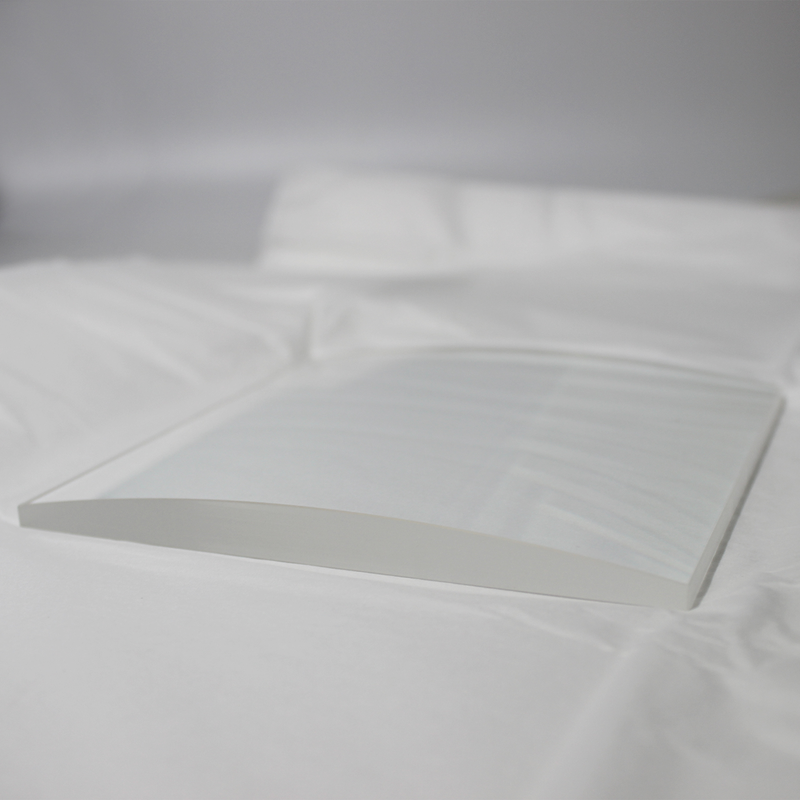
Custom Large 120mm K9 BK7 Glass Plano Convex Rectangular Cylinder Lens X-P24C6X9602
Cylindrical lenses are often used to change the profile of laser beams, for example to correct for astigmatism and ellipticity in diode lasers or to generate lines from single mode lasers.VY Optoelectronics Co., Ltd. can customize lenses according to your requirements. Material: N-BK7 / N-SF2 etc. Dimension: 3mm-500mm Tolerance: +/-0.01mm Surface Accuracy: lambda/10 Surface Quality: 10-5 Clear Aperature: 95% Coating: AR @400-700nm, R≤0.5% or Optional Cylindrical lenses is a lens which focuses light into a line instead of a point, as a spherical lens would. The curved face or faces of a cylindrical lens are sections of a cylinder, and focus the image passing through it into a line parallel to intersection of the surface of the lens and a plane tangent to it along the cylinder’s axis. The lens converges or diverges the image in the direction perpendicular to this line, and leaves it unaltered in the direction parallel to its cylinder’s axis. A toric lens combines the effect of a cylindrical lens with that of an ordinary spherical lens. Design principle of Optical Cylindrical lensOptical Cylindrical lenses are designed to focus light into a straight line, rather than to a single point. As the name suggests, the lens surface has a cylindrical shape rather than the usual spherical which allows for one dimensional shaping of light along a line. Cylindrical lenses are typically either plano-concave or plano-convex, designed to expand and focus light respectively, and can be supplied in either diameter or rectangular shape for ease of mounting. Cylindrical lens from: VY Optics offers a wide variety of Cylindrical Lenses in a range of substrates or anti-reflection coatings for maximum performance in the Ultraviolet (UV), Visible, or Infrared (IR). Anti-reflection coatings include UV-AR, UV Fused Silica or Calcium Fluoride (CaF2) substrates are also available for additional performance in the Ultraviolet (UV) or Infrared (IR) spectrums. UF Fused Silica Double-Convex Lenses are ideal for close conjugate imaging systems utilizing Ultraviolet (UV) illumination. Calcium Fluoride (CaF2) offers a very wide transmission range of 350nm – 7μm. People Also Ask: What is the difference between spherical lenses and cylindrical lenses? A spherical lens focuses a beam of light at a single point for viewing. A cylindrical lens, by contrast, focuses light on a single line. This change occurs because the light is focused at different points, depending on where on the axis it enters the lens. What is the advantage of cylindrical lens? Cylindrical lenses correct astigmatism by focusing light on only one plane, compensating for the difference in refraction in the two planes and aligning them. What shape glasses are best for astigmatism? Due to the irregular shape of the cornea, astigmatic glasses require cylindrical lenses rather than spherical lenses.
 Save to Favorites
Overview
Specifications
| Parameter | Value |
|---|---|
| Sizse | 120mm*120mm |
| Surface quality | 80/50 |
| Material | K9 |
| Dimension Tolerance [Normal Precision] | +/-0.1mm |
| Dimension Tolerance [Limit Precision] | +/-0.001mm |
| Thickness Tolerance [Normal Precision] | +/-0.1mm |
| Thickness Tolerance [Limit Precision] | +/-0.001mm |
| Scratch-Dig [Normal Precision] | 80/50 |
| Scratch-Dig [Limit Precision] | 10/5 |
| Surface Flatness [Normal Precision] | λ |
| Surface Flatness [Limit Precision] | λ/20 |
| Clear Aperture [Normal Precision] | 90% |
| Clear Aperture [Limit Precision] | 99% or better |
Key Features
Datasheet
Please provide your email to download the datasheet.
Invalid email format. Please try again.
Supplier Information
Related Products
-
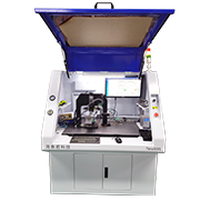 Tera3001-SA dual-LENS multidaughterboard coupling equipment
Optical Lenses
Terawan
The Tera3001-s multidaughterboard automatic alignment platform serves 10G/14G/25G optical transceivers. It mainly aligns lenses in Chip On Board (COB) modules, with single- or dual-channel lens/source alignment, automatic dispensing, and UV curing. The Tera3001-S provides high coupling efficiency, stability, and UPH depending on customer design, plus one-button collision protection and UV protection.
-
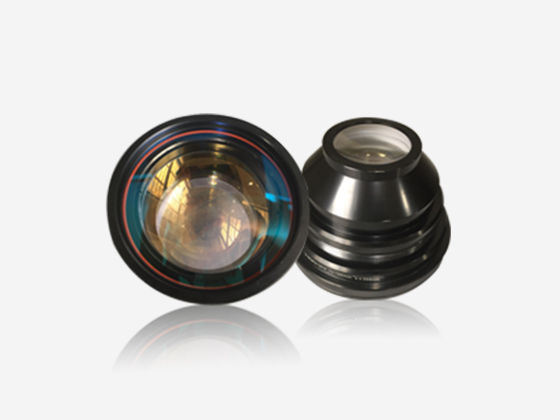 355 field lens
Optical Lenses
Central-laser
Focal Length [Original Table Row 2; Focal Length=100mm; Parallel Values in the Same Row Not Split into Separate Models or Configurations]: 100 mm Working Distance [Original Table Row 2; Focal Length=100mm; Parallel Values in the Same Row Not Split into Separate Models or Configurations]: 136 mm Scan Range [Original Table Row 2; Focal Length=100mm; Parallel Values in the Same Row Not Split into Separate Models or Configurations]: 70 mm² × 70 mm²
355 field lens: large zinc-selenide (ZnSe) focusing lens with a small spot for accurate marking. Imported lens material provides long service life and reduces removal, installation, and alignment. The 355nm scanning field lens is suitable for ultraviolet laser-marking machines.
-
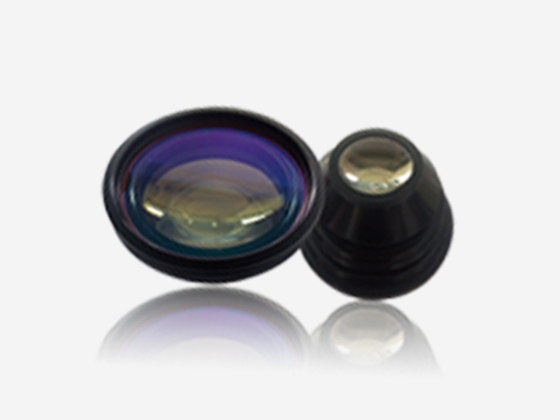 532 field lens
Optical Lenses
Central-laser
Focal Length [Original Table Row 2; Focal Length=100mm; Parallel Values in the Same Row Not Split into Separate Models or Configurations]: 100 mm Working Distance [Original Table Row 2; Focal Length=100mm; Parallel Values in the Same Row Not Split into Separate Models or Configurations]: 114.5 mm Scan Range [Original Table Row 2; Focal Length=100mm; Parallel Values in the Same Row Not Split into Separate Models or Configurations]: 70 mm² × 70 mm²
532 field lens: large zinc-selenide (ZnSe) focusing lens with a small spot for accurate marking. Imported lens material provides long service life and reduces removal, installation, and alignment. The 532nm field lens is suitable for green laser-marking machines.
-
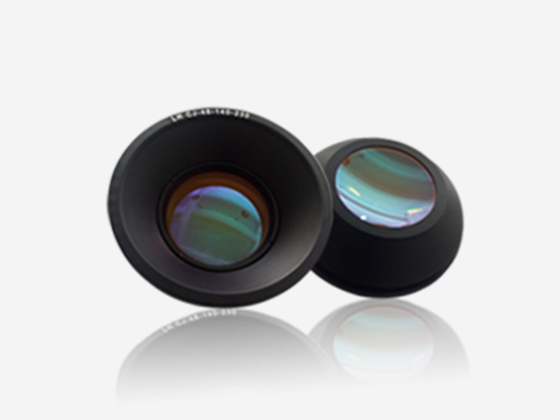 CO2 field lens
Optical Lenses
Central-laser
Focal Length [Original table row 2; Focal length=72mm; Parallel values in the same row, without additional model or configuration splitting]: 72 mm Mirror Diameter [Original table row 2; Focal length=72mm; Parallel values in the same row, without additional model or configuration splitting]: 48 mm Scan Range [Original table row 2; Focal length=72mm; Parallel values in the same row, without additional model or configuration splitting]: 50 mm² × 50 mm²
CO2 field lens: large zinc-selenide (ZnSe) focusing lens with a small spot for accurate marking. Imported lens material provides long service life and reduces removal, installation, and alignment. The 10640nm scanning field lens is suitable for CO2 laser-marking machines.
-
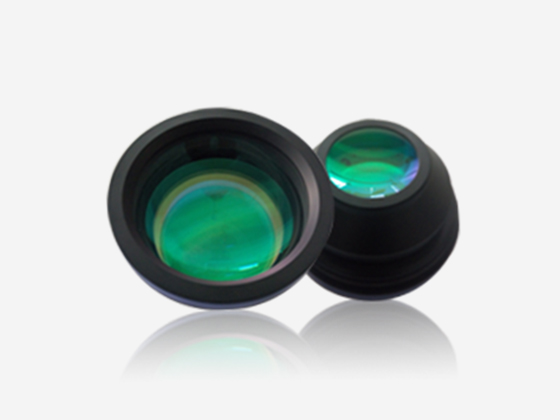 YAG field lens
Optical Lenses
Central-laser
Focal Length [Original table row 2; Focal length=63mm; Parallel values in the same row, without additional model or configuration splitting]: 63 mm Working Distance [Original table row 2; Focal length=63mm; Parallel values in the same row, without additional model or configuration splitting]: 78 mm Scan Range [Original table row 2; Focal length=63mm; Parallel values in the same row, without additional model or configuration splitting]: 50 mm² × 50 mm²
YAG field lens: large zinc-selenide (ZnSe) focusing lens with a small spot for accurate marking. Imported lens material provides long service life and reduces removal, installation, and alignment. The 1064nm scanning field lens is suitable for fiber laser-marking machines.
Related Articles
Founded in 2003, BWT Beijing Optoelectronics adheres to the mission "Let Dreams Fly With Light" and vision of becoming a Global Leader in Laser Solutions, guided by the core value "Innovate to Achieve Extraordinary".
As premium broadband light sources situated between traditional LEDs and laser diodes, MicroLight superluminescent‑diode (SLD) products combine broad spectral bandwidth, sufficient optical output power and low‑coherence performance.
Founded in November 2017, TIANJIN H‑CHIP TECHNOLOGY GROUP CORPORATION is a professional manufacturing‑service provider dedicated to micro‑nano optoelectronic chips. It holds multiple prestigious qualifications, including National High‑Tech Enterprise, one of Tianjin’s first Gazelle‑certified Enterprises, Specialized‑Refined‑Differentiated‑Innovative SME, and Leading Enterprise for Strategic Emerging Industries.
Looking for a market-verified 808nm pump laser diode? This guide introduces HAUCORE DM-8E5A-8OD (HGLD-808-COS-D-5W), its core advantages, key specs and mainstream industrial, medical & research applications.
Loading...
Name
Phone
Organization
Use Case

Database Platform