
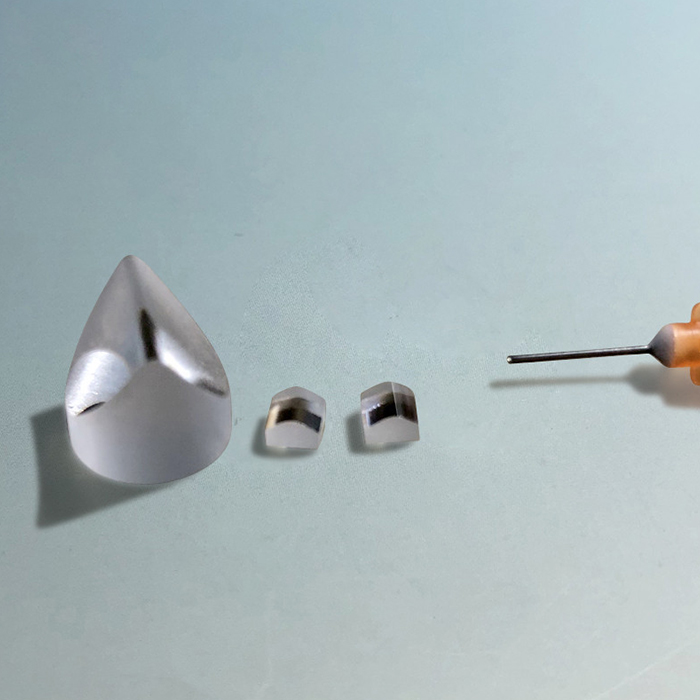
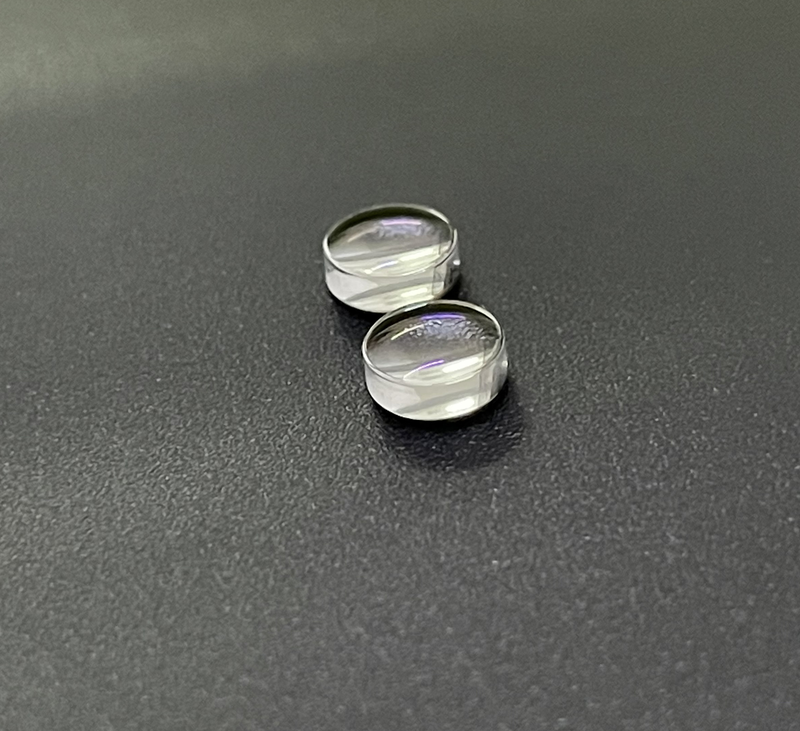
Powell Lens
The Powell lens generates straight laser lines with good optical density and stability, redistributing a Gaussian center hotspot. Its complex2D aspheric top creates spherical aberration, reducing central light and increasing edge light for uniform lines. Applications include biomedical systems, automotive assembly, food processing and machine vision. Small-angle designs use n=1.5glass; large-angle versions use n=1.8. Common materials: H-K9L, H-ZF7LA, JGS1. Fan angles2-110degrees and standard 9mm diameter are available, with custom sizes and rectangular designs. Fan angle depends on index and apex tilt: Greater tilt/index widens the fan at the same distance. Large angles use higher index or more apex tilt. Beam size: At fixed distance, input size determines line thickness; an elliptical collimated beam can produce two broad or narrow lines. Uniformity depends on input characteristics and aspheric quality; matching prism/module yields consistent lines. Intensity: The central80% of length should contain>80% of total light. Low center energy brightens ends; reducing end brightness improves utilization. A figure compares central distributions. Versus cylindrical lenses, which retain an approximately Gaussian profile, Powell prisms provide more uniform beam shaping.
 Save to Favorites
Overview
Specifications
| Parameter | Value |
|---|---|
| Material : | H-K9L JGS1 UV Fused Silica |
| Diameter [Standard ; +0.00/-0.05] | Standard 9mm+0.00/-0.05 |
| Diameter [Custom] | 3mm to 60mm Customizable |
| Sector Angle | 2-110 degrees |
| Beam diameter | 0.5-5mm or Greater |
| Uniformity [High accuracy] | >80%( High accuracy ) |
| Straightness [High accuracy] | 99.9%( High accuracy ) |
| Design Wavelength | 385-1064nm |
| Surface Quality | 40-20 |
| Coating | Antireflection Coating as Required |
| Environmental Directive | Compliant |
Datasheet
Please provide your email to download the datasheet.
Invalid email format. Please try again.
Supplier Information
Related Products
-
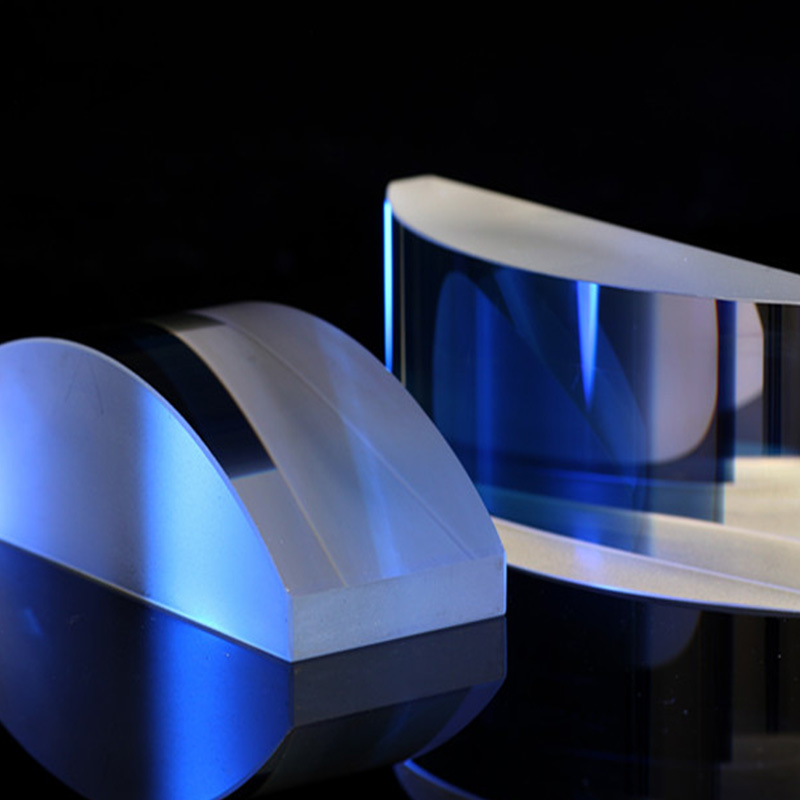 MZCM1210F10
Optical Lenses
Mzlaser
material: H-K9L focal length tolerance [±1%]: ±1% Surface Quality: 60/40
-
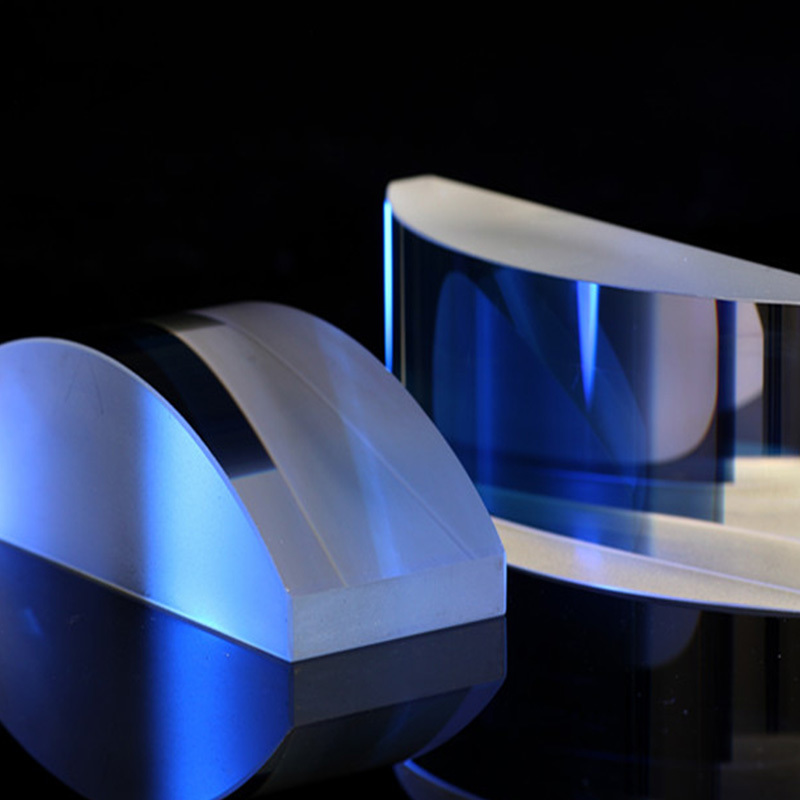 MZCM147F8
Optical Lenses
Mzlaser
material: H-K9L focal length tolerance [±1%]: ±1% Surface Quality: 60/40
-
 MZCM2010F10
Optical Lenses
Mzlaser
material: H-K9L focal length tolerance [±1%]: ±1% Surface Quality: 60/40
-
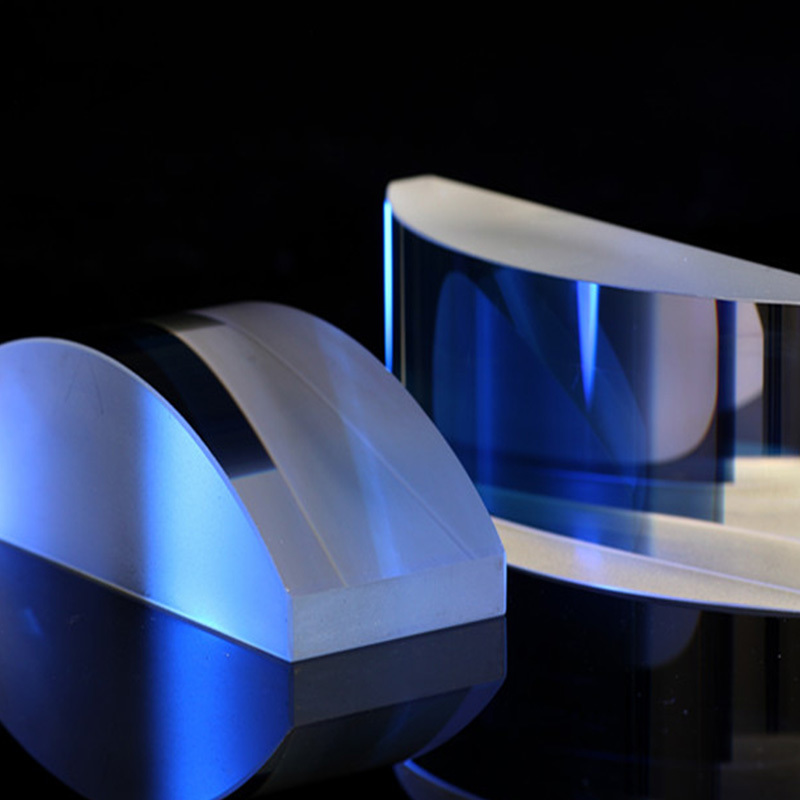 MZCM20510F10
Optical Lenses
Mzlaser
material: H-K9L focal length tolerance [±1%]: ±1% Surface Quality: 60/40
-
 MZCM30F37
Optical Lenses
Mzlaser
wavelength range: 405nm~980nm material: Glass Surface Quality: 60/40
Related Articles
Founded in 2019, Jilin JC Ultrafast Equipment Co., Ltd. is a high-tech enterprise incubated by the Ultrafast Optoelectronics Center of Jilin University. Our R&D team owns 15 years of profound experience in femtosecond laser micro-nano fabrication.
Driven by the rapid upgrading of industrial automation, high-precision displacement sensing technology has become a core foundation of intelligent manufacturing.
Founded in 2003, BWT Beijing Optoelectronics adheres to the mission "Let Dreams Fly With Light" and vision of becoming a Global Leader in Laser Solutions, guided by the core value "Innovate to Achieve Extraordinary".
On November 28, 2024, the 3rd China Laser Star Enterprise Summit & Advanced Laser Processing Technology Summit, an annual influential event in the laser industry, was grandly held in Wuhan Optics Valley.
Loading...
Name
Phone
Organization
Use Case

Database Platform