
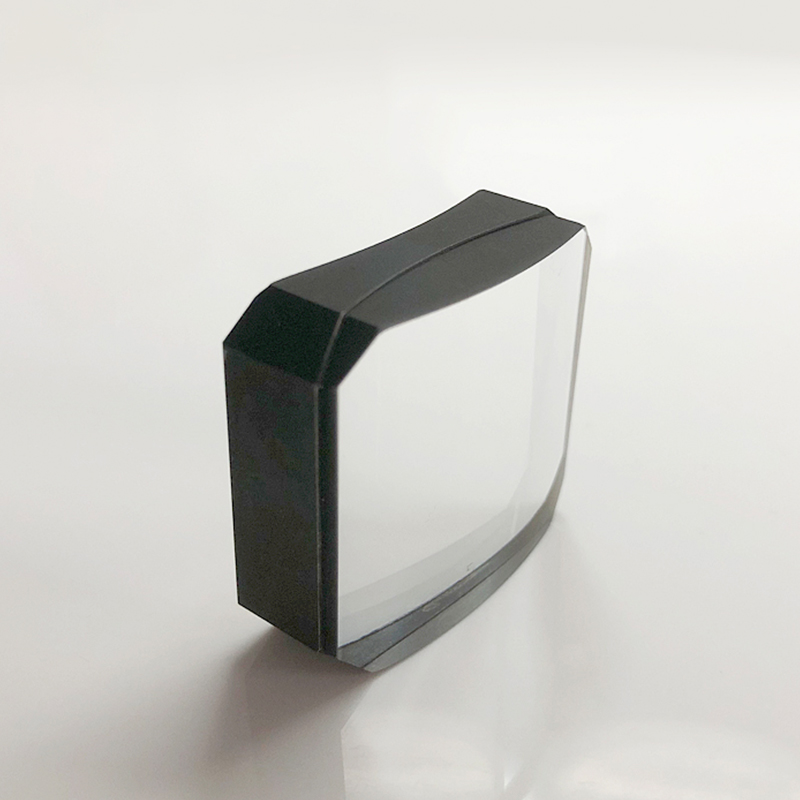
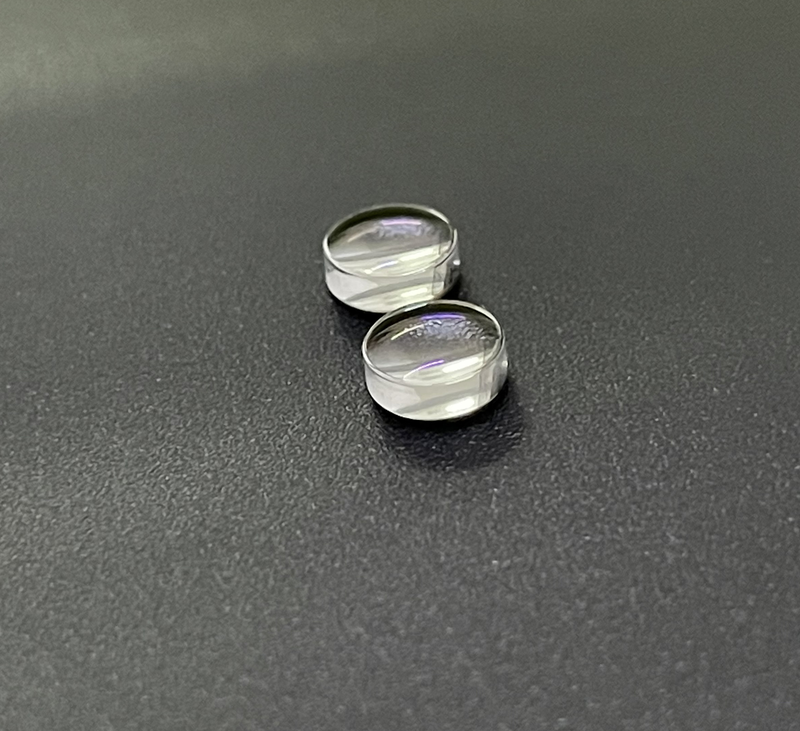
Achromatic Cylindrical Lens
An achromatic cylindrical lens is a cemented doublet combining a positive low-index crown element and a negative high-index flint element to reduce spherical and chromatic aberration. Applications include laser-diode line generation, focusing divergent beams onto linear detector arrays, and paired lenses for collimating and circularizing diode output. Common bonding techniques—ordinary bonding: Optical-grade adhesive joins lenses, prisms, mirrors or other elements into one component. Precise adhesive thickness and uniformity preserve performance. Adhesive must have good transparency, low scattering/absorption, strong adhesion and weather resistance. Optical contacting uses attraction between polished surfaces. It requires high surface accuracy and more difficult processing, but its medium-free interface preserves performance with low deformation and good heat/cold resistance. Optical bonding suits large-diameter elements and multielement systems.
 Save to Favorites
Overview
Specifications
| Parameter | Value |
|---|---|
| Structure | Achromatic Cylindrical Lens |
| Material | Optical glass 、UVFS、 Germanium 、 Silicon 、CaF2、MgF2、ZnSe ZnS、 Sapphire |
| Available diameter | 2 mm to 600 mm |
| Diameter Tolerance [or Customer design] | +0.00/-0.02mm or customer design |
| Surface Quality | 10-5 |
| Surface Irregularity [@632.8nm or Customer design] | λ/10 @632.8nm or Customer design |
| Thickness tolerance | +0/-0.02mm |
| Clear Aperture [Diameter] | > 90% of the diameter |
| Chamfer [According to Customer Requirements] | 0.05-0.5mmx45 degrees, according to customer requirements |
| Centering | 3 Arcmin |
| Coating | Single Mag2 and multilayer antireflection coatings; 350-650nm; B:650-1050nm; C:1050-1585nm; D:Customer design |
Datasheet
Please provide your email to download the datasheet.
Invalid email format. Please try again.
Supplier Information
Related Products
-
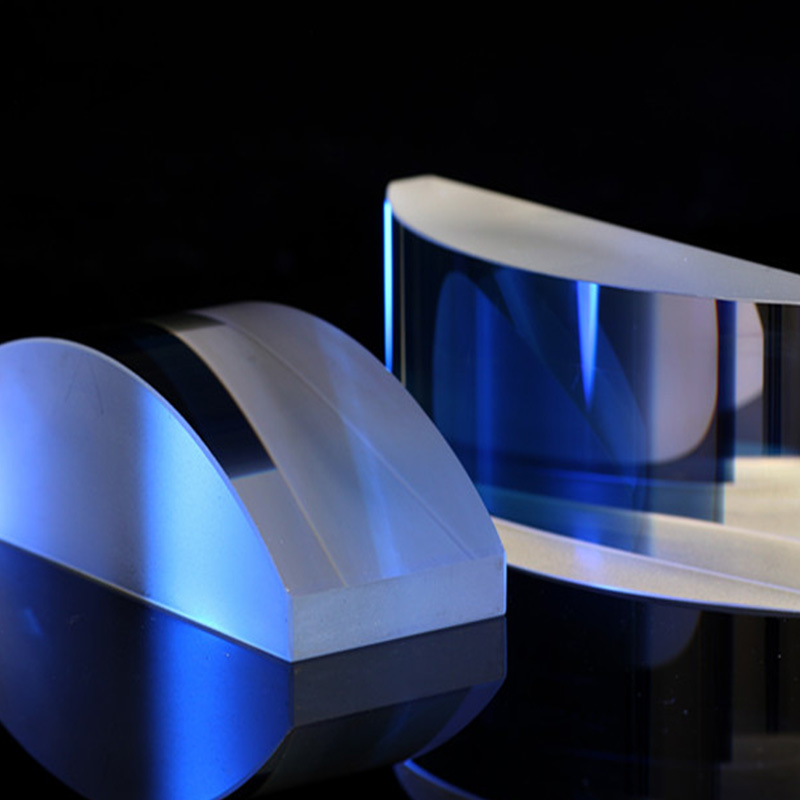 MZCM1210F10
Optical Lenses
Mzlaser
material: H-K9L focal length tolerance [±1%]: ±1% Surface Quality: 60/40
-
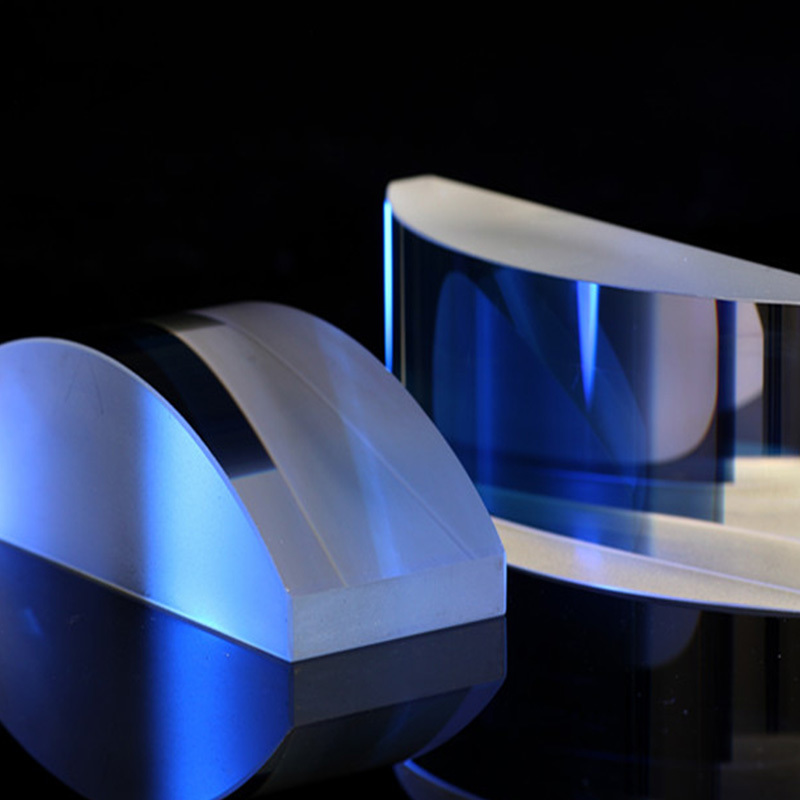 MZCM147F8
Optical Lenses
Mzlaser
material: H-K9L focal length tolerance [±1%]: ±1% Surface Quality: 60/40
-
 MZCM2010F10
Optical Lenses
Mzlaser
material: H-K9L focal length tolerance [±1%]: ±1% Surface Quality: 60/40
-
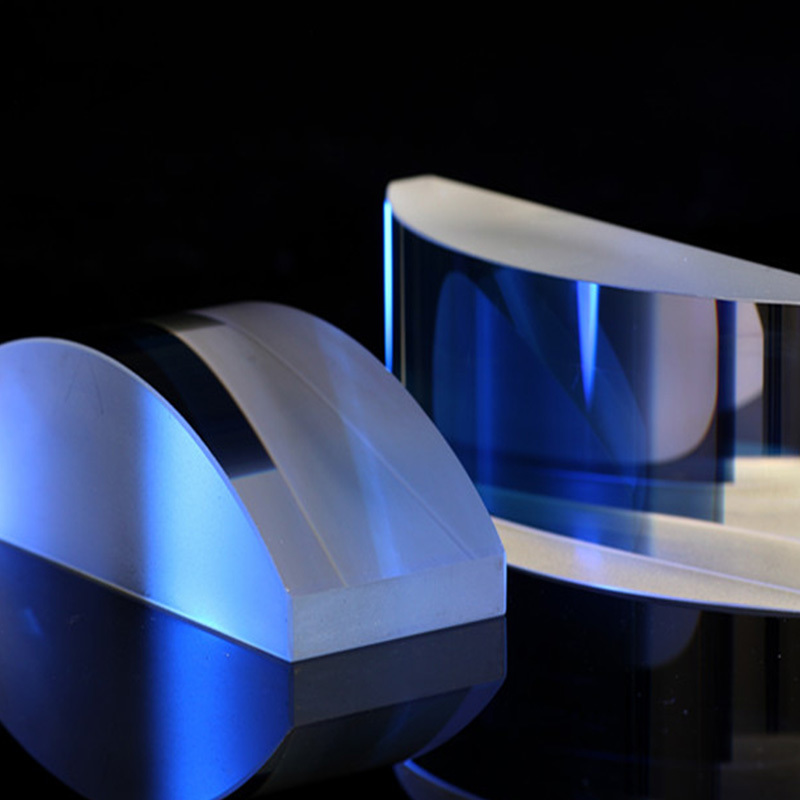 MZCM20510F10
Optical Lenses
Mzlaser
material: H-K9L focal length tolerance [±1%]: ±1% Surface Quality: 60/40
-
 MZCM30F37
Optical Lenses
Mzlaser
wavelength range: 405nm~980nm material: Glass Surface Quality: 60/40
Related Articles
Founded in 2019, Jilin JC Ultrafast Equipment Co., Ltd. is a high-tech enterprise incubated by the Ultrafast Optoelectronics Center of Jilin University. Our R&D team owns 15 years of profound experience in femtosecond laser micro-nano fabrication.
Driven by the rapid upgrading of industrial automation, high-precision displacement sensing technology has become a core foundation of intelligent manufacturing.
Founded in 2003, BWT Beijing Optoelectronics adheres to the mission "Let Dreams Fly With Light" and vision of becoming a Global Leader in Laser Solutions, guided by the core value "Innovate to Achieve Extraordinary".
On November 28, 2024, the 3rd China Laser Star Enterprise Summit & Advanced Laser Processing Technology Summit, an annual influential event in the laser industry, was grandly held in Wuhan Optics Valley.
Loading...
Name
Phone
Organization
Use Case

Database Platform